


You find a tick, pull it off, and then, naturally, your brain starts sprinting. Is that tiny red spot just irritated skin, or the start of something bigger? If you’ve ever stared at a bite with your phone flashlight like it holds the secrets of the universe… yeah, you’re not alone. Tick bites are sneaky because the first signs can look almost boring. Then sometimes they don’t. What matters is knowing what’s normal, what’s not, and when waiting it out stops being a smart plan. Let’s sort through the noise and make this a lot clearer.
Tick bite symptoms often start as a small red bump with mild itching or tenderness and usually fade within 24 to 36 hours without further issues.
Watch for expanding redness, developing rashes, or systemic symptoms like fever, chills, headache, and fatigue, as these can indicate tick-borne illnesses such as Lyme disease.
The classic Lyme disease rash may appear 3 to 30 days after a bite and can vary in appearance, so any expanding rash should prompt medical evaluation.
Delayed symptoms like joint pain, swollen lymph nodes, and neurological signs can occur weeks after a tick bite and require prompt attention.
Seek immediate medical care if you experience severe headache, neck stiffness, facial weakness, or if the tick bite shows signs of pain, blistering, or inflammation.
Early recognition and treatment of concerning tick bite symptoms significantly improve outcomes and reduce complications from tick-borne diseases.
We have helped thousands of people in Colorado, Oregon, Wyoming, New Jersey, Pennsylvania, Texas, and Wisconsin restore their health and quality of life by diagnosing and treating their Lyme Disease.

In the first few hours after a bite, the most common thing you’ll notice is pretty simple: a small red bump, a little tenderness, maybe mild itching. It can resemble a mosquito bite, just less dramatic and more annoying.
A lot of tick bites cause very little at all. No fever. No giant rash. Sometimes just a pinpoint mark where the mouthparts were attached. Local irritation from tick saliva can fade within about 24 to 36 hours after the tick is removed.
That short-lived reaction is usually a skin response, not proof of Lyme disease or another infection. And that’s where people get tripped up. A tiny bump right away doesn’t tell the whole story.
If you’re trying to compare what you’re seeing, this breakdown of Normal Tick Bite vs Lyme patterns can help. General dermatology sources also note that common tick bite symptoms often include mild redness, swelling, or itching at the site.
So yes, a small bump can be normal. The key is what happens next.
A mild local reaction stays small, close to the bite, and settles down over a few days. It may itch a bit. It may feel tender if your shirt or waistband keeps rubbing it. But it doesn’t keep spreading, and you don’t start feeling sick.
A concerning response behaves differently. The redness expands. A rash develops or changes shape. Or symptoms start showing up beyond the skin, fever, chills, headache, body aches, fatigue, nausea, swollen lymph nodes, joint pain.
That distinction matters because many people are told, “It’s probably nothing,” when their body is clearly waving a yellow flag.
One especially important point: you don’t need a dramatic movie-scene rash for a tick-borne illness to be real. Some early tick bite symptoms are systemic, not just skin-deep. And if the area becomes painful, blistered, rapidly enlarges, or you develop neurologic symptoms, that’s not a “wait a month and journal about it” situation.
Improving local irritation is reassuring. Expanding symptoms are not.
We have helped thousands of people in Colorado, Oregon, Wyoming, New Jersey, Pennsylvania, Texas, and Wisconsin restore their health and quality of life by diagnosing and treating their Lyme Disease.
Early tick-borne illness can feel weirdly like a summer flu. That’s part of why it gets missed.
Watch for:
fever
chills
headache
fatigue that feels heavier than normal tiredness
muscle aches
joint aches
swollen lymph nodes
nausea or vomiting
And then there are the symptoms that deserve faster attention: severe headache, neck stiffness, facial drooping, weakness, or confusion.
If that list sounds broad, it is. Lyme disease, ehrlichiosis, anaplasmosis, Rocky Mountain spotted fever, and other infections can overlap early on. The body often gives a general “something is off” signal before the pattern becomes obvious.
This is where clinical context matters. If symptoms begin after a known tick bite, or after time in grass, woods, leaf litter, or even your backyard, don’t brush them off just because you never saw a rash.
A fuller comprehensive guide to Symptoms of Lyme Disease can help connect those early dots, especially when symptoms seem vague but persistent. When you catch these warning signs early, you have more options and fewer expensive headaches later.
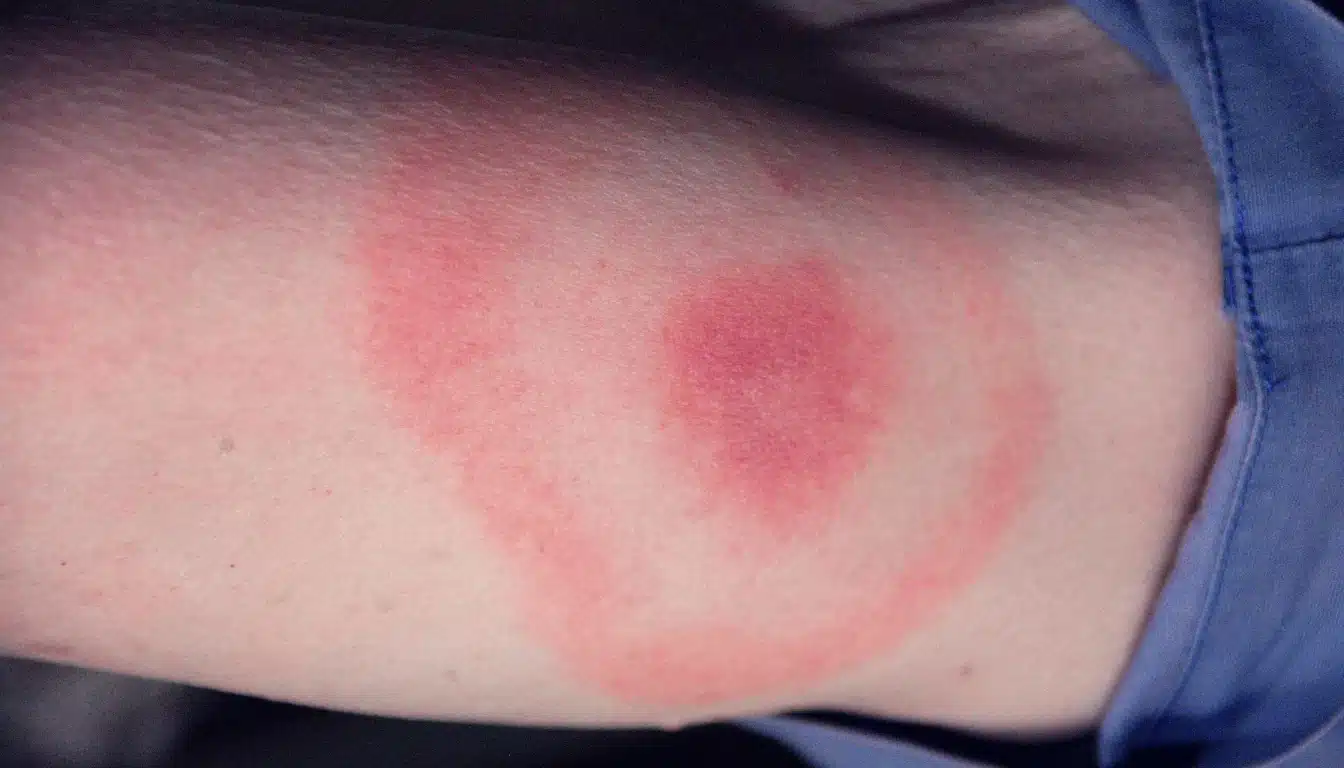
Photo: Lyme Disease “Bulls-eye Rash” James Gathany, Public Domain, Public Health Image Library, Centers for Disease Control and Prevention
The classic Lyme rash, called erythema migrans, usually shows up 3 to 30 days after a tick bite, with the average closer to about a week. It expands gradually and may feel warm, but it’s often not itchy or painful. That surprises people.
And even though the internet’s obsession with the perfect bull’s-eye, Lyme rashes don’t always read the script. They can look:
like a bull’s-eye
solid red
blotchy
bruise-like
oval or uneven
Other tick-borne illnesses can cause rashes too, including spotted patterns or tiny reddish-purple dots. A rash on the palms or soles is especially worth prompt medical attention. Early Lyme disease symptoms and related infections are often easier to address when caught sooner, not after weeks of second-guessing and blurry phone photos.
Here’s the sneaky part: symptoms of tick-borne illness often don’t start the same day. They commonly begin 3 to 30 days after a bite, and some can start anywhere from 1 day to 3 weeks later.
That delay is why people forget the bite, dismiss the risk, or get told their symptoms are “random.” Suddenly you’re exhausted, achy, foggy, maybe dizzy, and the tick from two weeks ago feels irrelevant. It isn’t.
Delayed symptoms can include ongoing fatigue, flu-like illness, new headaches, migrating joint pain, swollen glands, and worsening brain fog. For patients who already have complex health issues, that overlap can muddy the picture fast.
There’s also tick paralysis, which is less common but urgent. Symptoms usually begin 4 to 7 days after attachment and can include tingling, numbness, trouble swallowing, trouble talking, double vision, or facial weakness.
If you’re in that post-bite window, a practical Lyme Disease Prevention After a Tick Bite approach can help you think clearly about timing, monitoring, and next steps, without spinning out or ignoring red flags.
We have helped thousands of people in Colorado, Oregon, Wyoming, New Jersey, Pennsylvania, Texas, and Wisconsin restore their health and quality of life by diagnosing and treating their Lyme Disease.
You should seek medical care after a tick bite if you develop an expanding rash, fever, chills, body aches, or other flu-like symptoms. Those are some of the most important signs that the bite was more than a skin irritation.
Get prompt evaluation if you have:
severe headache
neck stiffness
confusion
facial weakness or drooping
rash on the hands or feet
trouble breathing
chest pain or heart palpitations
multiple swollen joints
Also get checked if the bite itself becomes painful, blistering, or inflamed, or if the tick was attached for several hours or longer.
One point that’s often missed: transmission risk isn’t always as simple as “it had to be attached forever.” That’s why resources like this Lyme Disease Tick Bite guide is useful when you’re deciding how urgently to act.
If you already feel dismissed by the medical system, trust your pattern recognition. You know when your body is acting off. Getting evaluated early is rarely overreacting: it’s often the smartest move in the whole story.
A small bump or brief redness after a tick bite can be completely normal. But an expanding rash, fever, flu-like symptoms, joint pain, or neurologic changes deserve real attention. Don’t wait for symptoms to become unmistakable. When tick bite symptoms shift from local irritation to whole-body signals, early action can make a very big difference.
In the first few hours after a tick bite, you may notice a small red bump, mild redness, tenderness, or itching at the site. Often, this irritation fades within 24 to 36 hours after removing the tick and doesn’t necessarily indicate infection.
A mild local reaction usually stays small, may itch or feel tender, and improves within days without spreading. Concerning symptoms include expanding redness, rash, fever, chills, headache, fatigue, joint pain, or swollen lymph nodes. If you notice these, seek medical care promptly.
Early tick-borne illness symptoms resemble flu: fever, chills, headache, heavy fatigue, muscle and joint aches, nausea, and swollen lymph nodes. Severe symptoms like neck stiffness, facial drooping, confusion, or weakness require urgent evaluation.
A Lyme disease rash, erythema migrans, usually appears 3 to 30 days after a bite, often around one week. It expands gradually, may be warm, and can look like a bull’s-eye, solid red, blotchy, or bruise-like. Rashes on palms or soles also need prompt medical assessment.
Yes, symptoms of tick-borne illness often start 3 to 30 days after the bite, sometimes up to 3 weeks later. These delayed signs include ongoing fatigue, flu-like illness, migrating joint pain, brain fog, and swollen glands. Also, rare tick paralysis symptoms like numbness and facial weakness can appear within a week. Early recognition is crucial to avoid complications.
Seek medical attention if you develop an expanding rash, fever, flu-like symptoms, severe headache, neck stiffness, facial weakness, rash on hands or feet, breathing difficulties, or if the bite itself becomes painful or blistered. Even if the tick was attached for just several hours, evaluation is important as Lyme disease can transmit quickly.
We have helped thousands of
people restore their health
and quality of life by diagnosing
and treating their Lyme Disease.
“Dr. Mueller’s approach to medicine is refreshing! There is only so much you can do with western medicine and in my life I was needing a new approach. By addressing the whole body, nutritional diet factors, environmental factors, blood work, and incorporating ideas I had not previously known, I was able to break through with my conditions. I am not only experiencing less pain in my life, but through the process of healing guided by Dr. Diane Mueller, I am now happy to say I have more consciousness surrounding how I eat, what to eat and when things are appropriate. Living by example Dr. Mueller has a vibrancy that makes you want to learn and know more about your body and overall health. I highly recommend her to anyone looking for new answers, a new approach to health, or in need of freedom from pain and limitations.”
-Storie S.
Kihei, HI