

Written By Dr. Diane Mueller
At home Lyme disease test kits sound simple. Prick your finger, mail a sample, get an answer. But if you have crushing fatigue, migrating joint pain, brain fog, or strange symptoms after a tick bite, the truth is harder than that.
I’ve seen this pattern for years in people who were told they were fine, anxious, or “just stressed.” A home test can be a useful starting point in some cases. It is not a final answer. If you rely on it too much, you can miss early Lyme, miss co-infections, or chase the wrong problem for months.
This guide explains what a lyme disease home test can tell you, where it falls short, and how to use the result without putting your health on hold.
An at home Lyme disease test can be a useful first step, but it cannot confirm an active infection on its own.
Timing matters because early Lyme disease often produces false-negative antibody results, especially soon after a tick bite or after early antibiotics.
Use a Lyme disease home test result alongside your symptoms, exposure history, and timeline instead of treating it like a final diagnosis.
A positive result should lead to prompt follow-up with a clinician who can review confirmatory testing, co-infections, and other possible causes.
A negative result does not rule out Lyme disease if you still have rash, fever, migrating pain, neurologic symptoms, or ongoing unexplained illness.
Skip home testing and seek urgent medical care right away for an expanding rash, facial droop, chest pain, shortness of breath, fainting, or severe confusion.
Here’s the clear answer: an at home Lyme disease test may show that your immune system reacted to Borrelia burgdorferi. It does not prove whether you have an active infection right now.
That distinction matters. Most home kits look for antibodies, not the bacteria itself. Antibodies can take time to appear. They can also remain after a past exposure. So the test result needs context: your symptoms, your timeline, your tick exposure, and the kind of test used.
In my experience, this is where people get stuck. They want one clean yes-or-no result. Lyme rarely behaves that neatly, especially once symptoms become widespread or long-lasting.
If you want a side-by-side look at testing methods, this guide on choosing the best Lyme disease test can help you compare options. You can also review a broader overview of the diagnostic path for Lyme before you buy anything.
Do this today: Write down your symptom start date, possible tick exposure date, and any prior antibiotics. This takes 10 minutes and makes any test result more useful.
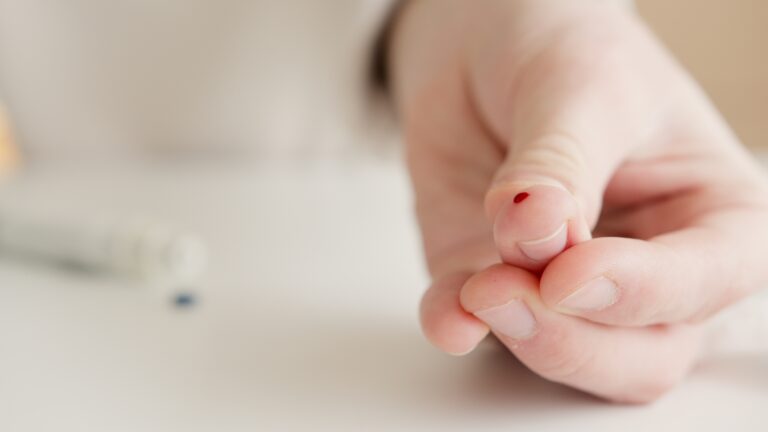
Most home kits use a finger-prick blood sample. You place drops of blood on a collection card or into a small tube, then mail it to a lab. Results often come back within a few days.
That speed is appealing. But sample quality can suffer if blood collection is poor, the sample sits in heat, or instructions are not followed closely. I’ve had patients tell me, “I barely got enough blood on the card, but I mailed it anyway.” That is not a small detail.
Some kits use methods similar to standard antibody testing. Others use less familiar methods with weaker validation. And many shoppers do not realize that “available to buy online” does not mean “proven accurate in all clinical situations.”
Do this today: Before ordering, read exactly what the kit measures and how the sample is processed. Spend 15 minutes on that step.
Timing changes everything. In early Lyme disease, your immune system may not have made enough antibodies yet. That means a test can come back negative even when infection is present.
Research has shown that standard two-tier Lyme testing can miss a large share of early cases. Early sensitivity has been reported in the 30% to 50% false-negative range, and overall performance varies widely by test type and stage of illness.
Antibiotics can complicate the picture too. If you took doxycycline soon after a bite, antibody development may be blunted. That can reduce the chance of a positive antibody result.
Then there is test type. An antibody test asks, “Did your immune system react?” A PCR test asks, “Can we find genetic material from the organism?” Those are not the same question. If you want a practical comparison, this article on Lyme disease test kit breaks down common choices.
Do this today: Count the days from your bite or first symptom. If it has been less than a few weeks, do not treat a negative home test as final.
Before ordering an at-home test for yourself, it’s worth checking whether free tick testing near you is an option since knowing what the tick carried can help you decide whether human testing is the right next step.
A home test may help as a first screen. It can make sense when you need a starting point, not a final diagnosis.
This is especially true if you live in or near a high-risk area, cannot get a prompt appointment, or want early data to bring to a clinician. In places like Greenwich, Connecticut, where wooded property lines, deer traffic, and trail exposure are common, people often want to act quickly after a suspicious bite.
Used well, a home test can move you from guessing to documenting. Used poorly, it can create false reassurance.
Do this today: Decide your goal before you test. Are you screening, documenting symptoms, or trying to guide the next medical visit? Pick one.
A home test may be helpful after a tick bite if it pushes you to track symptoms and seek care faster. But it should never delay treatment when symptoms are strong.
Watch for:
Expanding rash, including a bull’s-eye pattern
Fever or chills
Headache or neck stiffness
New fatigue that feels heavy and abrupt
Joint or muscle pain
Facial droop or odd nerve symptoms
Here’s the trap: early symptoms can feel like the flu, overtraining, or burnout. I’ve heard patients say, “I thought I just needed a weekend off.” Two weeks later, they could barely think straight.
In Greenwich, I think of patients who spent time around wooded edges near backyards, parks, or trails and did not even recall a bite. Tick bites are often missed. A home test can support the next step, but a rash or clear early Lyme picture deserves medical care now.
Do this today: Take photos of any rash and log symptoms twice a day for 3 days. That gives your doctor a clearer timeline.
A Lyme disease home test may also help when symptoms have dragged on for months and no one has connected the dots. I see this often in people with fatigue, brain fog, dizziness, sleep disruption, and pain that moves around.
Still, one result rarely explains a complex case. Chronic symptoms can involve more than Lyme alone. Mold exposure, gut issues, hormone shifts, thyroid problems, and nervous system overload can all pile on. Sequence matters.
That is why many patients need more than a single kit.
Do this today: Make a one-page symptom timeline with major events: tick exposure, mold exposure, infections, moves, water damage, pregnancy, major stress, and antibiotics. Give it 20 minutes.
The biggest problem is simple: home testing strips away clinical context. And Lyme disease is a context-heavy illness.
A test result without symptom history, exposure history, and a trained review can mislead you in either direction. I’ve seen people relax after a negative result even though their story screamed early tick-borne illness. I’ve also seen people panic over a positive antibody result that reflected past exposure rather than current disease.
Home tests also vary in quality. Some use methods with limited validation. Some are marketed more like wellness products than medical tools. And poor sample collection can affect what the lab sees.
If you are weighing test quality, this comparison of the best Lyme disease test options is a useful next step.
Do this today: Treat any home result as one data point, not a verdict. Write that sentence at the top of your notes.
False negatives happen. False positives happen. Co-infections get missed. That is the short version.
A false negative can happen when:
You test too early
Your antibody response is weak
You took antibiotics early
The test method has low sensitivity
A false positive can happen when antibodies cross-react or when a past exposure is read as a current problem. And many home kits do not evaluate common tick-borne co-infections such as babesiosis, anaplasmosis, ehrlichiosis, or bartonella-related patterns.
That matters because co-infections can change the symptom picture. Night sweats, air hunger, severe anxiety, rib pain, or sudden neurologic symptoms may point to more than Lyme alone.
In Greenwich and surrounding parts of coastal Connecticut, mixed tick exposure is not rare. Deer ticks do not travel with warning labels.
Do this today: If your symptoms include night sweats, shortness of breath, heart palpitations, or severe neuro symptoms, bring up co-infections at your next visit.
One test rarely explains a chronic illness picture. If you have been sick for six months, two years, or ten, your body has likely changed in more than one system.
This is the part many patients find both frustrating and relieving. Frustrating, because there may not be one clean lab answer. Relieving, because a “normal” or mixed result does not mean your symptoms are imaginary.
In complex cases, I look at patterns across systems:
Immune stress
Inflammation
Sleep disruption
Hormone and thyroid shifts
Gut problems
Mold or environmental exposure
Nervous system dysfunction
That systems view is often what people were missing all along. Lyme may be part of the story, but not the whole story. A useful resource is this guide on test for tick-borne diseases in humans, outlining common symptoms and what tests to ask for when you suspect Lyme or other diseases carried by ticks.
Do this today: Circle your top 3 symptoms and the 3 body systems they affect most. Start there instead of chasing every symptom at once.

Use the result as a clue, not a command. That mindset protects you from two common mistakes: false reassurance and panic.
The best use of an at home Lyme disease test is to support your next decision. It can help you decide whether to seek prompt medical care, ask for confirmatory testing, or widen the workup if symptoms remain unexplained.
Do this today: Put your result next to your symptoms and timeline on one page. If the three do not match, do not force the story.
A positive result means you need clinical follow-up. It does not mean you should self-diagnose and order random supplements online.
Take these steps:
Book a medical visit with a clinician who understands Lyme and tick-borne illness.
Bring your timeline of symptoms, exposure, and prior treatment.
Ask what the test measured: antibody class, method, and whether confirmation is needed.
Discuss co-infections and other root causes if your symptoms are broad or severe.
Get urgent care fast if you have chest pain, fainting, facial weakness, meningitis-like symptoms, or shortness of breath.
A positive home test can be useful. But it is the beginning of the evaluation, not the finish line.
Do this today: Schedule the follow-up before the day ends. It takes about 10 minutes and prevents months of drift.
A negative result does not rule out Lyme disease. This is especially true if you tested early, took antibiotics, or have symptoms that strongly fit a tick-borne pattern.
If you still feel sick, do this step by step:
Review timing. Ask whether you tested too soon.
Review symptoms. Note rash, nerve symptoms, fevers, migrating pain, and cognitive changes.
Review exposure. Include hikes, pets, yard work, and travel.
Ask about better testing or repeat testing when timing supports it.
Broaden the evaluation to co-infections, mold, thyroid, iron status, autoimmune issues, and gut problems.
This is the moment when many people blame themselves. Don’t. A negative test with ongoing symptoms is a sign to investigate more carefully, not quit.
Do this today: Book a visit and bring three questions: Could this still be Lyme? Could this be a co-infection? What else should we rule out?
Sometimes you should skip the home test and get medical care now. That is true when symptoms suggest early Lyme, a complication, or another urgent problem.
Seek care instead of relying on home testing if you have:
A bull’s-eye rash or an expanding rash after a tick bite
Fever, severe headache, or neck stiffness
Chest pain, palpitations, or fainting
Facial droop or new numbness
Shortness of breath
Severe weakness or confusion
Symptoms after a known tick bite in a high-risk area
This is also true if you live in a tick-heavy area like Greenwich and your symptoms started after yard work, trail walks, or time near brush and deer paths. Waiting for a mailed result can cost precious time.
If you have been dismissed before, I want to say this plainly: you are not imagining it. You still need a proper evaluation. Lyme disease, mold illness, and other chronic conditions can overlap, and the right clinician will look at the full picture instead of one checkbox.
Do this today: If any of the urgent signs above apply, contact a licensed clinician or urgent care today. Do not wait for a home kit to settle it.
An at home Lyme disease test can be a useful first step. It can also mislead you if you treat it like the final word. That is the real takeaway.
If your symptoms are recent, severe, or strongly suggest Lyme, get medical care quickly. If your symptoms are chronic and confusing, use home testing only as one piece of a bigger root-cause workup. The goal is not just a lab result. The goal is to understand why you feel this way and what to do next.
Stop guessing. Start documenting. Then get the right help.
No. An at home Lyme disease test usually checks for antibodies to Borrelia burgdorferi, not the bacteria itself. That means it may suggest past or current exposure, but it cannot confirm an active infection without a clinician reviewing your symptoms, timing, and tick exposure history.
Most kits use a finger-prick blood sample that you collect at home and mail to a lab. The lab typically looks for Lyme-related antibodies and returns results within a few days. Accuracy can be affected by poor sample collection, heat exposure, and differences in test method validation.
A negative result does not rule out Lyme disease, especially early on. Antibodies can take weeks to develop, and early antibiotics may blunt the immune response. False negatives are common in early infection, so symptoms, rash history, and exposure risk still need medical evaluation.
Get medical care promptly if you have an expanding or bull’s-eye rash, fever, severe headache, neck stiffness, facial droop, chest pain, fainting, shortness of breath, or new neurologic symptoms after possible tick exposure. In these situations, waiting on an at home Lyme disease test may delay needed treatment.
Treat a positive result as a reason for follow-up, not a final diagnosis. Schedule a visit with a healthcare provider, bring a symptom and exposure timeline, and ask what the test measured. You may need confirmatory laboratory testing and evaluation for co-infections or other overlapping conditions.
Usually not. Many at home Lyme disease test kits focus only on Lyme-related antibodies and do not assess other tick-borne infections such as babesiosis, anaplasmosis, or ehrlichiosis. If you have night sweats, air hunger, palpitations, or severe neurologic symptoms, ask a clinician about broader testing.
References:
Branda, J. A., & Steere, A. C. (2021). Laboratory diagnosis of Lyme borreliosis. Clinical Microbiology Reviews, 34(2), Article e00018-20. https://pmc.ncbi.nlm.nih.gov/articles/PMC7849240/
We have helped thousands of
people restore their health
and quality of life by diagnosing
and treating their Lyme Disease.
“Dr. Mueller’s approach to medicine is refreshing! There is only so much you can do with western medicine and in my life I was needing a new approach. By addressing the whole body, nutritional diet factors, environmental factors, blood work, and incorporating ideas I had not previously known, I was able to break through with my conditions. I am not only experiencing less pain in my life, but through the process of healing guided by Dr. Diane Mueller, I am now happy to say I have more consciousness surrounding how I eat, what to eat and when things are appropriate. Living by example Dr. Mueller has a vibrancy that makes you want to learn and know more about your body and overall health. I highly recommend her to anyone looking for new answers, a new approach to health, or in need of freedom from pain and limitations.”
-Storie S.
Kihei, HI