


Written by Dr. Diane Mueller
Borrelia test questions usually start after months of confusion. You feel awful, your labs look “normal,” and someone finally says the word Lyme.
Here’s the plain truth: a test for borrelia can help, but it cannot tell the whole story by itself. Most Lyme tests measure your immune response, not whether the bacteria are active right now. That gap matters.
I’ve worked with many patients who were told a negative test ended the conversation. Often, it didn’t. This guide explains when testing makes sense, what each test can and can’t show, and what to do next if results don’t match your symptoms.
A borrelia test is most useful when symptoms match potential tick exposure in Lyme-endemic areas like the Northeast US.
Most borrelia tests detect antibodies, not active infection, so a positive test shows past or present immune response but not necessarily current disease.
Timing of testing matters greatly—testing too early can result in false negatives, so repeat tests after 4 weeks may be necessary.
Two-tier testing with ELISA followed by Western blot is standard, but PCR and specialty tests can help in complex or unclear cases.
Interpret borrelia test results in full clinical context, considering symptoms, exposure history, and timing rather than relying solely on lab reports.
If symptoms strongly suggest Lyme despite negative tests, track symptoms and exposures carefully and seek clinician guidance for further evaluation.
We have helped thousands of people in Colorado, Oregon, Wyoming, New Jersey, Pennsylvania, Texas, Wisconsin, New Hampshire, Alabama, South Dakota, and Vermont restore their health and quality of life by diagnosing and treating their Lyme Disease.
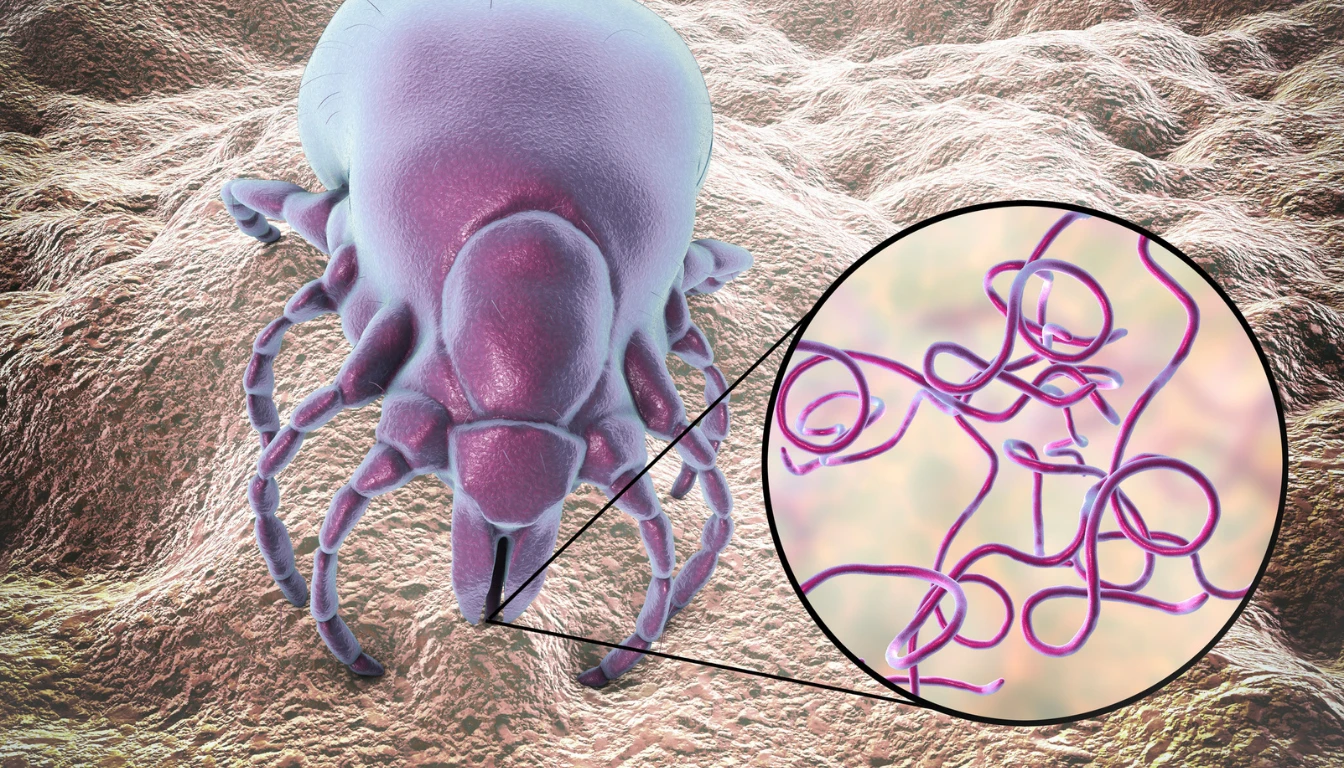
A borrelia test makes sense when symptoms and exposure line up. The key question is not “Did I ever get a tick bite?” The key question is “Do I have symptoms that fit Lyme disease, plus a realistic chance of exposure?”
Testing is more useful if you have:
fever or chills
fatigue that feels unusual
headache
muscle or joint pain
swollen lymph nodes
a possible erythema migrans rash
time outdoors in a tick-heavy area
In the Northeast, that often means wooded parts of Connecticut, New York, Massachusetts, or nearby areas where blacklegged ticks are common. In clinics serving patients around New York City, we often hear the same story: a weekend in the Hudson Valley, a hike near Westchester, then “flu-like” symptoms that never fully leave.
But there’s a catch. If you have a classic bull’s-eye or expanding EM rash, many clinicians diagnose Lyme without waiting for a lab test. Early antibodies may not show up yet. The National Library of Medicine supports this symptom-and-exposure approach in early disease.
Do this today: write down your symptom start date, tick exposure risk, travel, and any rash photos. It takes 10 minutes and makes testing decisions far clearer.
Borrelia is the bacterial group linked to Lyme disease. In the United States, the main species is Borrelia burgdorferi.
That sounds simple. The confusing part is the test itself. A test for borrelia usually does not look directly for the whole living bacteria in your blood. Instead, it usually looks for antibodies your immune system made against it.
Those antibodies are usually:
IgM, which may rise earlier
IgG, which often appears later and can stay positive for a long time
So a positive borrelia test often means your immune system recognized Borrelia at some point. It does not automatically prove current active infection. And a negative result does not always rule Lyme out, especially early on.
This is where many patients feel misled. They assume positive means “active now” and negative means “definitely no Lyme.” Real life is messier than that.
If you want a plain-language breakdown of test names, the Lyme Disease Blood Test guide helps sort out what doctors are actually ordering. Do this today: ask your clinician one direct question, “Is this test measuring antibodies, DNA, or something else?”
Most borrelia test options fall into a few main buckets. The standard U.S. approach is still two-tier antibody testing.
This is usually the first screen. It checks for antibodies to Borrelia proteins. It is useful, but it can miss early cases.
A practical explainer on Understanding the ELISA shows why this first step is only the beginning, not the final word.
This test looks for antibody “bands” against specific Borrelia proteins. In the classic CDC framework, IgM needs at least 2 specific bands, and IgG needs at least 5.
That sounds strict because it is strict. Some patients have several Lyme-specific bands but still get labeled negative by reporting rules. The Western Blot Test discussion covers that problem well.
PCR looks for Borrelia genetic material. It can help in certain fluids or tissue samples, but it is not reliably positive in every blood case.
Some labs test broader Borrelia species or co-infections. These can help when exposure history, symptoms, and standard testing do not match.
Do this today: get the exact name of your test. “Lyme test” is too vague to guide decisions.
The short answer is blunt: timing can make or break a borrelia test. Test too early, and your body may not have made enough antibodies to detect.
In the first few weeks after infection, false negatives are common. Some estimates put early-stage misses as high as 50%. After about 4 weeks, sensitivity improves, often into the roughly 70% to 90% range, while specificity stays relatively high.
Why does a test for borrelia miss real cases?
antibodies take time to form
immune response varies from person to person
early antibiotics can blunt antibody production
some people are simply weak antibody producers
lab criteria may not capture every clinically significant case
I’ve seen this firsthand. A patient develops crushing fatigue, neck pain, and migrating joint pain 12 days after a known tick bite. The first test is negative. Three weeks later, the picture changes.
That is why one negative result should never end the discussion too fast. WebMD also notes that timing matters in Lyme testing, especially early on.
If you are comparing methods, this Best Lyme Disease Test resource is a useful side-by-side guide. Do this today: note the number of weeks between symptom onset and your blood draw.
A positive borrelia test supports Lyme, but context gives it meaning. You need symptoms, exposure risk, exam findings, and timing.
Here is the practical framework I use:
Positive test + fitting symptoms + tick exposure: Lyme becomes much more likely.
Negative test + classic EM rash: Lyme can still be diagnosed clinically.
Negative test + strong symptoms early on: Lyme is still on the table.
Positive antibodies + no symptoms: This needs caution. It may reflect past exposure, not current disease.
This is where many people get lost. A lab portal shows “negative,” but the full blot lists several bands. Or an ELISA is positive and the confirmatory step is “indeterminate.” Those details matter.
In New York City and surrounding suburbs, I’ve seen patients bounce between rheumatology, neurology, and primary care before anyone steps back and asks the obvious question: does the whole story fit a tick-borne illness pattern?
A broader Lyme Disease Test overview can help you compare results in context. Do this today: request the full lab report, not just the word positive or negative.
A negative test for borrelia does not always close the case. If your symptoms, timing, and exposure still point toward Lyme, take the next step instead of giving up.
Start with this order:
Review timing. If you tested early, repeat testing in 2 to 4 weeks may help.
Review symptoms. Track fatigue, pain, headaches, dizziness, sweats, and cognitive changes.
Review the raw report. Look for partial bands, not just the summary line.
Check for mimics. Autoimmune disease, viral illness, mold exposure, thyroid disease, and iron deficiency can overlap.
Consider co-infections. Babesia and Bartonella can change the picture.
This matters most for patients with complex chronic illness. And here’s the honest warning: not every chronic symptom cluster is Lyme. But not every negative test is reassuring either.
Do this today: build a one-page timeline with symptom onset, exposures, tests, and treatments. It takes 15 minutes and often changes the appointment.
We have helped thousands of people in Colorado, Oregon, Wyoming, New Jersey, Pennsylvania, Texas, Wisconsin, New Hampshire, Alabama, South Dakota, and Vermont restore their health and quality of life by diagnosing and treating their Lyme Disease.
A borrelia test is a tool, not a verdict. It can support a Lyme diagnosis, miss early disease, or create confusion when results get read without context.
If your story strongly fits Lyme, do not let one poorly timed negative test end the search for answers. Start with your timeline, get the exact test details, and work with a clinician who looks at the full clinical picture, not just a checkbox on a lab report.
A borrelia test is appropriate if you have symptoms like fever, unusual fatigue, headache, muscle or joint pain, swollen lymph nodes, or a possible erythema migrans rash, combined with a realistic tick exposure in endemic areas such as wooded parts of the Northeast USA.
Borrelia tests detect antibodies (IgM and IgG) that your immune system produces against Borrelia burgdorferi, the bacteria causing Lyme disease. These tests measure immune response, not the presence of active bacteria, so positive results show exposure, not necessarily current infection.
False negatives can occur early because antibodies take 2–6 weeks to develop after infection. Early testing may miss active Lyme due to weak immune responses, prior antibiotics, or individual variation, so a negative result doesn’t always rule out Lyme disease initially.
The primary borrelia tests include ELISA, a screening test for antibodies; Western blot, which confirms and identifies specific antibody bands; and PCR tests that detect bacterial DNA in fluids or tissues. ELISA and Western blot are standard in the US two-tiered testing process, while PCR is less commonly positive in blood.
Yes, a negative test especially early on, or if symptoms strongly suggest Lyme (like a classic rash), does not exclude Lyme disease. Retesting in 2 to 4 weeks, clinical evaluation, and considering co-infections or mimics are important steps when suspicion remains high.
Interpreting borrelia test results requires combining positive or negative findings with symptom history, exposure risk, and clinical signs. A positive test plus compatible symptoms makes Lyme more likely, but a negative test does not rule out disease, especially if signs like an EM rash are present.
We have helped thousands of
people restore their health
and quality of life by diagnosing
and treating their Lyme Disease.
“Dr. Mueller’s approach to medicine is refreshing! There is only so much you can do with western medicine and in my life I was needing a new approach. By addressing the whole body, nutritional diet factors, environmental factors, blood work, and incorporating ideas I had not previously known, I was able to break through with my conditions. I am not only experiencing less pain in my life, but through the process of healing guided by Dr. Diane Mueller, I am now happy to say I have more consciousness surrounding how I eat, what to eat and when things are appropriate. Living by example Dr. Mueller has a vibrancy that makes you want to learn and know more about your body and overall health. I highly recommend her to anyone looking for new answers, a new approach to health, or in need of freedom from pain and limitations.”
-Storie S.
Kihei, HI