

Written by Dr. Diane Mueller
You walk into a room, take a deep breath, and do the little sniff test.
“No musty smell… so I’m probably fine, right?”
If you’re dealing with weird symptoms, chronic fatigue, Lyme, or this vague feeling that your house is making you sick, that tiny moment of reassurance can feel huge. You want your nose to give you a clear yes or no so you can stop spiraling down the Google rabbit hole.
But here’s the uncomfortable truth: some of the worst mold exposures have no obvious smell at all.
You’ll hear people say, “If you can’t smell it, it’s not mold,” like it’s a law of physics. It isn’t. And thinking that way keeps a lot of smart, research‑minded people stuck and sick for years.
Let’s dig into why your nose lies, when you can smell black mold, and how to actually get clarity without losing your mind (or your savings).
You can sometimes smell black mold, but relying on odor alone is risky because many serious mold problems have little or no detectable smell.
The most dangerous black mold growth often hides behind walls, under floors, and in settled dust, even when surfaces look clean and the air smells normal.
Standard quick inspections and short air tests frequently miss hidden mold exposure, especially when heavy particles have settled into dust instead of staying airborne.
If you feel better away from home, have chronic unexplained symptoms, or a history of water damage, you should still suspect mold even if you can’t smell black mold.
More accurate answers come from dust-based testing, moisture mapping, targeted sampling, and working with mold-literate clinicians who can turn vague worry into a concrete plan.
Have Mold Illness or suspect you do?
We have helped thousands of people in Colorado, Oregon, Wyoming, New Jersey, Pennsylvania, Texas, and Wisconsin restore their health and quality of life by diagnosing and treating their Mold Illness.

You weren’t born thinking about mycotoxins and air sampling.
You grew up with the idea that mold is that fuzzy green stuff on old bread or that dark patch on a bathroom ceiling. It’s visible. It’s stinky. It’s obvious.
So of course your brain goes:
No smell + no black streaks on the wall = no mold problem.
A few reasons this belief is so sticky:
We’re taught to trust our noses. Rotten milk, gas leaks, smoke, your nose usually warns you. It feels primal and reliable, more “real” than lab reports.
Culturally, mold is treated like a housekeeping issue, not a health exposure. Landlords, contractors, even doctors say things like, “If there was serious mold, you’d see it or smell it.” You start to internalize that.
“Data” often gets dismissed. Maybe you’ve shown a doctor a black mold test or a symptom timeline and heard, “If your house was that bad, you’d smell it.” When authority figures repeat a myth, it gains power.
I see this play out over and over in chronic illness communities.
Someone posts: “My symptoms get worse at home, but I don’t smell anything musty, so I doubt it’s mold.” Then ten people answer, “Same here… and it was mold.”
That gap, between what you’ve been told and what actually happens in real homes, is exactly where people stay sick for years.
You don’t need to blame yourself. The assumption is common because it’s simple and comforting. But simple and comforting isn’t the same as accurate.
Here’s the short version: sometimes you can smell black mold, and often you cannot.
Certain molds (including some that look black) give off that classic musty, “old basement” odor. You might notice it when you first walk into a room, open a closet, or run the AC.
Situations where you may smell it:
After a leak or flood, especially in basements or bathrooms.
In closed-up spaces, crawlspaces, storage rooms, under-sink cabinets.
When humidity is high and ventilation is poor.
But here’s the trap: no smell does not equal no mold.
Real story: a patient of Dr. Diane Mueller’s clinic, My Lyme Doc in Colorado, had intense fatigue, brain fog, and pain. Their home smelled totally normal, fresh candles, windows open, nothing musty. Standard inspection said “all clear.”
Deeper testing later showed significant mold contamination in wall cavities and dust… and their black mold symptoms eased after remediation and relocation.
So yes, you can sometimes smell black mold. But if you’re looking for a simple sniff test to declare your home safe? That’s where problems start.
Your nose is helpful, but it’s not a mold meter.
A few science-backed reasons smell misleads you:
Not all molds are strong smellers.
Some species produce powerful odors: others are mild or intermittent. Two homes with similar contamination can smell totally different.
Odor changes with moisture and environment.
When materials are very wet, you may notice a smell. When they dry out on the surface (while staying damp inside the wall), the odor can fade while the mold keeps growing.
Your nose “gives up” over time.
This is called olfactory fatigue. If you live or work in a moldy space, your brain stops alerting you to the smell because it thinks, Well, this must be normal now. Visitors might walk in and say, “Whoa, what’s that smell?” while you don’t notice anything.
Chronic exposure dulls your detection.
If you’ve been sick for a while, your nervous system is already overloaded. Many people with mold toxicity or Lyme describe a kind of sensory burnout, noise is too loud, light is too bright, but smells don’t register the same way.
The bottom line: smell is one data point, not a decision-maker. Treat it like the check-engine light. If it’s on, pay attention. If it’s off, that doesn’t prove the engine is fine.
Have Mold Illness or suspect you do?
We have helped thousands of people in Colorado, Oregon, Wyoming, New Jersey, Pennsylvania, Texas, and Wisconsin restore their health and quality of life by diagnosing and treating their Mold Illness.
Black mold has a bad reputation, but it’s also annoyingly sneaky.
It doesn’t always bloom in big obvious patches right where you can see it. In a lot of water-damaged buildings, the real problem is hidden growth and settled particles, not the small stain you notice on the shower caulk.
Many toxic mold particles and fragments are relatively heavy compared to things like fragrance chemicals or smoke.
What does that mean for you?
They don’t stay floating in the air for long.
Gravity pulls them down into dust on floors, furniture, vents, carpets, and clutter.
Standard air samples (those little canisters run for a few minutes) can easily miss them.
So you end up with this weird situation:
You inhale a lot of contaminated dust when you vacuum, sit on the couch, or your kids play on the carpet…
But a quick air test taken 6 feet up in the middle of the room says, “Looks pretty normal.”
That disconnect is why some people are practically bedridden at home but feel significantly better on vacation or in a hotel.
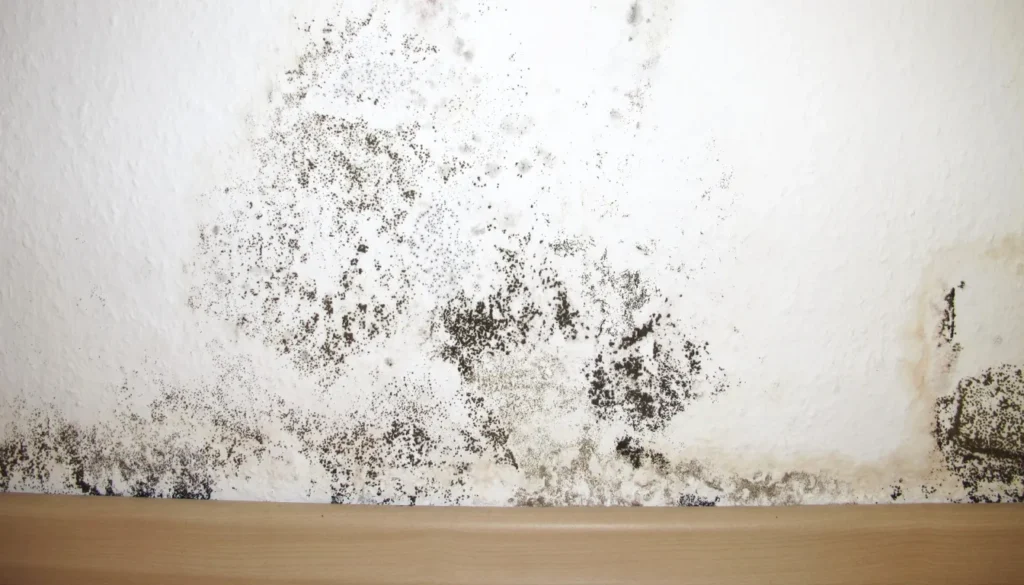
If you’ve had even one leak, roof, window, dishwasher, washing machine, ice maker, basement seepage, mold can set up shop behind surfaces that look picture-perfect from the outside.
Common hiding spots:
Behind drywall and insulation after an old leak “dried out.”
Inside wall cavities around electrical outlets and light switches.
Under flooring or behind baseboards near exterior doors.
On the surface? Everything looks fine. Fresh paint. No stains. No smell.
Behind the wall? Wet drywall, decaying framing, and mold using your house as an all-you-can-eat buffet.
So if you’re staring at a clean-looking wall thinking, It looks fine, so it must be fine, that’s exactly how black mold gets a head start.
You hire an inspector, they walk around for 45 minutes, take a couple of air samples, and hand you a report that basically says, “You’re good.”
It feels reassuring… until your symptoms don’t budge.
Here’s where the system often fails you:
Over-reliance on air testing.
Short air samples are like taking a single photograph and calling it a documentary. Because heavy particles settle, the worst contamination is often in dust, not the air at that one moment.
Visual-only mindset.
Some inspectors only flag what they can see: stains, bubbling paint, obvious growth. Hidden moisture, wall cavities, and past leaks can get ignored.
Passing an inspection ≠ being mold-free.
A report that says “within normal limits” doesn’t mean your body is safe in that space. It just means the specific methods they used didn’t catch anything dramatic.
People and training vary wildly.
Two inspectors in the same house can reach very different conclusions depending on experience, tools, and whether they understand mold illness.
You’re not wrong if you feel like you’re losing your mind when the report says “fine” but your body says “absolutely not.” That mismatch is common, especially for folks with Lyme, mast cell issues, or heightened sensitivity.
Forget the nose for a second.
Your body often gives you more reliable information than the air in your living room.
Red flags that should make you at least consider mold, even with no odor:
You feel noticeably better when you’re away.
A weekend with family, a work trip, even a random hotel stay, and suddenly your head clears a bit, pain eases, or sleep is deeper. Then you go home and slide backward.
You have chronic, unexplained symptoms.
Multiple diagnoses that don’t quite fit, or “all your labs are normal” while you feel anything but. Mold isn’t always the cause, but it’s often ignored.
There’s a history of water damage.
Leaks, flooding, roof issues, basement dampness, recurring “mildew” on walls or window sills, all are big clues, smell or no smell.
Indoor humidity runs high.
Consistently above ~50–55% indoors (especially in basements or bathrooms) creates prime mold conditions. You can check this with a cheap hygrometer from a hardware store.
If you’re checking a mental box right now, Yep, that’s me, you’re not being paranoid for wanting deeper answers.
Have Mold Illness or suspect you do?
We have helped thousands of people in Colorado, Oregon, Wyoming, New Jersey, Pennsylvania, Texas, and Wisconsin restore their health and quality of life by diagnosing and treating their Mold Illness.
Mold doesn’t act like a simple allergy for many people, especially if you also have Lyme or chronic infections.
Everyone’s different, but these symptoms pop up a lot in mold-exposed patients:
Crushing fatigue that sleep doesn’t fix.
Brain fog, losing words, trouble focusing, feeling like you’re thinking through mud.
Headaches or migraines, often triggered by being in certain rooms or buildings.
Chronic pain, muscle aches, nerve pain, weird tingling or burning.
Heightened sensitivity to light, sound, chemicals, or fragrances.
These aren’t diagnoses: they’re patterns.
Many people only connect the dots backward. They move out, remediate, or finally address mold… and months later, they look back and think, Wow, I didn’t realize how sick that environment was making me.
If this is hitting close to home, it doesn’t mean mold is the sole root cause. But it absolutely deserves a spot on your investigation list.
More than the typical sluggishness and fatigue, some symptoms can be neurological. Find out the difference in our Neurological Symptoms of Mold Exposure guide.
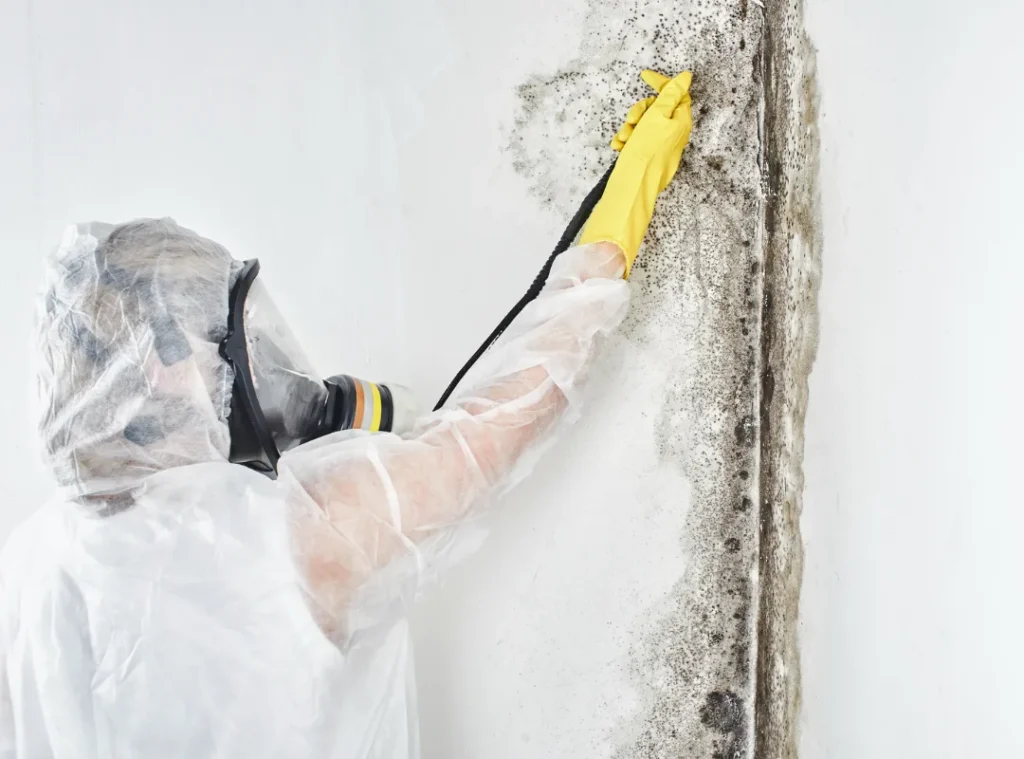
If your nose and a quick air test aren’t enough, what actually helps?
Think of mold assessment as gathering multiple clues, not hunting for one magic number.
Better tools and approaches include:
Dust-based testing.
Because heavy particles settle, analyzing dust (ERMI, HERTSMI-2, or other dust PCR tests) can give a clearer picture of what’s been in your air over time.
Targeted surface sampling.
Instead of random swabs, good inspectors sample suspicious areas, around prior leaks, under sinks, in HVAC components, and interpret results in context.
Moisture mapping and infrared cameras.
These help find hidden dampness behind walls, under floors, or around windows, even when surfaces look fine.
Context over single snapshots.
A good professional asks about your health history, building history, past leaks, and where you feel worst. They don’t just hand you numbers: they help you understand what those numbers mean for you.
Testing isn’t about proving you’re “not crazy.” It’s about getting enough information to make safer, smarter decisions with your time, energy, and money.
If your gut is waving a red flag, here’s a grounded way to move forward, without panicking or burning everything you own.
Stop using your nose as the judge and jury.
The absence of a musty odor doesn’t clear your home. Treat smell as one clue, nothing more.
Document history and patterns.
Write down leaks, water issues, damp rooms, and when your symptoms flare or ease. This becomes gold for any inspector or clinician you work with.
Consider proper environmental testing.
Look for an inspector experienced with mold illness, not just real estate transactions. Ask what tools they use (dust testing, moisture mapping, targeted sampling) and how they interpret results.
Loop in a mold-literate clinician.
A clinic like My Lyme Doc, or another provider familiar with both Lyme and environmental illness, can help you sort out whether mold is a major driver for your body or just one piece of a bigger puzzle.
Use results to guide next steps.
That might mean focused remediation, trial time away from the environment, or more medical work-up. There’s no one-size-fits-all path, and that’s okay.
You don’t have to figure everything out this week. You just need to move from “I have no idea what’s going on” toward “I’m collecting real information and making informed choices.” That shift alone is powerful.
Have Mold Illness or suspect you do?
We have helped thousands of people in Colorado, Oregon, Wyoming, New Jersey, Pennsylvania, Texas, and Wisconsin restore their health and quality of life by diagnosing and treating their Mold Illness.
If your brain is full right now, here’s the distilled version you can screenshot:
Smell is unreliable.
You can sometimes smell black mold, but many serious mold problems have little to no odor.
The most dangerous growth is often hidden.
Behind walls, under floors, around old leaks, and in dust where heavy particles settle.
Standard inspections can miss real exposure.
Quick visual checks and short air samples don’t tell the whole story, especially for sensitive or chronically ill people.
Your body’s patterns matter.
Feeling better away from home, weird chronic symptoms, and a history of water damage are all big, flashing clues.
Testing offers clarity that scent never will.
Thoughtful environmental assessment, plus a mold-literate clinician, can turn vague fear into a concrete plan.
If you walk away with one thing, let it be this: “I don’t smell mold” is not a clean bill of health. You deserve better evidence than that.
All of this is meant for education, not diagnosis or treatment.
If you’re dealing with persistent symptoms, suspected mold exposure, or complex illness like Lyme disease, please work with a qualified healthcare professional who understands your specific situation.
Don’t stop or change medications, remediation plans, or medical care based solely on what you read online, including this article.
Use this information as a starting point for better questions and more informed conversations with your providers, not as a substitute for them.
Dapsone is an older sulfa-type antibiotic originally approved for leprosy and certain autoimmune skin conditions. Some Lyme-literate doctors now use it off-label for chronic Lyme disease because lab studies suggest it may help target “persister” or dormant forms of Borrelia when combined with other medications and a broader treatment plan.
Some patients report short-term improvements in fatigue, brain fog, and pain on dapsone-based protocols, but relapse at 6–12 months is not uncommon. Outcomes are often temporary if deeper issues—like mold exposure, coinfections, immune dysregulation, and mitochondrial damage—aren’t addressed alongside antimicrobial treatment and comprehensive support.
Dapsone can cause nausea, headaches, rashes, and unusual fatigue, but its most serious risks include hemolytic anemia, methemoglobinemia (reduced oxygen-carrying capacity), liver stress, and rare severe skin reactions like Stevens–Johnson syndrome. Because of these dangers, patients need G6PD screening, regular bloodwork, and close supervision by a qualified clinician.
Yes. Many integrative clinicians use combinations of other antibiotics, herbal antimicrobials (such as Japanese knotweed, cat’s claw, and cryptolepis), biofilm disruptors, detox and drainage support, mold remediation, mitochondrial nutrients, and nervous system therapies. These approaches often aim to reduce microbial load while strengthening immune, gut, and detox systems to support more durable recovery.
Dapsone is usually considered only in select, treatment-experienced patients with long-standing Lyme and suspected persister or biofilm-heavy infections. A Lyme-literate provider should review your full history, prior treatments, coinfections, mold exposure, G6PD status, lab results, and overall resilience, then discuss risks, monitoring plans, and alternatives before deciding if it’s appropriate.
Gorna-Binkul, L., & Hitchmough, J. (2010). Visually observed mold and moldy odor versus quantitatively measured microbial exposure in homes. Science of the Total Environment, 408(22), 5565–5574. https://doi.org/10.1016/j.scitotenv.2010.07.090
Hänninen, O. O., et al. (2025). The validity and accuracy of self-reported measures in assessing indoor mould exposure. Journal of Building Engineering, 102, 111932. https://doi.org/10.1016/j.jobe.2025.111932
Pitkäranta, M., et al. (2018). Comparison of indoor air sampling and dust collection methods for fungal exposure assessment. Environmental Health, 17(21). https://www.ncbi.nlm.nih.gov/pmc/articles/PMC5884110/
Connecticut Department of Public Health. (n.d.). Mold, damp indoor environments, & health effects [Fact sheet]. https://portal.ct.gov/-/media/Departments-and-Agencies/DPH/dph/environmental_health/eoha/pdf/MoldClinicianIndexCardpdf.pdf
Liu, X., Sun, X., Wang, X., Xu, J., & Zang, S. (2025). Association between indoor musty odors and cognitive impairment among older adults. Scientific Reports, 15, 31943. https://doi.org/10.1038/s41598-025-12000-y
U.S. Environmental Protection Agency. (2025, September 25). What does mold smell like? EPA. https://www.epa.gov/mold/what-does-mold-smell
We have helped thousands of
people restore their health
and quality of life by diagnosing
and treating their Lyme Disease.
“Dr. Mueller’s approach to medicine is refreshing! There is only so much you can do with western medicine and in my life I was needing a new approach. By addressing the whole body, nutritional diet factors, environmental factors, blood work, and incorporating ideas I had not previously known, I was able to break through with my conditions. I am not only experiencing less pain in my life, but through the process of healing guided by Dr. Diane Mueller, I am now happy to say I have more consciousness surrounding how I eat, what to eat and when things are appropriate. Living by example Dr. Mueller has a vibrancy that makes you want to learn and know more about your body and overall health. I highly recommend her to anyone looking for new answers, a new approach to health, or in need of freedom from pain and limitations.”
-Storie S.
Kihei, HI
We have helped thousands of people restore their health and quality of life by diagnosing and treating their Mold Illness.