


A lot of people first hear about Japanese knotweed for Lyme in a Facebook group at 11:47 p.m., right after googling why their joints hurt, their brain feels wrapped in cotton, and their regular labs came back “normal.” Sound familiar? It’s one of those herbs that keeps popping up for a reason. Not because it’s magic, and definitely not because one plant fixes a complex illness, but because it shows up in many root-cause protocols for inflammation, nervous system symptoms, and microbial support. If you’ve been told it’s all stress, this is the part where we slow down, get practical, and sort hype from useful clinical reality.
Japanese knotweed is commonly used in Lyme disease protocols for its anti-inflammatory, antioxidant, and possible antimicrobial properties largely due to resveratrol content.
This herb may help reduce inflammation and support nervous system symptoms like joint pain, brain fog, and sleep disruption commonly associated with Lyme disease.
Research shows Japanese knotweed acts against Lyme-causing bacteria in lab settings, but human clinical proof is not yet established.
Dosing should start low and increase slowly to avoid side effects like nausea, headaches, or Herx reactions, and it’s often combined with other treatments.
Japanese knotweed is best used as part of a comprehensive, sequenced Lyme support plan rather than a standalone cure, tailored to individual health status and root causes.
Medical supervision is important due to potential interactions with medications and possible side effects requiring prompt attention.
We have helped thousands of people in Colorado, Oregon, Wyoming, New Jersey, Pennsylvania, Texas, Wisconsin, New Hampshire, Alabama, South Dakota, and Vermont restore their health and quality of life by diagnosing and treating their Lyme Disease.
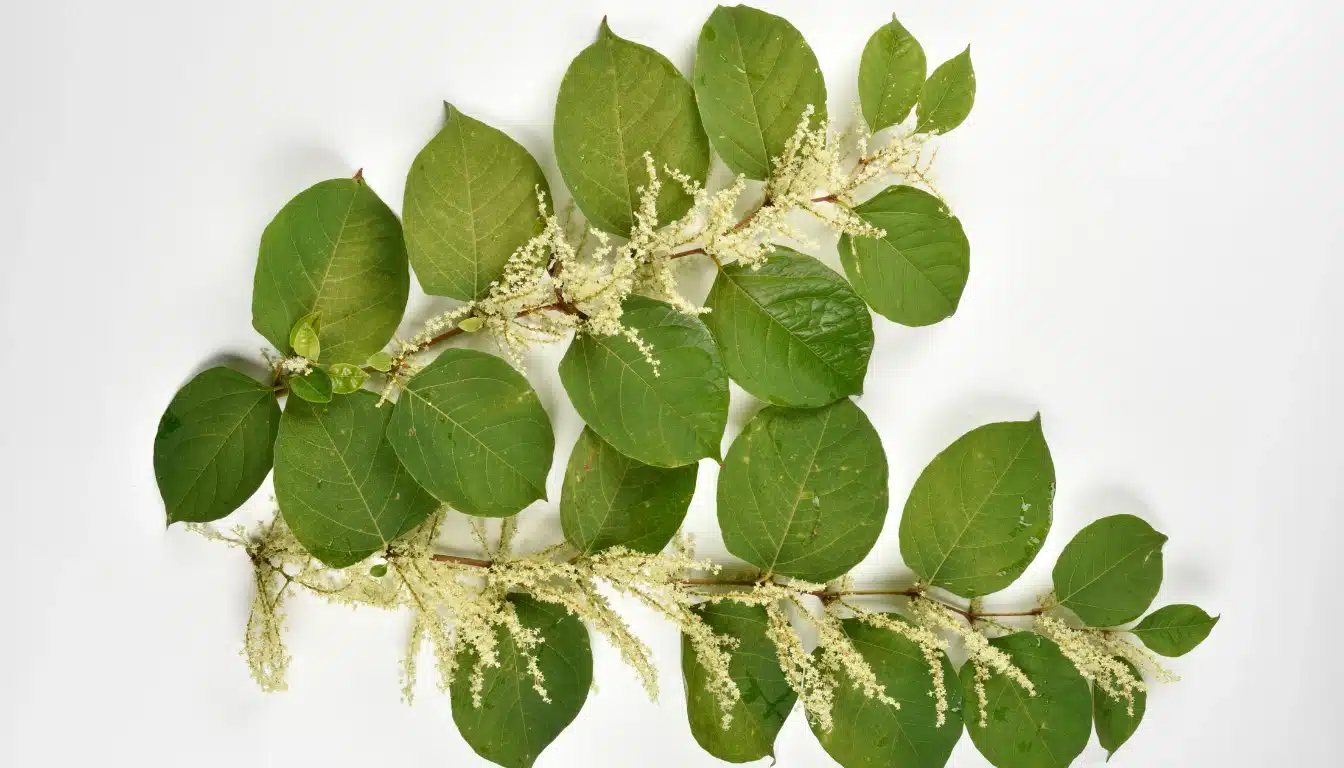
Japanese knotweed, also called Polygonum cuspidatum or Fallopia japonica, is one of the most familiar herbs in Lyme-oriented care. The short version? It contains resveratrol and other polyphenols that have drawn attention for anti-inflammatory, antioxidant, and possible antimicrobial effects.
In the Lyme world, it’s often used because people aren’t just dealing with one issue. You may have joint pain, headaches, dizziness, brain fog, sleep disruption, and that strange “I’m wired and wiped out” feeling all at once. That’s why herbs that do more than one job tend to stay in protocols.
Japanese knotweed is also a staple in many broader Lyme disease natural treatment approaches because it may support the body on several fronts at once. And among the herbs for Lyme disease, it’s usually discussed early for exactly that reason.
Clinically, it often fits best as a support herb inside a bigger plan, not as a solo hero. Sequence matters. Your gut, refresh pathways, mold exposure, co-infections, and nervous system tone all change how well you tolerate it.
This is where Japanese knotweed gets interesting.
Many patients with suspected Lyme aren’t only fighting a bug: they’re dealing with collateral damage. Inflammation gets loud. The nervous system gets twitchy. Blood flow, sleep, cognition, and recovery all seem off-kilter.
Japanese knotweed may help by calming inflammatory signaling pathways like NF-kB and reducing oxidative stress. Translation: it may help turn down some of the biochemical “fire alarm” activity that keeps symptoms flaring. For you, that can matter if your main picture is aching joints, head pressure, overstimulation, or a brain that feels like it forgot how to alphabetize.
There’s also interest in its neuroprotective effects. Some preclinical research suggests resveratrol may support brain tissue under stress and help protect the vascular lining. That matters in Lyme support because poor tissue resilience can make symptoms feel bigger, longer, and harder to recover from.
I’ve seen people describe the shift as subtle but meaningful, not fireworks, more like the room gets a little less noisy. Less pressure. Clearer thinking. Fewer “why am I crying because the grocery store has fluorescent lights?” moments.
Here’s the honest version: the research is promising, but it does not prove Japanese knotweed supports Lyme disease.
Lab studies have found that knotweed extracts show activity against Borrelia burgdorferi in test-tube settings, including forms that are harder to kill. Some early work has also suggested activity against Bartonella species. Research databases indexed through the National Library of Medicine are part of why this herb keeps getting serious attention.
But test-tube results are not the same as human outcomes. A petri dish doesn’t have your hormones, your liver, your mold exposure, your sleep debt, or your very dramatic immune system on a Tuesday.
We also have preclinical evidence for anti-inflammatory, antioxidant, vascular, and neuroprotective effects. That’s valuable. It gives us mechanism. It does not give us proof of clinical aid.
So where does that leave you? In a reasonable middle ground. Japanese knotweed may be a useful part of a thoughtful protocol, but if someone tells you one herb alone is the answer for every Lyme case, that’s a red flag. Real root-cause medicine is rarely that tidy.
We have helped thousands of people in Colorado, Oregon, Wyoming, New Jersey, Pennsylvania, Texas, Wisconsin, New Hampshire, Alabama, South Dakota, and Vermont restore their health and quality of life by diagnosing and treating their Lyme Disease.
Most people take Japanese knotweed as a tincture, capsule, tablet, or powdered root. Tinctures are popular because they’re easy to titrate drop by drop. Capsules are simpler if you hate the taste, which, fair, many people do.
There is no single universally validated Lyme dose. In practice, clinicians usually start low and build slowly. Really slowly, sometimes. Think 10–15 drops once or twice daily for a tincture, or a low capsule dose, then increase every few days to weekly based on symptoms and tolerance.
Why the slow crawl? Because if your system is inflamed, mold-reactive, constipated, under-slept, or prone to Herx reactions, jumping in fast can backfire. It’s not weakness. It’s physiology.
Japanese knotweed is often paired with other herbs, like Cryptolepis, of stronger antimicrobial support when the time is right.
My bias? Start lower than you think you need. Boring starts beat dramatic crashes.
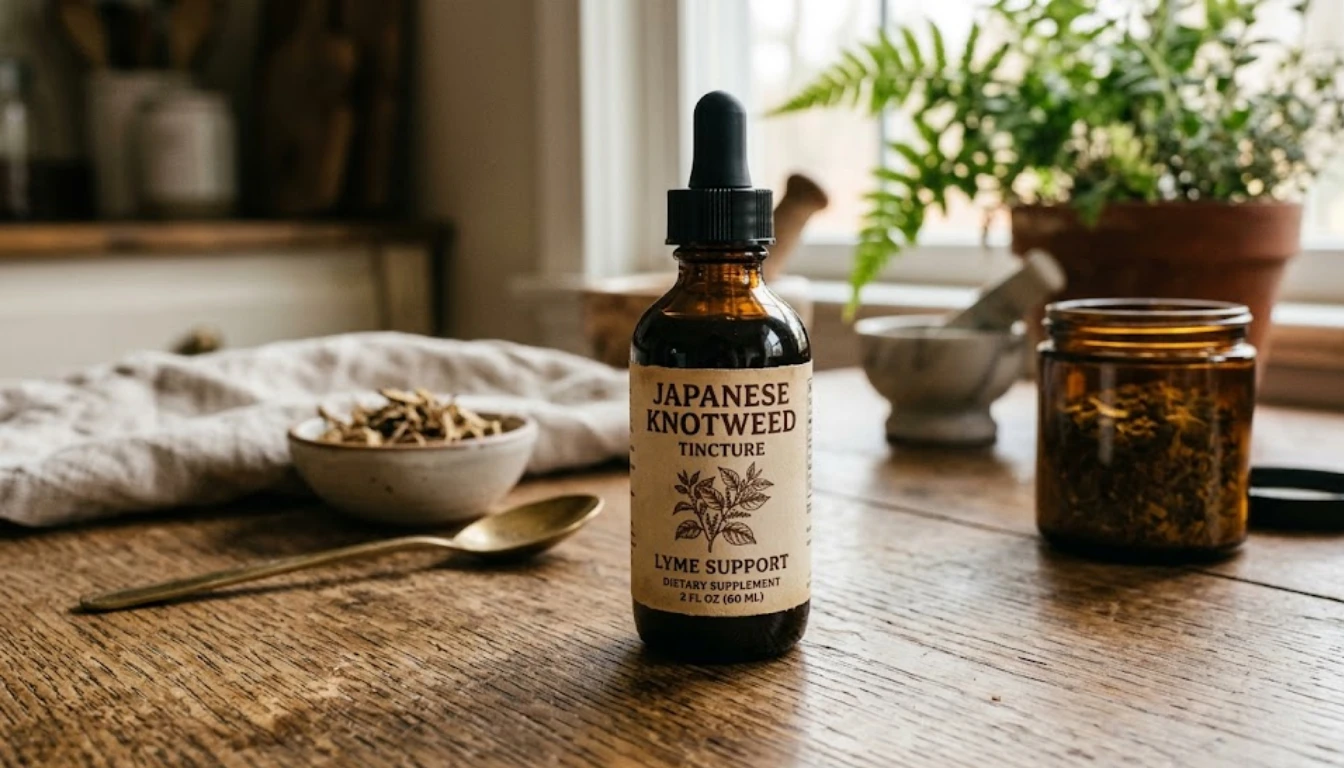
Japanese knotweed often makes the most sense for people with suspected Lyme who have a strong inflammatory or neurological picture: joint pain, headaches, nerve irritation, brain fog, light sensitivity, mood swings, or that “my body is buzzing” sensation.
It may also be considered when Bartonella is part of the picture, especially if symptoms include foot pain, irritability, vascular issues, or neurologic agitation. That doesn’t mean self-diagnose from one symptom list and sprint to your supplement cart. Still, patterns matter.
And sequence really, really matters.
If your drainage is poor, your gut is a mess, or mold is still in the home, even a good herb can feel like too much. This is one reason we talk so much about root-cause order of operations at My Lyme Doc. You don’t always start with the strongest antimicrobial. Sometimes you start by making your body safer to treat.
Exposure history matters too. People who never noticed a tick bite sometimes dismiss Lyme entirely, even though different ticks and exposures can complicate the picture.
In plain English: the right herb at the wrong time can still be the wrong move.
We have helped thousands of people in Colorado, Oregon, Wyoming, New Jersey, Pennsylvania, Texas, Wisconsin, New Hampshire, Alabama, South Dakota, and Vermont restore their health and quality of life by diagnosing and treating their Lyme Disease.
Japanese knotweed is natural. That does not mean side-effect free. Poison ivy is natural too, and nobody’s making tea from that on purpose.
The most common issues are digestive: nausea, loose stools, stomach upset. Some people report headache, dizziness, or fatigue. Others feel worse before they feel better, which gets labeled a Herx reaction. Sometimes that’s true. Sometimes it’s simply too much, too fast.
A Herx-like response may look like increased pain, fogginess, flu-ish symptoms, irritability, or more insomnia after starting or raising the dose. If that happens, back up. Lower the dose. Support hydration, bowel movements, minerals, and sleep. Heroic suffering is not a treatment strategy.
Interactions matter too. Because of its resveratrol content, Japanese knotweed may affect platelet activity or drug metabolism, so use extra caution with blood thinners, seizure medications, and other prescriptions with narrow dosing windows.
Red flags that deserve prompt medical attention: jaundice, dark urine, severe abdominal pain, unusual bruising, confusion, new weakness, trouble breathing, or a full-body rash.
If you’re already building a protocol from Top 5 Powerful options or considering Revealing the Potential of multi-herb combinations, this is where supervision matters most. Not every flare is “refresh.” Sometimes your body is waving a giant red flag.
Japanese knotweed for Lyme has a real place in integrative care, especially when inflammation, neuro symptoms, and tissue stress are front and center. But it works best inside a sequenced plan, not as a one-herb shortcut. If your case is layered, and most are, the goal isn’t to guess harder. It’s to build the right roadmap, in the right order, with someone who actually believes you.
Japanese knotweed is used in Lyme disease protocols for its anti-inflammatory, antioxidant, and antimicrobial properties, mainly due to resveratrol. It may help soothe symptoms like joint pain and brain fog by calming inflammation and supporting nervous system health within a broader treatment plan.
Japanese knotweed may reduce inflammation by inhibiting NF-kB signaling and oxidative stress, which helps ease joint pain and brain fog. Its neuroprotective effects also support brain tissue under stress, potentially improving cognition and mood in Lyme patients.
No, while laboratory studies show Japanese knotweed extracts have activity against Borrelia and Bartonella in vitro, there is no clinical evidence proving it cures Lyme disease. It is best used as part of a comprehensive and supervised treatment protocol rather than a standalone cure.
Japanese knotweed is commonly taken as a tincture, capsule, or powder, starting at a low dose such as 10–15 drops of tincture once or twice daily. The dose is slowly increased to minimize side effects and Herxheimer reactions. Professional guidance is important for safe and effective use.
People with Lyme disease experiencing strong inflammatory or neurological symptoms, such as joint pain, headaches, brain fog, or co-infections like Bartonella, may benefit most. Timing and sequence of use are important, with knotweed often introduced early to modulate inflammation before other treatments.
Side effects can include nausea, digestive upset, headache, or fatigue. Herxheimer-like reactions may occur if dosing is increased too quickly. Because of its impact on platelet activity and metabolism, caution is needed if you take blood thinners or other medications. Seek medical advice if severe symptoms or allergic reactions appear.
We have helped thousands of
people restore their health
and quality of life by diagnosing
and treating their Lyme Disease.
“Dr. Mueller’s approach to medicine is refreshing! There is only so much you can do with western medicine and in my life I was needing a new approach. By addressing the whole body, nutritional diet factors, environmental factors, blood work, and incorporating ideas I had not previously known, I was able to break through with my conditions. I am not only experiencing less pain in my life, but through the process of healing guided by Dr. Diane Mueller, I am now happy to say I have more consciousness surrounding how I eat, what to eat and when things are appropriate. Living by example Dr. Mueller has a vibrancy that makes you want to learn and know more about your body and overall health. I highly recommend her to anyone looking for new answers, a new approach to health, or in need of freedom from pain and limitations.”
-Storie S.
Kihei, HI