

Post-exertional malaise is a disabling worsening of symptoms that follows physical, mental or emotional effort, and the defining feature is that it arrives late. Not during the activity. Not right after. Most often one to two days later, and it can last hours, days, weeks or even months. In one study of recovery after a two-day exercise test, people with ME/CFS took an average of 12.7 days to return to baseline while healthy sedentary controls needed 2.1 days. That gap is the clearest evidence that this is not being out of shape. It is a different physiological response to exertion.
Most people describe two separate experiences, and confusing them is why so many patients get dismissed.
The first is ordinary tiredness. You do something hard, you feel it, you rest, you recover. Everyone knows that.
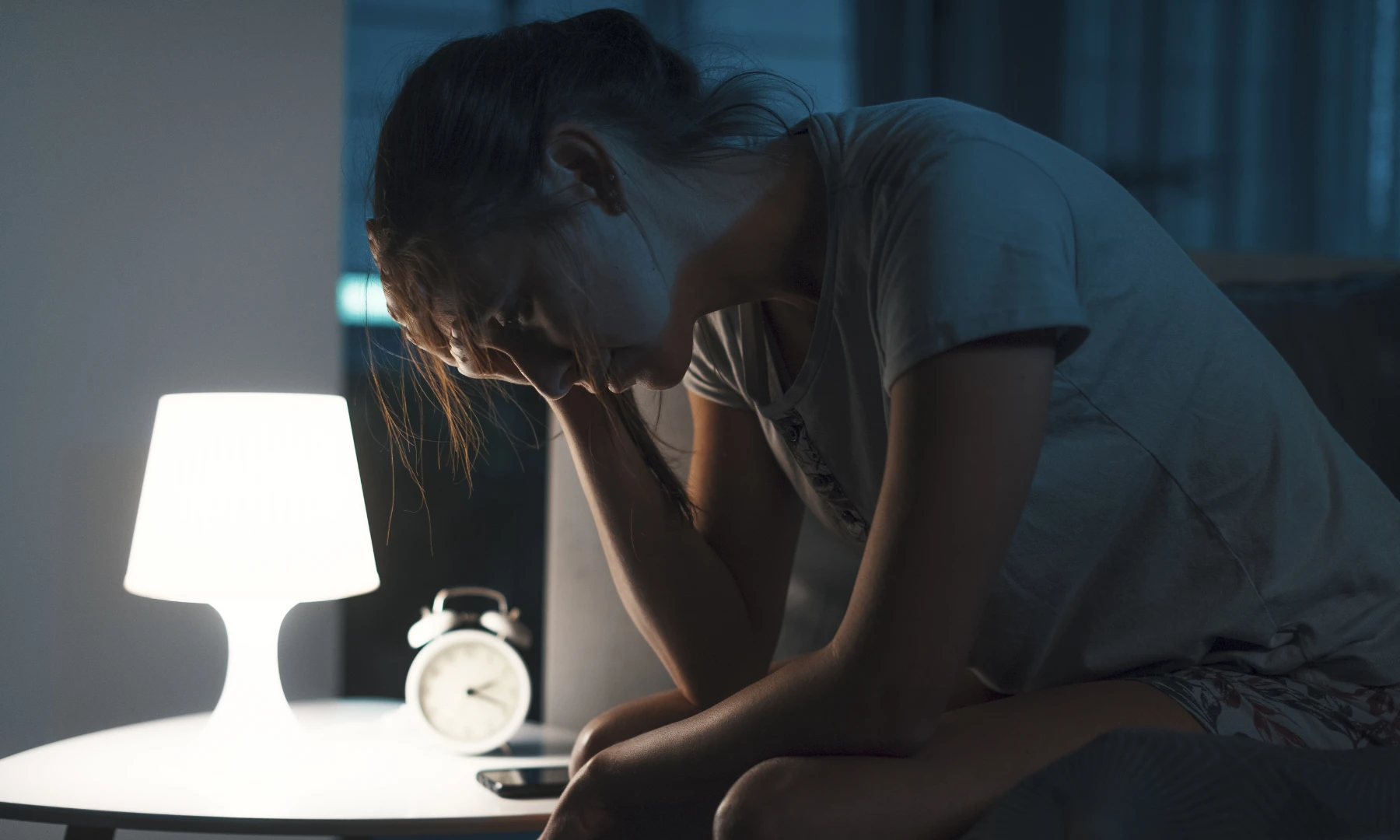
The second is PEM. You do something unremarkable on Monday. Monday feels fine, or close to it. Then Tuesday afternoon the floor drops out. Your legs feel filled with wet sand. Your brain will not assemble sentences. You are feverish without a fever, sore without an injury, and no amount of sleep touches it. By Thursday you are still not back.
Patients report a specific cluster during these episodes: fatigue, cognitive difficulty, unrefreshing sleep, pain and weakness, a heavy feeling in the body, and flu-like symptoms (Vollestad and Mengshoel, 2023). That combination, arriving late and lasting disproportionately long, is the signature.
If you have been trying to explain this to clinicians and getting nowhere, there is a reason. The delay breaks the mental model most people use for cause and effect. You are describing Tuesday’s collapse while the cause was Monday’s errand, and it does not sound connected.
This is the argument you have probably lost several times, so here is the evidence.
Researchers used a two-day cardiopulmonary exercise test, which measures how the body produces energy on consecutive days. People with ME/CFS took an average of 12.7 days to recover. Sedentary healthy controls took 2.1 days. The difference was statistically overwhelming, and roughly 7 to 8 percent of the ME/CFS group needed one to two months (Moore et al., 2023).
Deconditioned people recover in days. They also improve with training. Neither is true here.
A separate study measured symptoms after a standardized exertion. People with ME/CFS reported an average of 14 symptoms compared with 4 in controls, and in the seven days afterward the ME/CFS group was still reporting symptoms while controls reported none at all (Mateo et al., 2020).
You are not weak and you have not let yourself go. Your body is responding to exertion in a measurably different way, and the underlying reason involves how your cells generate energy. That is a bigger subject, and it has its own page: mitochondrial dysfunction in chronic illness.
The word “exertion” misleads people into thinking this is about the gym. It is not.
A study of PEM in daily life found triggers fall into three categories: physical activity, cognitive effort, and emotional moments. Household chores and social activities appeared alongside exercise, and in one survey, medium-level physical and cognitive activity together accounted for the large majority of episodes (Vollestad and Mengshoel, 2023).
In practice, that means the following can all trigger a crash:
| Trigger type | Real examples patients report |
|---|---|
| Physical | Showering, cooking a meal, a short walk, carrying groceries |
| Cognitive | A work meeting, filling out insurance forms, reading something dense |
| Emotional | A difficult family conversation, a stressful appointment, grief |
| Orthostatic | Standing in a line, sitting upright for a long visit |
| Sensory | A loud restaurant, a bright store, a long drive |
The emotional and cognitive triggers are the ones that make patients doubt themselves. It feels absurd that a phone call could cost you three days. It is not absurd. It is documented.
There is no blood test for post-exertional malaise. It is identified by pattern, which makes an unhurried history the actual diagnostic tool.
Under the 2015 Institute of Medicine criteria, PEM is required for a diagnosis of ME/CFS, alongside substantial reduction in function lasting more than six months, unrefreshing sleep, and either cognitive impairment or orthostatic intolerance. The criteria describe PEM as out of proportion to the activity and often delayed, most likely occurring one to two days afterward, with effects lasting anywhere from hours to months (NASEM).
What a careful clinician is listening for:
This is also where testing for chronic fatigue syndrome fits. Lab work does not diagnose PEM, but it identifies the drivers underneath it, which is where treatment decisions actually get made.
PEM is most associated with ME/CFS, but it shows up throughout complex chronic illness, and in this practice it is one of the most common patterns patients describe.
People with chronic Lyme disease symptoms frequently report exactly this shape: a good day followed by two bad ones, an activity ceiling that keeps dropping, and a crash that no longer maps to anything strenuous. The same is true in mold-related illness and fatigue, where exposure and exertion compound each other.
This matters for treatment. If your fatigue is driven by an ongoing infection, an unaddressed mold exposure, or both, then pacing alone will help you function but will not resolve the cause. And treatment aimed at the cause has to account for PEM, or it will trigger the very crashes it is meant to prevent.
That is the reasoning behind building the body before going after the pathogen. Most clinics reverse it, start aggressive antimicrobial treatment first, and the patient crashes hard. Dr. Mueller’s approach puts foundational work first precisely because patients with PEM cannot absorb an aggressive protocol.

Nothing here is a cure. These are the strategies that reduce crash frequency and severity while the underlying drivers are addressed.
Pacing. Staying under the exertion threshold that triggers a crash rather than pushing to the edge of capacity and paying for it. It is unglamorous and it works better than anything else available.
Learning your delay. If your crash reliably lands 36 hours out, you can plan around it. Tracking activity against symptoms for a few weeks usually reveals a consistent personal pattern.
Budgeting cognitive and emotional load, not just physical. Most people pace their walking and then spend the same energy on a three-hour family visit.
Stopping before you feel you need to. The instinct to finish the task is what converts a manageable day into a three-day crash.
Refusing graded exercise as a default. Progressive exercise programs were standard advice for years. In people with genuine PEM, pushing through the threshold reliably makes things worse.
Treating what is driving it. Pacing manages the symptom. Finding the infection, the exposure or the physiological driver is what changes the ceiling. That is the work of a full chronic fatigue and pain evaluation.
No. Ordinary tiredness is proportionate and resolves with rest. PEM is disproportionate, delayed by roughly one to two days, and can last from hours to months. The delay and the disproportion are what separate them.
It varies widely. Controlled testing found an average recovery of about 12.7 days after a two-day exercise test, with a range from 1 to 64 days, and a small proportion needing one to two months (Moore et al., 2023). Everyday crashes are usually shorter than a laboratory exertion.
Yes. PEM is required for an ME/CFS diagnosis but is not exclusive to it. It appears in chronic Lyme disease, mold-related illness, dysautonomia and other complex chronic conditions.
Not in the way it works for deconditioning. In people with genuine PEM, exertion past the threshold triggers the crash rather than building capacity. Gentle movement within your limits is different from a progressive exercise program.
The delay obscures the connection, and PEM cannot be measured with a standard blood test. It requires a clinician who takes a long history and knows the pattern.
It can improve substantially when an active driver is found and addressed, but the response varies by person and by how long the illness has been present. Nobody can honestly promise resolution.
Every source below was checked against the specific claim it supports.
Written and medically reviewed by Dr. Diane Mueller, ND, LAc, DAOM. Dr. Mueller is a naturopathic doctor and licensed acupuncturist who has worked with more than 1,000 patients across the six states where she is licensed. Most arrive having seen twenty or more specialists. Read more about Dr. Mueller.
Last reviewed: August 21, 2026
If you are living with this pattern and want a full evaluation of what is driving it, you can book an initial visit.
This page is for general educational purposes and is not medical advice. It does not create a doctor and patient relationship, and it is not a substitute for diagnosis or treatment from your own clinician. Always talk with a qualified healthcare provider before starting, stopping, or changing any treatment. If you are experiencing a medical emergency, call 911 or go to the nearest emergency room.
We have helped thousands of people in Colorado, Wyoming, New Jersey, Pennsylvania, Texas, Wisconsin restore their health and quality of life by diagnosing and treating their Lyme Disease.
We have helped thousands of
people restore their health
and quality of life by diagnosing
and treating their Lyme Disease.
“Dr. Mueller’s approach to medicine is refreshing! There is only so much you can do with western medicine and in my life I was needing a new approach. By addressing the whole body, nutritional diet factors, environmental factors, blood work, and incorporating ideas I had not previously known, I was able to break through with my conditions. I am not only experiencing less pain in my life, but through the process of healing guided by Dr. Diane Mueller, I am now happy to say I have more consciousness surrounding how I eat, what to eat and when things are appropriate. Living by example Dr. Mueller has a vibrancy that makes you want to learn and know more about your body and overall health. I highly recommend her to anyone looking for new answers, a new approach to health, or in need of freedom from pain and limitations.”
-Storie S.
Kihei, HI