

One of the hardest parts of Bartonella is that it rarely walks in wearing a name tag. It shows up as anxiety that came out of nowhere, shin pain at 2 a.m., a fried nervous system, weird gut issues, hormone chaos, and then someone tells you your labs are “fine.” I’ve seen that story over and over. If you’ve been circling diagnoses, collecting supplements like they’re Pokémon, and still feeling awful, there’s a reason. Bartonella treatment works best when you stop chasing single symptoms and start looking at the whole pattern. That’s where things finally begin to make sense.
Bartonella treatment is most effective when addressing the entire pattern of symptoms rather than isolated issues.
The infection often masquerades as varied symptoms like anxiety, pain, and gut problems, making it hard to diagnose with standard tests alone.
A thorough Bartonella evaluation includes detailed history, symptom patterns, and comprehensive lab work to identify co-infections and body system disruptions.
Treatment sequence is critical; supporting the body’s detox and repair systems before starting antimicrobials improves tolerance and outcomes.
Bartonella treatment may involve antibiotics, herbal remedies, and nervous system care to manage symptoms and improve recovery.
Flare-ups or Herxheimer reactions during treatment signal the body’s response to die-off and should be managed carefully, not seen as failure.
We have helped thousands of people in Colorado, Oregon, Wyoming, New Jersey, Pennsylvania, Texas, and Wisconsin restore their health and quality of life by diagnosing and treating their Lyme Disease.
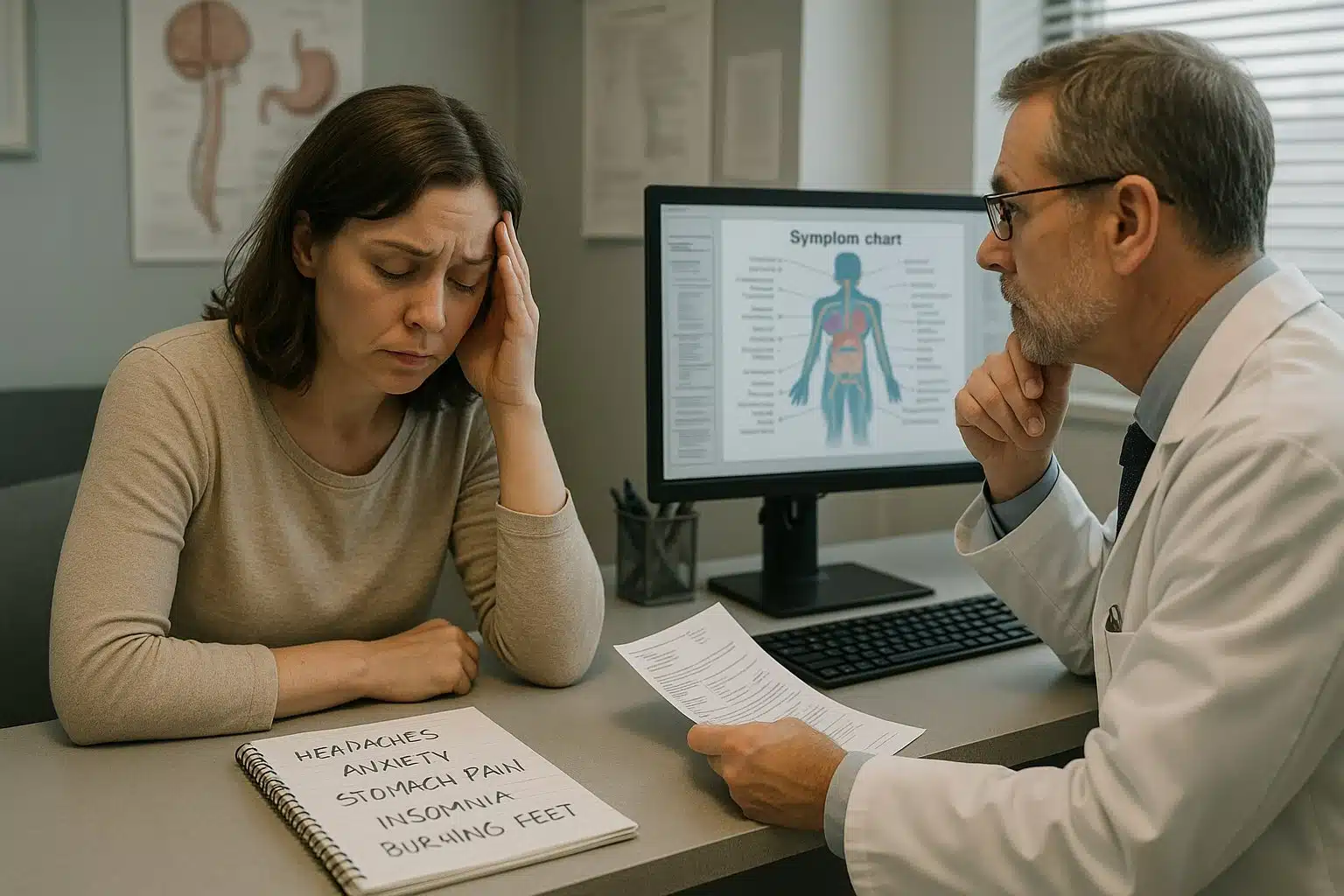
Bartonella is easy to miss because it doesn’t always look dramatic. Sometimes it looks like panic attacks, burning feet, migraines, rib pain, gastritis, insomnia, or rage that feels wildly out of character. Sometimes it looks like all of them.
That symptom scatter is exactly why people get bounced from doctor to doctor. Neurology looks at the headaches. GI looks at the bloating. Psychiatry gets handed the anxiety. But the thread tying it together never gets pulled.
Bartonella can also overlap with Lyme, Babesia, mold illness, and chronic inflammatory patterns. If you’re dealing with bartonella symptoms on top of mold or Lyme, the picture gets noisy fast. And when Bartonella and Lyme travel together, symptoms often hit harder, especially in the brain and nervous system.
Testing doesn’t make this easier. Serology can miss cases. PCR has limits. Clinical pattern recognition still matters, a lot. That’s not guesswork. It’s what complex chronic illness often requires.
This infection tends to behave like a system disruptor.
In the nervous system, you might feel wired and tired at the same time. Adrenaline surges. Internal buzzing. Light sensitivity. Poor sleep even when you’re exhausted. Some people describe it as feeling like their body forgot how to downshift.
Then the gut joins the party, because of course it does. Nausea, abdominal pain, constipation, loose stools, food reactivity. Not glamorous, but very real.
Hormones can get pulled in next. Irregular cycles, PMS flares, low stress tolerance, thyroid-looking symptoms with “normal” basic labs. And skin clues matter too. A strange Bartonella rash or stretch-mark-like streaking can be a useful breadcrumb.
Even mainstream overviews like this Bartonellosis summary note that Bartonella can affect far more than one body system.
That’s the key point: if your symptoms seem unrelated, they may not be unrelated at all.
A good evaluation goes way beyond “Do you have a positive test?”
First, your history matters. Tick exposure, cat scratches, fleas, mold exposure, old “mystery” illnesses, travel, sudden psychiatric shifts, medication sensitivity, symptom flares after antimicrobials, those details are gold. Tiny clues, big pattern.
Then comes systems review. Not just infection, but immune function, refresh capacity, sleep, gut health, hormone balance, and nervous system state. If your body is already inflamed and overloaded, treatment can feel rougher than it needs to.
Labs may include Bartonella testing, broader vector-borne panels, inflammatory markers, liver support markers, nutrient status, and coinfection workups. Our guide on Bartonella and Lyme Co-infections helps patients understand why the picture gets so layered.
At My Lyme Doc, this kind of root-cause medicine matters because one infection is rarely the whole story. The question isn’t only “Is Bartonella present?” It’s “What terrain is letting it keep winning?”
We have helped thousands of people in Colorado, Oregon, Wyoming, New Jersey, Pennsylvania, Texas, and Wisconsin restore their health and quality of life by diagnosing and treating their Lyme Disease.
Here’s where people get into trouble: they start killing before the body can handle cleanup.
Sequence matters. A lot.
If your refresh pathways are sluggish, your gut is inflamed, your sleep is wrecked, and your nervous system is stuck in fight-or-flight, jumping straight into aggressive Bartonella treatment can create a miserable spiral. You feel worse, assume the treatment is wrong, quit too early, then lose hope. I hate that cycle.
For some people, the first steps are support: bowel regularity, binders when appropriate, hydration, minerals, liver support, steady meals, better sleep, less nervous system chaos. Not sexy. Very effective.
Then antimicrobial work lands better.
This is also why protocols borrowed from a friend or Facebook group can backfire. Your order of operations depends on coinfections, mold burden, medication tolerance, and symptom intensity. There isn’t one perfect plan. There is a smart sequence.
And honestly, that’s often what separates progress from expensive headaches down the road.

For many cases, Bartonella treatment includes antibiotics, but not always in the same form, dose, or timing. More serious presentations may need combination therapy, while uncomplicated cases can look very different. If Lyme is also active, discussions around antibiotic treatment for Lyme become part of the broader strategy.
Herbal support can also have a role. Some clinicians use plant-based antimicrobials alongside or after pharmaceuticals, especially when patients are sensitive or need a slower ramp. The key is being honest about the evidence: herbs can be useful, but they’re not a casual substitute for appropriate care in severe disease.
And then there’s the part too many protocols skip, nervous system care. If your body is locked in survival mode, treatment tends to feel louder. Breathwork, limbic system retraining, trauma-informed support, sleep repair, pacing, and reducing overstimulation can change tolerance dramatically.
It’s not “all in your head.” It’s in your nervous system. That’s biology, not blame.
A flare doesn’t automatically mean failure.
Sometimes it means your body is reacting to microbial die-off, inflammation, or a treatment pace that’s too fast for your current reserves. Sometimes it means coinfections are still active. Sometimes it means you’re stirring up an already overloaded system. Annoying answer? Yes. True answer? Also yes.
A Herx reaction usually feels like a temporary intensification of existing symptoms, more fatigue, more pain, more irritability, more brain fog. But new or severe symptoms always deserve a closer look. Don’t just white-knuckle it because someone online said suffering is proof it’s working. That logic has derailed plenty of recoveries.
Slow progress can still be real progress. Bartonella often affects the endothelium, immune signaling, and the nervous system. Those tissues don’t always bounce back on a neat timeline.
When patients need context around layered antimicrobial care, I often point them to Effective Antibiotic Treatments for because it helps frame why personalization matters.
The goal isn’t heroic misery. It’s steady forward motion.
If you’ve felt dismissed, confused, or stuck, you’re not crazy, and you’re not failing Bartonella treatment. The bigger issue is usually sequence, complexity, and missing root causes. With the right roadmap, real recovery becomes far more possible. Not overnight. But step by step, system by system, your body can stop spinning and start healing.
We have helped thousands of people in Colorado, Oregon, Wyoming, New Jersey, Pennsylvania, Texas, and Wisconsin restore their health and quality of life by diagnosing and treating their Lyme Disease.
Bartonella is hard to diagnose because its symptoms mimic anxiety, pain, gut issues, and hormone imbalances. Testing methods like serology and PCR often miss cases, so recognizing the overall symptom pattern rather than isolated signs is essential for effective treatment.
Bartonella often occurs with Lyme disease, causing more severe neurological and psychiatric symptoms. Treating these co-infections requires tailored antibiotic regimens and careful sequencing to address each infection and reduce symptom flare-ups effectively.
Starting aggressive Bartonella treatment before the body is ready can worsen symptoms. Prioritizing gut health, liver support, sleep, and nervous system balance helps the body tolerate antimicrobials better, leading to more successful and tolerable treatment outcomes.
Treatment often includes antibiotics like doxycycline and rifampin for serious cases, sometimes combined with herbal antimicrobials as supportive care. Nervous system therapies such as breathwork and sleep repair also improve treatment tolerance and recovery.
Yes, symptom flares or Herx reactions may happen as bacteria die off, causing temporary worsening. These reactions are not treatment failures but require monitoring to ensure new or severe symptoms receive proper evaluation.
Bartonella disrupts multiple systems, causing neurological symptoms like brain fog and headaches, gut issues such as nausea and constipation, hormonal imbalances, and skin signs like rash or stretch-mark-like streaks. Recognizing these helps guide comprehensive treatment.
We have helped thousands of
people restore their health
and quality of life by diagnosing
and treating their Lyme Disease.
“Dr. Mueller’s approach to medicine is refreshing! There is only so much you can do with western medicine and in my life I was needing a new approach. By addressing the whole body, nutritional diet factors, environmental factors, blood work, and incorporating ideas I had not previously known, I was able to break through with my conditions. I am not only experiencing less pain in my life, but through the process of healing guided by Dr. Diane Mueller, I am now happy to say I have more consciousness surrounding how I eat, what to eat and when things are appropriate. Living by example Dr. Mueller has a vibrancy that makes you want to learn and know more about your body and overall health. I highly recommend her to anyone looking for new answers, a new approach to health, or in need of freedom from pain and limitations.”
-Storie S.
Kihei, HI