Written and medically reviewed by Dr. Diane Mueller, ND, DAOM, LAc, founder of MyLymeDoc. Last reviewed August 28, 2026.
Most people buying a home mold test kit are not really asking which kit is best. They are asking whether something in their house is making them ill. Before spending money on one, there is a fact worth knowing that almost no product review mentions: there is no standard to compare your result against. The Environmental Protection Agency states that “standards or Threshold Limit Values (TLVs) for airborne concentrations of mold, or mold spores, have not been set,” and that “currently, there are no EPA regulations or standards for airborne mold contaminants.” A kit can return a number. Nothing official defines what number is a problem.
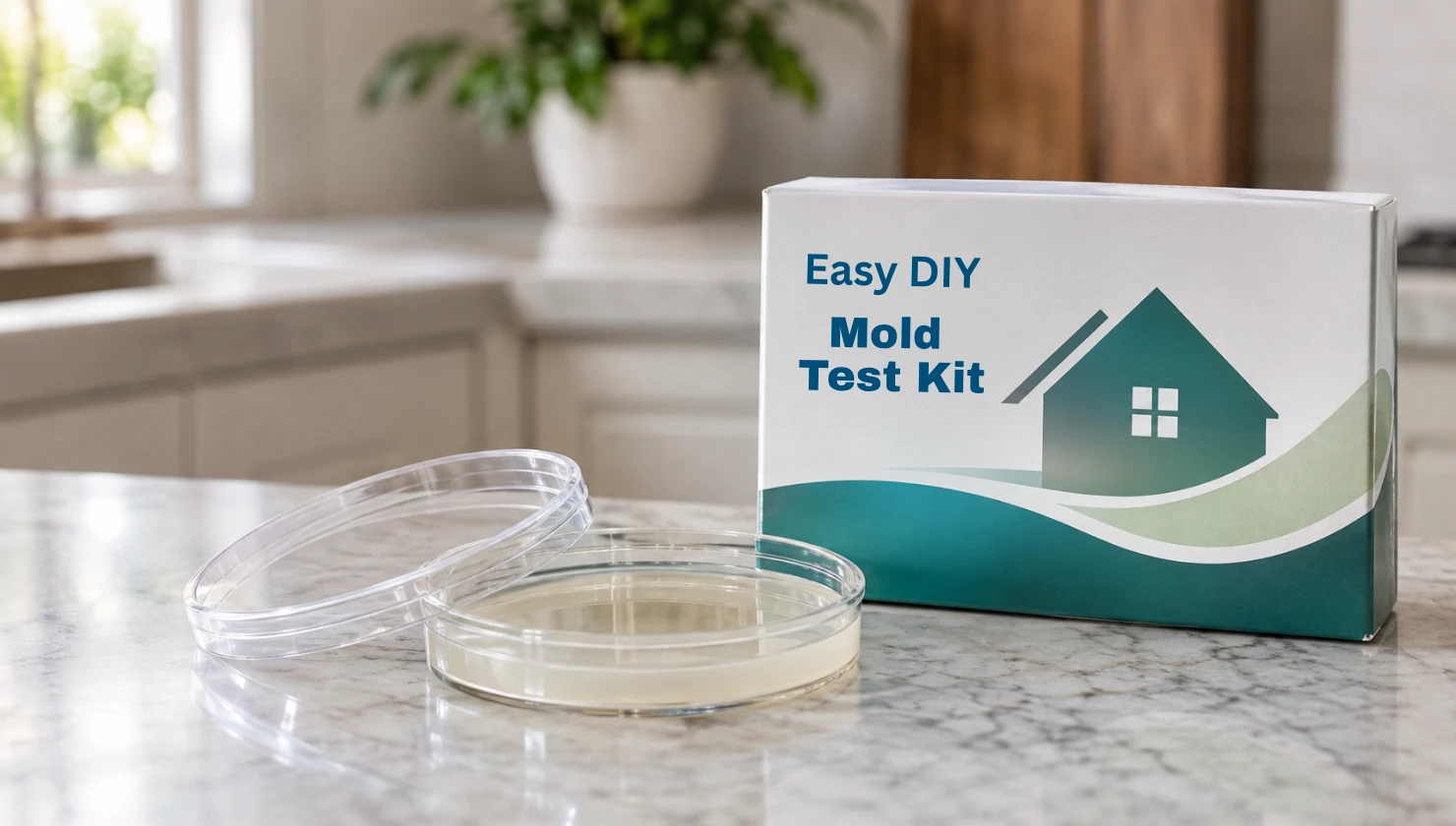
A home mold test kit can reliably tell you one thing: that mold spores are present. It is much weaker at telling you whether the amount is unusual, whether it explains how you feel, or where the growth is coming from.
We do not sell mold test kits and we do not sell inspections, which makes that easier to say plainly.
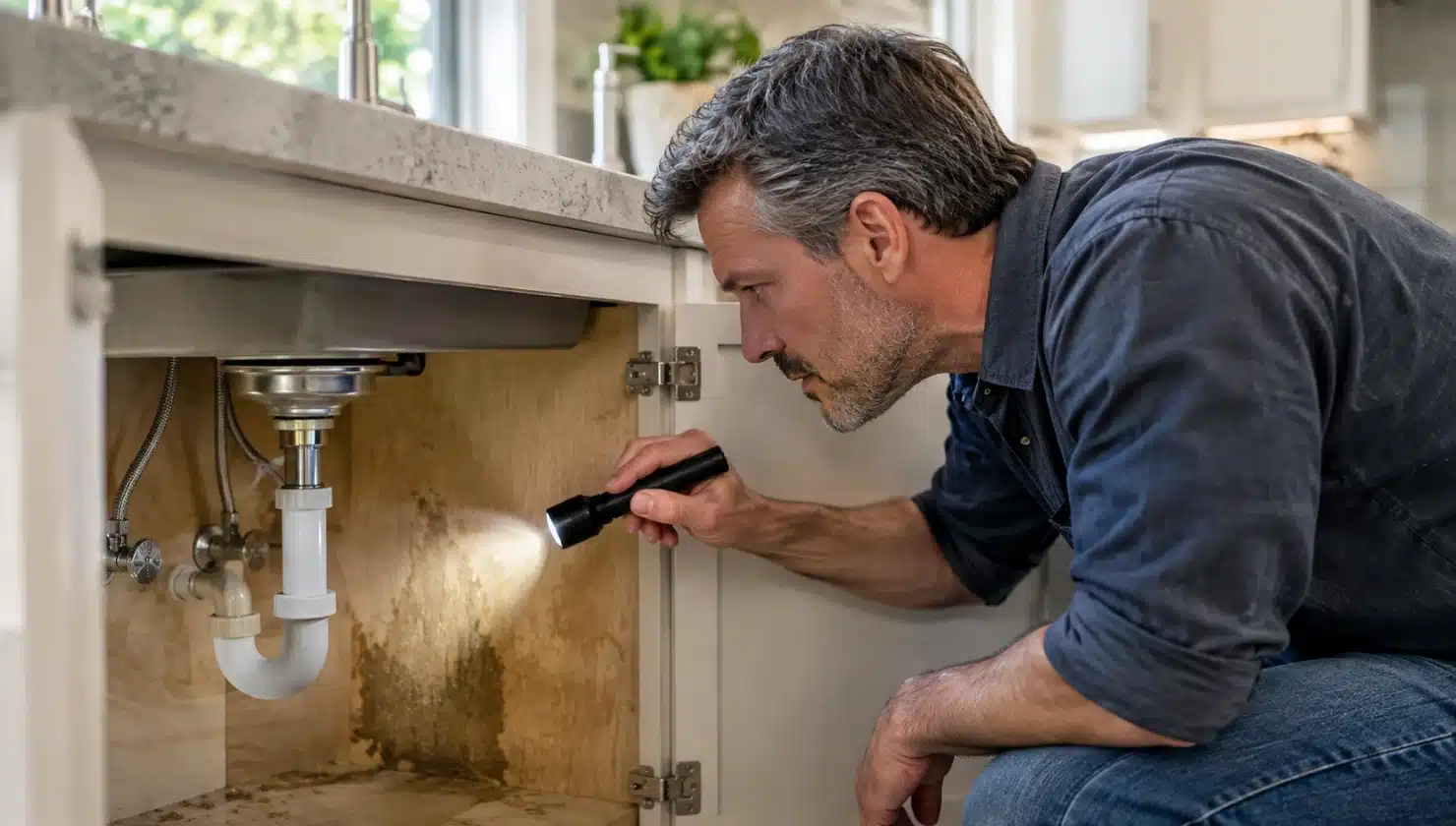
The EPA’s own guidance is blunt about the most common situation: “In most cases, if visible mold growth is present, sampling is unnecessary.” If you can see it, you already have the finding. The next step is fixing the moisture, not quantifying the spores.
If you can already see growth, what black mold looks like covers why appearance still will not tell you whether it is dangerous. Where a kit has more value is the opposite case, when you suspect a problem you cannot see. Even then the result needs careful reading, for the reasons below.
Threshold Limit Value (TLV) is the exposure level at which a substance is considered a concern. For airborne mold, no such value exists.
This is the part that reframes the whole product category.
The EPA states that “standards or Threshold Limit Values (TLVs) for airborne concentrations of mold, or mold spores, have not been set.” It adds that there are “no EPA regulations or standards for airborne mold contaminants.” Sampling therefore “cannot be used to check a building’s compliance with federal mold standards,” because there are none to comply with.
So when a report comes back with a spore count, there is no official line that separates normal from harmful. Any interpretation offered alongside that number is the testing company’s judgment, not a regulatory threshold.
That does not make testing worthless. It does mean a confident-looking number deserves less weight than most people give it.
| Kit type | What it measures | Viable or non-viable | Answers “is it growing here?” | Answers “is it affecting me?” | Main limitation |
|---|---|---|---|---|---|
| Petri dish / settle plate | What grows on a dish left open in a room | Viable only | Weakly | No | Shows what is culturable, not what is airborne in normal conditions. Something will usually grow. |
| Air sampling with laboratory analysis | Spore concentration and types in a sampled volume of air | Usually non-viable count | Yes, for that moment | No | Snapshot of one spot in time. No official threshold to compare against. |
| Surface / tape lift | What is on a specific surface | Non-viable | Yes, for that surface | No | Confirms one surface, tells you nothing about the rest of the building |
| Dust-based indices such as ERMI or HERTSMI | Mold DNA in settled dust | Neither, DNA based | Partly, as a history | No | Developed as a research tool, and interpretation is contested |
Viable sampling grows what it captures, so it only detects organisms still alive. Non-viable sampling counts spores whether alive or dead. Neither measures mycotoxins, which is a separate analysis again.
The EPA does note one clear use: “surface sampling may be useful to determine if an area has been adequately cleaned or remediated.” Testing after remediation to confirm the work is a defensible use. Testing to decide whether you are ill is a much weaker one.
There is more on the dust-based approach on ERMI testing.
Mold spores are not unusual. They are normal.
The EPA puts it directly. Spores “float through outdoor and indoor air.” It adds that “it is impossible to get rid of all mold and mold spores indoors; some mold spores will be found floating through the air and in house dust.”
Which means a test that detects mold spores has detected a condition present in essentially every building. A false positive here is not a laboratory error, it is the expected result of measuring something that is always there. A petri dish left open in a clean home will usually grow something. That is not evidence of a problem, and it is a common reason people spend money on remediation they may not need.
It is worth knowing what the result does not establish. The EPA also notes that “black mold” is not a species and neither is “toxic mold,” so a kit that promises to tell you whether you have “toxic mold” is promising something the category does not support. There is more on that in what black mold actually looks like.
Here is the distinction that gets lost.
Testing your house asks: is there mold here. Testing you asks: is my body responding to something. Those are different questions, and people who are unwell usually want the second one answered while buying a product that addresses the first.
Two people in the same house with the same exposure can have completely different responses. The building result is identical. The health picture is not. So a spore count cannot tell you whether you are among the people affected.
Think about fatigue, brain fog, or sinus problems that began after moving somewhere. In that situation the more informative work looks at you rather than the wall. That is what mold toxicity testing covers.
The symptom pattern itself, and how it differs from ordinary allergy, is on black mold symptoms.
None of that replaces fixing the building. If there is water, deal with it. How to fix a mold problem covers that side.
They can detect mold spores. The harder problem is interpretation, because the EPA has set no threshold limits for airborne mold, so there is no official benchmark for what a given result means.
We do not recommend a specific product. The type matters more than the brand, and what matters most is whether the result will change what you do next.
No. The EPA states that “black mold” is not a species and neither is “toxic mold.” A kit cannot confirm a category that is not scientifically defined.
Usually not. The EPA says that in most cases, if visible mold growth is present, sampling is unnecessary. Fixing the moisture is the priority.
Not on its own. Mold spores are present in essentially all indoor air. Presence is expected, and there is no regulatory threshold that defines a dangerous level.
It depends what you want to know. Home testing asks whether mold is present in the building. Clinical testing asks whether your body is responding. If you are unwell, the second question is usually the one that changes your treatment.
Every source below was checked against the specific claim it supports.
Written and medically reviewed by Dr. Diane Mueller, ND, DAOM, LAc. Dr. Mueller is a naturopathic doctor and licensed acupuncturist who has worked with more than 1,000 patients across the seven states where MyLymeDoc is licensed. Read more about the team.
Last reviewed: August 28, 2026
If you suspect an exposure has affected your health, you can book an initial visit.
This page is for general educational purposes and is not medical advice. It does not create a doctor and patient relationship, and it is not a substitute for diagnosis or treatment from your own clinician. Always talk with a qualified healthcare provider before starting, stopping, or changing any treatment. If you are experiencing a medical emergency, call 911 or go to the nearest emergency room.
We have helped thousands of people in Colorado, Oregon, Wyoming, New Jersey, Pennsylvania, Texas, and Wisconsin restore their health and quality of life by diagnosing and treating their Lyme Disease.
We have helped thousands of
people restore their health
and quality of life by diagnosing
and treating their Lyme Disease.
“Dr. Mueller’s approach to medicine is refreshing! There is only so much you can do with western medicine and in my life I was needing a new approach. By addressing the whole body, nutritional diet factors, environmental factors, blood work, and incorporating ideas I had not previously known, I was able to break through with my conditions. I am not only experiencing less pain in my life, but through the process of healing guided by Dr. Diane Mueller, I am now happy to say I have more consciousness surrounding how I eat, what to eat and when things are appropriate. Living by example Dr. Mueller has a vibrancy that makes you want to learn and know more about your body and overall health. I highly recommend her to anyone looking for new answers, a new approach to health, or in need of freedom from pain and limitations.”
-Storie S.
Kihei, HI