


Written and medically reviewed by Dr. Diane Mueller, ND, LAc, DAOM, founder of MyLymeDoc. Last reviewed September 7, 2026.
Ozone therapy is marketed heavily to people with chronic Lyme disease, often at significant cost and often with confident claims. Here is what the published evidence actually supports. No published human trial has tested ozone therapy for Lyme disease. What exists is laboratory and animal work, plus one funded study at Tufts with preliminary results. The nearest human evidence is a 2024 review of ozone therapy in musculoskeletal medicine, covering osteoarthritis, tendinopathies, chronic pain and fibromyalgia, and it describes the evidence base as Level 2 to 3. It notes that “a significant portion of these studies exhibit a high or uncertain risk of bias,” and it names “the absence of FDA approval” as a barrier to mainstream use. None of that makes ozone useless. It does mean anyone presenting it as an established Lyme treatment is going beyond what has been shown.
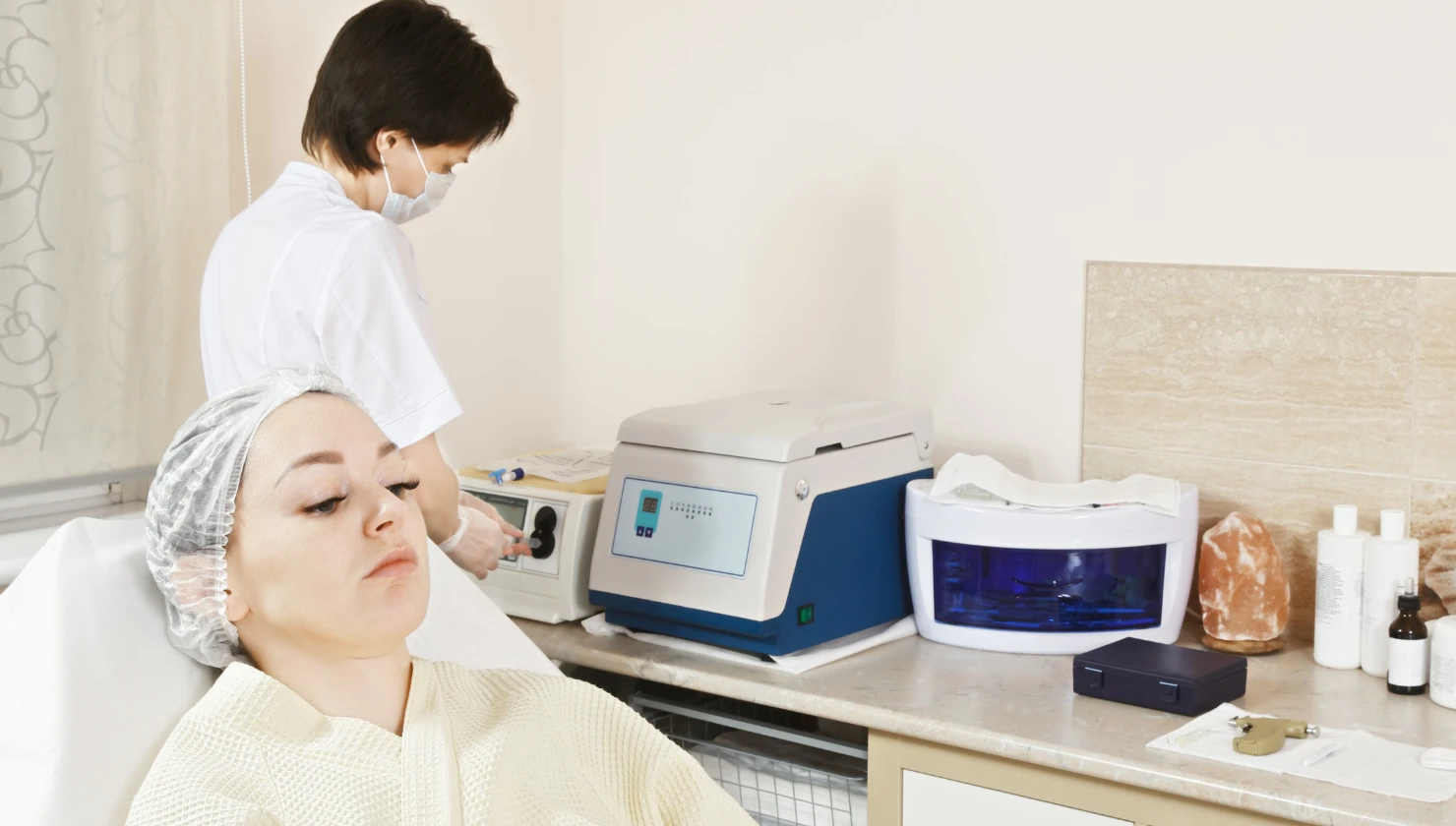
Ozone therapy refers to a group of treatments that introduce an oxygen and ozone gas mixture into the body, by various routes, with the intent of stimulating an oxidative or immune response.
Delivery methods vary considerably. Some involve drawing blood, mixing it with the gas and returning it. Others introduce gas into body cavities, joints, or tissue. The variation matters, because when people compare “ozone therapy” results they are often comparing quite different procedures.
That inconsistency is a documented problem in the literature, not a criticism invented here. The 2024 musculoskeletal review notes “a marked inconsistency in treatment protocols” and says this “underlines the need for standardized approaches.”
Anyone weighing this alongside other options may find herbal approaches for Lyme disease a useful comparison, since the evidence questions are similar.
The closest recent source is a 2024 review in the European Journal of Medical Research covering ozone therapy across musculoskeletal medicine. Its findings on quality are worth quoting directly:
The conditions it examined were fractures, osteoarthritis, osteonecrosis, osteomyelitis, adhesive capsulitis, tendinopathies, rheumatic disease, chronic pain, fibromyalgia, wound healing, and myalgic encephalomyelitis/chronic fatigue syndrome (ME/CFS).
Lyme disease does not appear in that list, and that review was not designed to look for it. The more relevant point is what does and does not exist elsewhere, which is covered in the next section.
There are no published human trials, and the research picture is more interesting than “there is nothing.”
There are no published human trials of ozone therapy for Lyme disease. What exists is preclinical work, and one funded line of research aimed squarely at the question. The Global Lyme Alliance awarded a $160,000 grant to Dr. Tanja Petnicki-Ocwieja at Tufts University School of Medicine to examine intravenous ozone use in post-Lyme patients. Ozone generates reactive oxygen species, which can modulate the immune response to Borrelia burgdorferi, and the study is looking at whether that modulation calms the inflammation behind persistent symptoms.
Tufts reported in 2021 that her preliminary data “has shown some support for the treatment, suggesting it calms the immune response.” No peer-reviewed result from that work had been published as of this review.
It is also worth reporting what the musculoskeletal review did find, because it is the closest thing to a relevant human result. In ME/CFS, using oxygen-ozone autohemotherapy, it reports that “approximately 43.5% of participants experienced a marked reduction in fatigue symptoms, with these benefits persisting for at least 3 months.” Fatigue is not Lyme disease, and one finding in one review is not a foundation. But a page that omitted it while listing every negative finding would not be honest.
Ozone therapy is not approved by the FDA for treating Lyme disease or, in the United States, for medical use generally.
What makes this unusually clear is that the point is conceded by one of the field’s own advocates. Velio Bocci, who spent a career arguing for ozone therapy’s legitimacy, wrote that “the FDA, for several good reasons, had to prohibit the use of ozone in the USA.” He disagreed strongly with the reasoning, calling parts of it “an absurd and antiscientific idea,” but he did not dispute the fact of the prohibition.
He was also direct about the historical research gap, writing that “the lack of basic research and randomized clinical trials relegated ozone therapy in the field of complementary medicine.” That sentence describes the field before his own research program began in the late 1980s, not a verdict on where it stands today.
It matters to be fair to him here. Bocci was a lifelong advocate of ozone therapy, called it “a real wonder drug,” judged it “extremely valid, often more than orthodox treatments” in some applications, and expected it to “mark a medical revolution.” His view was that ozone works and the regulatory position is wrong. He is quoted on this page not because he opposed the therapy, but because even one of its own champions documented the prohibition, the historical evidence gap, and the deaths caused by careless administration.
The risks are route-dependent, and they get left out of clinic marketing.
Bocci documented that during the 1990s, unqualified practitioners injecting gas directly into the bloodstream caused “pulmonary embolism and possibly of a few deaths.” He raised this as an argument for proper training rather than against ozone itself, but the harm is on the record either way.
The 2024 musculoskeletal review lists more routine adverse effects as “mild and self-limiting,” including abdominal distension, lower limb hypoesthesia and transient pain. It also names specific contraindications, in the review’s own words: “latent hypoglycaemia, hyperthyroidism, favism (due to G-6PD deficiency), pregnancy, and sickle cell anaemia,” with a further caution for people on ACE inhibitors.
Two practical implications. Route of administration matters enormously to risk, and who is holding the syringe matters more than the substance in it.
People with chronic Lyme disease symptoms are an unusually vulnerable market. They have often been ill for years, dismissed repeatedly, and are willing to try things mainstream medicine has not offered. That is a reasonable response to being failed, and it is also exactly the profile that attracts confident marketing.
Ozone is frequently presented as directly killing the organism. That framing is appealing because it is simple. The evidence supporting it in humans with Lyme disease is not there.
It is also worth noting that ozone “has failed to yield a result in HIV-AIDS, cancer, retinitis pigmentosa and tinnitus,” again per Bocci.
If you are considering it, the honest questions are what it costs, what the practitioner claims it will do, and whether that claim matches anything published.
The problem with reaching for an aggressive adjunct early is not usually the adjunct. It is the sequence.
Patients with chronic Lyme disease frequently arrive depleted, with disrupted sleep, unstable blood sugar, an inflamed gut and a nervous system in a constant threat state. Introducing an oxidative therapy into that picture asks a system with no reserve to absorb more stress, which is a common reason people crash during treatment.
Dr. Mueller’s approach builds the body before going after the pathogen. That means correcting the foundations first, then nervous system regulation, then gentle detoxification, and only then targeted antimicrobial work. The full sequence is on Lyme disease treatment.
For anyone whose exhaustion includes delayed crashes after ordinary activity, that pattern changes what any treatment plan should look like, and it is covered on post-exertional malaise.
None of this rules ozone out permanently. It puts it where the evidence puts it, which is an unproven adjunct rather than a foundation.

A Lyme-literate doctor should welcome all six. A clinic that answers all six comfortably is behaving well. One that deflects on evidence or cost is telling you something.
There is no evidence that it does. No published human trial has tested ozone therapy for Lyme disease. Laboratory and animal work exists, and one funded study is examining the mechanism, but no human trial supports it as a cure.
No. The absence of FDA approval is named as a barrier to mainstream use even in reviews written by supporters of the therapy.
It depends heavily on route and practitioner. Reported adverse effects in the reviewed literature are mostly mild, but direct injection of gas into the bloodstream has caused pulmonary embolism and, per the field’s own literature, possibly deaths.
Chronic Lyme patients are often willing to try what mainstream medicine has not offered. That creates a market. A treatment being widely offered is not evidence that it works.
Talk to the clinician providing it rather than stopping based on a web page. If it is helping you and it is being administered safely, that is a conversation to have with them.
There is no single answer, which is itself the honest position. Addressing the drivers, infection, mold exposure, nutrient depletion and nervous system dysregulation, is where Dr. Mueller’s approach starts, and it does not depend on any single adjunct therapy.
Every source below was checked against the specific claim it supports.
Written and medically reviewed by Dr. Diane Mueller, ND, LAc, DAOM. Dr. Mueller is a naturopathic doctor and licensed acupuncturist who has worked with more than 1,000 patients across the seven states where MyLymeDoc is licensed. Dr. Mueller’s background and the MyLymeDoc team.
Last reviewed: September 7, 2026
If you want a treatment plan built on what your case actually needs, you can book an initial visit.
This page is for general educational purposes and is not medical advice. It does not create a doctor and patient relationship, and it is not a substitute for diagnosis or treatment from your own clinician. Do not start or stop any therapy based on this page. If you are experiencing a medical emergency, call 911 or go to the nearest emergency room.
We have helped thousands of people in Colorado, Oregon, Wyoming, New Jersey, Pennsylvania, Texas, and Wisconsin restore their health and quality of life by diagnosing and treating their Lyme Disease.
We have helped thousands of
people restore their health
and quality of life by diagnosing
and treating their Lyme Disease.
“Dr. Mueller’s approach to medicine is refreshing! There is only so much you can do with western medicine and in my life I was needing a new approach. By addressing the whole body, nutritional diet factors, environmental factors, blood work, and incorporating ideas I had not previously known, I was able to break through with my conditions. I am not only experiencing less pain in my life, but through the process of healing guided by Dr. Diane Mueller, I am now happy to say I have more consciousness surrounding how I eat, what to eat and when things are appropriate. Living by example Dr. Mueller has a vibrancy that makes you want to learn and know more about your body and overall health. I highly recommend her to anyone looking for new answers, a new approach to health, or in need of freedom from pain and limitations.”
-Storie S.
Kihei, HI