
Written and medically reviewed by Dr. Diane Mueller, ND, LAc, DAOM, founder of MyLymeDoc. Last reviewed September 7, 2026.
SOT therapy for Lyme disease has been tested in exactly one published human study. It enrolled 28 people with Lyme disease, measured only how much Borrelia DNA could be detected in their blood after treatment, recorded no symptom outcomes at all, and was written by researchers affiliated with the company that makes the product. As of this review, that single study is the entire human evidence base. Twenty-eight patients and one lab number is not nothing, and it is a long way from what the marketing implies. Here is what SOT therapy for Lyme actually measured, what it did not, and the questions to ask before committing money to it.
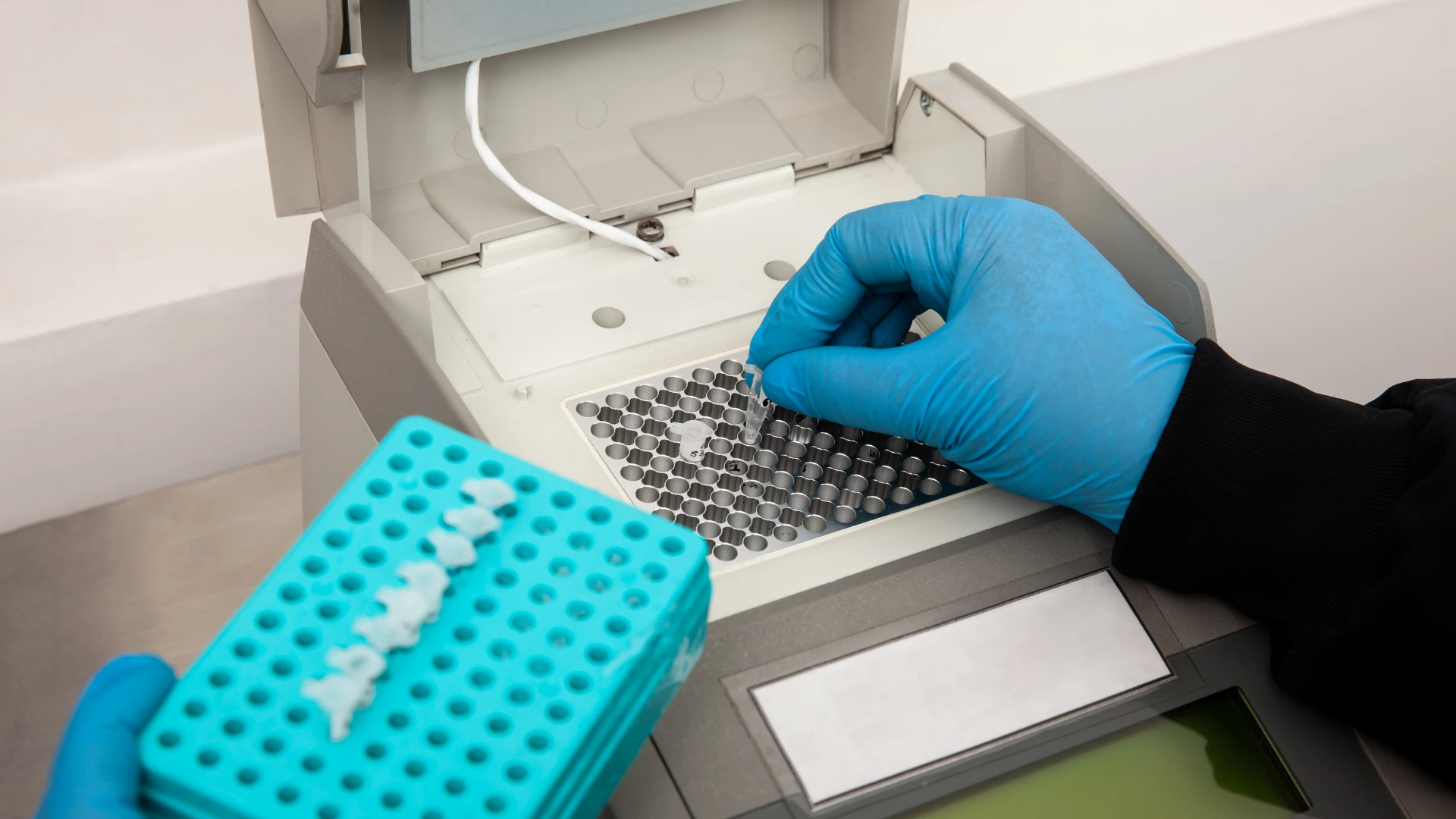
Supportive oligonucleotide therapy (SOT) is a short strand of synthetic RNA, a small interfering RNA or siRNA. Each molecule is designed per patient to match a genetic sequence in a target organism such as Borrelia burgdorferi, then given intravenously with the aim of blocking a protein that organism needs.
The idea is borrowed from a legitimate field. Antisense and small interfering RNA drugs exist, several are FDA approved for genetic conditions such as spinal muscular atrophy, and the first one, approved in 1998, targeted a viral eye infection. The mechanism of switching off a specific gene is well established in the laboratory. SOT applies that concept to infections, with the molecule designed and produced by RGCC, a laboratory group based in Greece and Switzerland.
That lineage matters, because it is what separates SOT from most alternative Lyme treatments. The question is not whether antisense technology works in general, because it does. The question is whether this particular product, made this way and given to this group of patients, does anything clinically useful. Only that narrower question matters, and it is the one the evidence has to answer.
Twenty-eight Lyme patients, one laboratory measurement, no symptom outcome: those are the dimensions of the study, published by Apostolou and colleagues in 2022 in Infectious Disease Reports and described in its own title as preliminary results.
Quantitative PCR (qPCR) counts copies of a target DNA sequence in a sample. It reports a cycle threshold, or Ct value: the more cycles needed to detect the target, the fewer DNA copies were present.
The researchers drew blood from 115 patients with Epstein-Barr virus, herpes simplex, or Lyme disease, made a custom SOT molecule for each, gave it intravenously, and ran quantitative PCR, or qPCR, afterward to see whether the amount of detectable pathogen DNA had changed.
Twenty-eight of the 115 patients had Lyme disease. For that group, the authors report a statistically significant increase in PCR cycle threshold after one and again after two administrations. A higher cycle threshold means less target DNA was detected. The paper does not report a percentage or fold reduction, only the statistical test.
What the study did not do is as important as what it did:
A study of 28 people with a single laboratory endpoint is a pilot. Its authors say so.
The four authors list their affiliations as Research Genetic Cancer Centre S.A. in Greece and Research Genetic Cancer Centre International GmbH in Switzerland. Both belong to RGCC, the organization that designs and manufactures SOT. The paper’s conflict of interest statement reads, in full, “The authors declare no conflict of interest.”
None of this is an accusation of dishonesty. Manufacturers run early studies of their own products all the time, and the data may be perfectly accurate. What it does mean is that the only human evidence for SOT in Lyme disease was generated by the seller, has not been replicated by anyone independent, and should be read with that in mind.
A PCR test measures fragments of Borrelia genetic material in a blood sample. Live bacteria in tissue, where Borrelia tends to be, never show up in that number, and neither do the dormant persister forms that survive antibiotics in the first place. Nor does it measure the immune activation, inflammation, or nervous system disruption that produce the symptoms people are trying to get rid of. And the people who stay unwell after treatment frequently test PCR negative in blood already, which is one reason post-treatment Lyme disease syndrome is so hard to study.
So even taking the 28-patient result entirely at face value, it tells you that a laboratory number moved. Whether anyone slept better, thought more clearly, or went back to work is unknown, because the study did not measure it and no other published study we could find has.
Whether Lyme disease can be cleared at all in the persistent-symptom group is its own question, covered on can Lyme disease be cured.
SOT is not approved by the FDA for Lyme disease, or for any infection. Clinics that work with RGCC offer it as an investigational or off-label product, and it is typically not covered by insurance.
The distinction worth holding onto is between the class and the product. Antisense drugs as a class have FDA-approved members, and LymeDisease.org’s own 2025 review of SOT makes the same point, calling the one infectious-disease approval, fomivirsen for CMV in 1998, “historical” and use for Lyme “off-label/experimental.” SOT for Lyme disease is not one of them, has not been through an FDA review, and has no published safety series. When a clinic points to the approved antisense drugs as evidence, they are borrowing credibility from a different product.
No systematic safety data for repeated SOT infusions has been published. The 2022 study reported no adverse events and collected none, yet its conclusion still states that “SOT is safe and specific for every target,” an assertion the paper provides no data to support. Clinic reports describe mostly mild reactions such as fatigue or flu-like symptoms during infusion, but a report is not a safety series. Silence in the literature does not mean the treatment is dangerous. What it means is that the answer to “is it safe” is “nobody has published the data that would let anyone say.”
Any IV infusion of a custom biological product carries the ordinary infusion risks. Whether SOT carries others is unknown, which is a different statement from “it has none.”
SOT is expensive, priced per custom molecule, and usually repeated. Prices vary between clinics, so this page does not quote one. Before paying, get clear answers to these:
A Lyme-literate doctor should be comfortable with all five. Discomfort with the first two is informative.

MyLymeDoc does not offer SOT, and this is not a page about a product we sell.
The reason most people look at treatments like SOT is that they have already been through antibiotics and are still unwell. In that group, the pattern is rarely one organism that needs one more targeted weapon. More often the picture is a body that has been running on empty for years, with disrupted sleep, a reactive gut, unstable blood sugar and a nervous system stuck in threat mode, on top of whatever infections are present.
Dr. Mueller’s approach works that sequence in order: build the foundations, settle the nervous system, support detoxification gently, and only then do targeted antimicrobial work. The promise is slower than “a custom molecule that switches off the bacteria,” and it does not depend on a single laboratory number moving. The full sequence is on Lyme disease treatment.
What treatment looks like for the people who stay unwell, with independent research rather than manufacturer research behind it, is on chronic Lyme disease treatment.
We do not publish an outcome rate for that approach, because we do not have one that would survive the same scrutiny this page applies to SOT. The omission is deliberate.
Nobody has measured whether SOT therapy for Lyme helps symptoms. The one published human study, 28 Lyme patients, found less detectable Borrelia DNA in blood after treatment. It did not measure symptoms, had no control group, and was written by researchers affiliated with the manufacturer. Those results justify further study; they are not evidence that it works.
No. SOT is not FDA approved for Lyme disease or any other infection. Antisense drugs as a class include FDA-approved medicines, but SOT is not one of them.
No systematic safety data for repeated SOT infusions has been published. The 2022 study collected no adverse-event data, although its authors state that SOT is safe. Clinic reports describe mostly mild infusion reactions.
It varies by clinic and by how many custom molecules and infusions are used, and it is typically not covered by insurance. Ask for the total, in writing, before starting.
The same study included EBV and herpes simplex patients and reported that viruses needed two to three administrations to show a PCR change. No published data exists for Bartonella or Babesia, and no symptom outcomes were measured for any group.
No. Patients ask about it often, which is why this page exists.
Every source below was checked against the specific claim it supports.
Written and medically reviewed by Dr. Diane Mueller, ND, LAc, DAOM. Dr. Mueller is a naturopathic doctor and licensed acupuncturist who has worked with more than 1,000 patients across the seven states where MyLymeDoc is licensed. About Dr. Mueller and the MyLymeDoc team.
Last reviewed: September 7, 2026
If you are weighing SOT because nothing else has worked, the more useful first step is usually a full look at what is still driving symptoms. You can book an initial visit.
If you want to pursue an investigational therapy, do it through an infectious disease or Lyme-literate clinician who will define the outcome in advance and put it in writing, and check ClinicalTrials.gov for registered studies, which is where a treatment with real evidence behind it would be listed.
This page is for general educational purposes and is not medical advice. It does not create a doctor and patient relationship, and it is not a substitute for diagnosis or treatment from your own clinician. Do not start or stop any therapy based on this page. If you are experiencing a medical emergency, call 911 or go to the nearest emergency room.
We have helped thousands of people in Colorado, Oregon, Wyoming, New Jersey, Pennsylvania, Texas, and Wisconsin restore their health and quality of life by diagnosing and treating their Lyme Disease.
We have helped thousands of
people restore their health
and quality of life by diagnosing
and treating their Lyme Disease.
“Dr. Mueller’s approach to medicine is refreshing! There is only so much you can do with western medicine and in my life I was needing a new approach. By addressing the whole body, nutritional diet factors, environmental factors, blood work, and incorporating ideas I had not previously known, I was able to break through with my conditions. I am not only experiencing less pain in my life, but through the process of healing guided by Dr. Diane Mueller, I am now happy to say I have more consciousness surrounding how I eat, what to eat and when things are appropriate. Living by example Dr. Mueller has a vibrancy that makes you want to learn and know more about your body and overall health. I highly recommend her to anyone looking for new answers, a new approach to health, or in need of freedom from pain and limitations.”
-Storie S.
Kihei, HI