Written by Dr. Diane Mueller
When you have a sensitive body that can easily flare, traveling can seem like an impossibility. Even just a short trip to see family, take a break, and have a change of scenery can feel so daunting that you could start to wonder whether it’s even worth it. So, today I wanted to take you through the functional medicine approach to reducing travel flare risk.
In this resource, we’re going to cover how you can do the best you can to mitigate mold exposure while traveling – starting with how to screen your Airbnb, booking a reservation, and what supplements should be in your carry-on. We’re not striving for perfection (because we all know that’ll never happen while traveling), but we are talking about how to get closer to bulletproof.
Key Takeaways
- Mitigate the health risks of mold exposure while traveling by boosting immune resilience and opening drainage pathways 3–7 days before departure.
- Screen potential accommodations for past water damage and perform an immediate visual and smell test upon entering any hotel room or rental.
- Pack a functional medicine travel kit that includes binders, glutathione, and electrolytes to help neutralize toxins and manage acute symptoms.
- Prevent cross-contamination by keeping luggage zipped and off carpeted floors, as heavy mold spores tend to settle in rugs.
- Accelerate post-trip recovery by washing all clothing immediately upon return and continuing a binder protocol for several days.
Table of Contents
Have Mold Illness or suspect you do?
We have helped thousands of people in Colorado, Wyoming, New Jersey, Pennsylvania, Texas, and Wisconsin restore their health and quality of life by diagnosing and treating their Mold Illness.
Why Mold Exposure While Traveling Is A Hidden Risk For Sensitive Bodies
If you’ve been dealing with chronic illness for a while, you’ve likely heard the phrase “immune priming.“ Think of your immune system like a security guard that’s been on high alert for months, maybe years. When you have conditions like MCAS (Mast Cell Activation Syndrome) or Lyme, your body is already hyper-aware of threats.
For the general population, inhaling a few mold spores in a damp hotel room might trigger a sneeze. For you? It can set off an inflammatory cascade. Mold spores and mycotoxins (the toxins mold produces) can trigger oxidative stress and histamine release almost instantly. This isn’t just about “allergies.“ It’s about your body perceiving a threat and launching a full-scale defense that results in fatigue, pain, and cognitive issues.
The goal here isn’t to terrify you into never leaving your house. It’s to validate why you react differently from your travel companions. Understanding that your biology requires different care is the first step toward protecting it. You aren’t being “difficult” or “high maintenance”: you’re managing a complex medical reality.
How Mold Exposure Happens When You Travel
Travel exposes us to environments we can’t control, and unfortunately, mold loves many of the same places vacationers do. It thrives in humidity, neglected corners, and older buildings, staples of the travel industry.
Common Sources Of Mold During Trips And Holidays
It’s not just the obvious crumbling ceiling tiles you need to watch out for. Often, the sources are hidden. Hotel HVAC systems are notorious culprits: they usually run intermittently, creating condensation that never quite dries out. Vacation rentals, especially in humid climates (hello, beach houses), can harbor mold in carpets, behind wallpaper, or in locked owners’ closets.
Don’t forget transportation. If you’ve ever sat in a rental car that smelled like wet dog, you’ve likely encountered mold in the upholstery or AC vents. Even visiting family can be tricky; staying in a moldy home, particularly one with a damp basement or a history of leaks, is one of the most common ways people get “hit” during the holidays.
Short-Term Versus Chronic Exposure
There is a silver lining here. Spending three days in a musty hotel room is fundamentally different from living in a moldy house for three years. Chronic exposure depletes your reserves and constantly re-poisons the system. Short-term exposure while traveling is more like a temporary assault.
While a short trip can absolutely trigger symptoms, sometimes severe ones, your body hasn’t necessarily accumulated the same toxic load as it would in a permanent residence. The risk is acute inflammation rather than deep tissue saturation, provided you get out and refresh effectively afterward.
Have Mold Illness or suspect you do?
We have helped thousands of people in Colorado, Wyoming, New Jersey, Pennsylvania, Texas, and Wisconsin restore their health and quality of life by diagnosing and treating their Mold Illness.
Who Is Most At Risk From Holiday Mold Exposure
Not everyone needs to worry about checking the vents in their Airbnb. But if you fall into specific categories, your radar needs to be sharper. High-risk groups include those with:
- CIRS (Chronic Inflammatory Response Syndrome): Your genetic makeup may prevent you from clearing biotoxins efficiently.
- Lyme Disease: The immune system is already distracted and dysregulated.
- MCAS: You may react to the presence of mold spores before mycotoxins even enter the bloodstream.
- Asthma or COPD: Respiratory compromise makes the lungs more reactive.
If you are currently in a severe crash or early in your recovery, some environments, like an old family farmhouse known for dampness, might need to be off-limits entirely for now.

Recognizing Mold Exposure Symptoms During And After Travel
Symptoms can be slippery. Sometimes they hit you the moment you cross the threshold: other times, they wait until you’re halfway home. Learning to listen to your body’s subtle whispers can save you from a screaming crash later.
Early Warning Signs While You Are Away
Your body usually tells you something is wrong before your brain registers it. Pay attention to sudden shifts that happen within 10 to 60 minutes of entering a new space. Common early warning signs include:
- Sinus congestion that wasn’t there an hour ago.
- A headache that starts at the base of the skull or behind the eyes.
- Itchy, watery eyes or a sudden dry cough.
- Unusual fatigue: You felt fine in the car, but now you feel like you’ve been drugged.
- Anxiety or irritability: This is a big one. Neuroinflammation can feel like sudden mood swings.
If you turn on the AC and immediately feel dizzy or spacey, trust that signal. It’s not “all in your head“, it’s in the air.
Delayed Mold Exposure Symptoms After Travel
Sometimes the adrenaline of travel keeps you going, and the crash waits until you’re back in your safe zone. This is common with “bucket filling.“ You might tolerate the exposure for a few days, but once the bucket overflows, symptoms appear.
Post-travel symptoms often look like a relapse: return of deep bone fatigue, joint pain, brain fog, or digestive issues. Keeping a simple symptom journal around your trips can help you connect the dots. If you constantly crash after visiting Aunt Sarah, it might not be the stress of the visit; it might be her house.
Red Flag Symptoms That Require Medical Care
Most travel exposures can be managed with self-care, but there are exceptions. If you experience severe shortness of breath, chest pain, high fever, confusion, or signs of anaphylaxis (throat swelling, hives), do not try to “ride it out.“ Seek immediate medical attention. Acute reactions can be dangerous and require urgent intervention.
Have Mold Illness or suspect you do?
We have helped thousands of people in Colorado, Wyoming, New Jersey, Pennsylvania, Texas, and Wisconsin restore their health and quality of life by diagnosing and treating their Mold Illness.
Preparing For Travel: Functional Medicine Pre-Trip Checklist
The best defense is a good offense. In functional medicine, we focus on resilience. You want your body to be a fortress before you even step on the plane.
Strengthen Foundations Before You Leave
Start your prep about 3 to 7 days before your trip. The goal is to lower your body’s “total load” so you have more wiggle room if you encounter toxins.
- Open Drainage Pathways: You need to be pooping daily. If you’re constipated, toxins have nowhere to go but back into circulation. Hydrate aggressively.
- Anti-Inflammatory Nutrition: Cut out sugar, alcohol, and processed foods a week before you leave. Don’t make your liver deal with a margarita and mold at the same time.
- Sleep Banking: Get extra rest. Sleep deprivation weakens the blood-brain barrier, making you more susceptible to neurotoxins.
Plan Your Lodging And Route With Mold In Mind
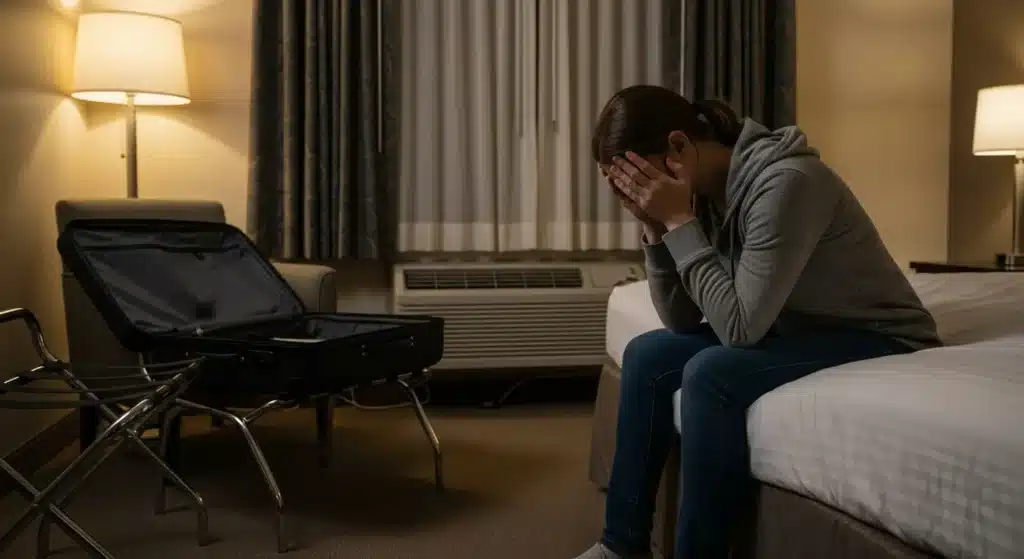
This is the hardest part for many people because it involves social trade-offs. You might love your family, but if their house has a wet basement, you cannot sleep there. Period.
Prioritize air quality in your sleeping area above all else. You spend 8 hours there: it’s your recovery chamber. A strategic compromise is visiting family during the day but booking a clean, newer hotel for the night. Explain it as a medical necessity, because it is. When driving, plan routes that allow for breaks outside the car to get fresh air, especially if you’re sensitive to car upholstery off-gassing.
Choosing Safer Places To Stay When You Are Mold Sensitive
Not all hotels are created equal. Finding a “safe” room requires a bit of detective work, but it pays off in peace of mind.
How To Screen Lodging Before Booking
Whether you are booking a hotel or an Airbnb, don’t rely on the pretty photos. Send a message to the host or call the front desk. Here is a script you can use:
“I have a severe medical sensitivity to mold and chemicals. Can you confirm if the property has had any past water damage or leaks? Also, is there a basement, and do you use strong scents or air fresheners in the room?”
Look closely at photos online. Do you see peeling paint? Old, wall-to-wall carpeting? Dehumidifiers running in the background? (A dehumidifier often means they are battling dampness.) Avoid basements and garden-level apartments entirely.
On Arrival: Quick Mold Assessment Checklist
When you arrive, do not unpack immediately. Spend the first 10 minutes auditing the room.
- The Sniff Test: Walk in. Does it smell musty, stale, or overly perfumed (which often masks mold)? If yes, walk out.
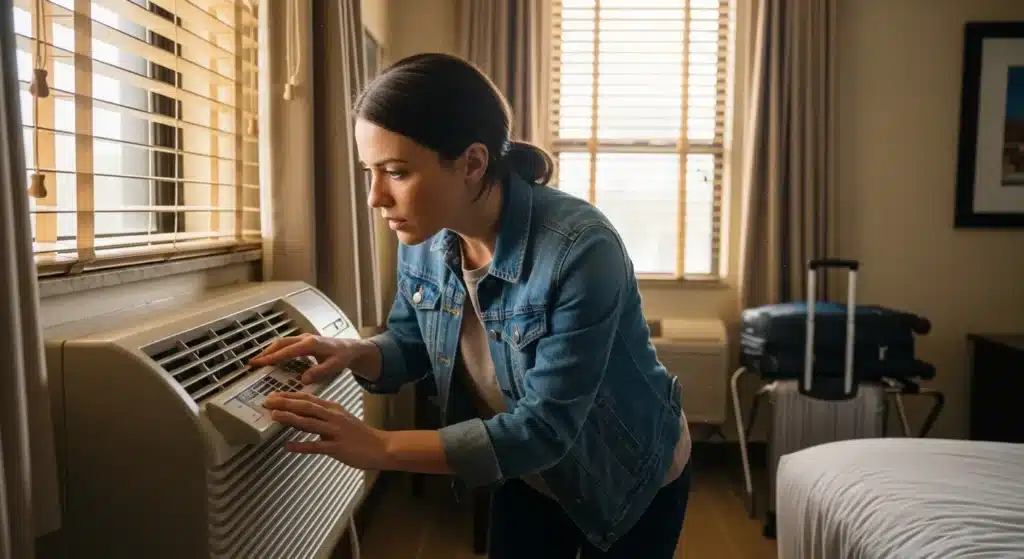
- Check the HVAC: Look into the vents of the AC unit. Do you see black specks?
- Water Sources: Check under the bathroom sink and around the toilet for signs of leaks or rot.
- Windows: Is there heavy condensation or black mold on the sills?
If your gut says “unsafe,“ listen to it. Ask to change rooms or, in worst-case scenarios, find another hotel.
Have Mold Illness or suspect you do?
We have helped thousands of people in Colorado, Wyoming, New Jersey, Pennsylvania, Texas, and Wisconsin restore their health and quality of life by diagnosing and treating their Mold Illness.
When You Have To Stay In A Moldy Home
Sometimes, you’re stuck. Maybe it’s a family emergency, or every other hotel is booked. If you must stay in a questionable environment, practice harm reduction:
- Ventilation: Keep windows open as much as possible to dilute the air.
- Sanctuary Room: Keep the bedroom door closed to the rest of the house. Don’t let pets or kids track dust in.
- Air Filtration: If you drive, bring a portable HEPA filter. If you flew, you can buy small travel-sized units.
- Get Out: Spend your waking hours outdoors or in neutral spaces (parks, cafes). Minimizing the hours of exposure helps.
The Functional Medicine Travel Kit: Core Supplements For Mold Exposure Support
You wouldn’t travel without a toothbrush: don’t travel without your refresh support. These are the tools that help your body neutralize and eliminate toxins on the go.
Minimalist Protocol: The Four Pack For Mold Exposure While Traveling
Think of this as a simple “core four” you can ask your provider about. From a functional medicine perspective, they support binding, elimination, and oxidative stress.
| Core Support | Examples | Main Role |
|---|---|---|
| Binder | Activated charcoal, bentonite clay, cholestyramine (Rx), modified citrus pectin | Binds toxins in the gut so they exit in stool rather than recirculate |
| Glutathione (or precursors) | Liposomal glutathione, NAC | Supports liver refresh, protects cells from oxidative stress |
| Magnesium / Electrolytes | Magnesium glycinate or citrate, mineral powders | Keeps bowels moving, supports muscles, nervous system, and hydration |
| Vitamin C | Buffered vitamin C powder or capsules | Antioxidant support, gentle immune support |
How To Use Binders Safely On The Road
Binders are powerful, but they aren’t “smart”; they will bind to your medications and nutrients, too.
- Timing is key: Take binders at least 1 hour away from food and 2 hours away from prescription medications.
- Hydrate: Binders can be constipating. You must drink extra water. If you stop pooping, stop the binders until things get moving again. You do not want a backlog of toxin-filled clay in your gut.
Glutathione, ALA, And Vitamin C For Antioxidant And Brain Support
Mycotoxins cause what we call “rusting” (oxidative stress) in the body, particularly in the brain. Antioxidants are your rust-proofing.
Liposomal Glutathione is excellent for travel because it absorbs quickly. Alpha Lipoic Acid (ALA) is another favorite because it can cross the blood-brain barrier, offering protection where you often feel symptoms most (brain fog). Note: Always check with your clinician on dosages, especially if you have mercury fillings, as ALA can mobilize heavy metals.
Optional Add-Ons Based On Individual Needs
Got extra room in your bag? Consider adding:
- Natural Antihistamines: Quercetin or stinging nettle if you have MCAS tendencies.
- Liver Support: Milk thistle or dandelion root tea.
- Probiotics: To keep your gut barrier strong against foreign bacteria and fungi.
After You Get Home: Recovery And When To Seek More Help
You made it back. Now, let’s make sure you leave the travel toxins behind.
Gentle Post Travel Recovery Protocol
- Wash Everything: Throw all travel clothes in the wash immediately with a laundry additive designed for mold (like borax or specific enzyme cleaners). Wipe down your hard-shell suitcase with vinegar or a botanical cleaner.
- Continue Binders: Keep your binder protocol going for 3-5 days post-trip to catch any circulating toxins.
- Rest: Give yourself a buffer day before returning to work if possible. Your nervous system needs to downshift.
When Symptoms Do Not Settle Back Down
Usually, travel flares settle within a week. If you are two weeks out and still feel crushed, or if you’ve developed new, strange symptoms, this might be more than a simple flare.
Considering Mold Testing Or Treatment Adjustments
If you’ve regressed significantly, it might be time to chat with your functional medicine doctor. It could be that the exposure was more severe than you realized, or it “unmasked” another layer of illness, like a dormant co-infection. Urine mycotoxin testing can help determine if you picked up a new load of toxins.
Have Mold Illness or suspect you do?
We have helped thousands of people in Colorado, Wyoming, New Jersey, Pennsylvania, Texas, and Wisconsin restore their health and quality of life by diagnosing and treating their Mold Illness.
How Functional Medicine Can Help You Travel More Safely With Mold Illness
Traveling with mold illness, Lyme, or chronic fatigue doesn’t have to mean suffering. It just means planning. It requires moving from a place of fear to a place of informed action. By understanding your triggers, preparing your body, and knowing how to recover, you reclaim a piece of your freedom.
At My Lyme Doc, we understand that standard medical advice often falls short for complex, sensitive patients. Dr. Diane Mueller and our team have walked this path, personally and professionally. We focus on building resilience so that a weekend away doesn’t derail your life.
If you are feeling overwhelmed by your reactivity or need a personalized plan to get your life back, we’re here to help. Don’t let mold keep your world small.
Ready to build a body that can handle the world?
Book a consultation with My Lyme Doc today, and let’s get you road-trip ready.
Frequently Asked Questions
To prevent mold exposure while traveling, perform a 10-minute audit upon arrival. Start with a “sniff test” for musty odors or strong perfumes used to mask smells. Visually inspect HVAC vents for black specks, check under sinks for leaks, and look for condensation on windows. If the air feels heavy or you react immediately, request a different room.
Symptoms can manifest within 10 to 60 minutes of entering a compromised environment. Common signs include sudden sinus congestion, a headache at the base of the skull, itchy eyes, unexpected fatigue, or sudden mood shifts like irritability. Trust these physical signals even if you don’t immediately see mold.
Yes, mold is considered a health hazard on most major booking platforms and by hotel chains. To secure a refund or room change, document the mold with clear photos immediately, report the issue to the host or front desk within the first hour, and cite health safety concerns rather than just cleanliness.
A functional medicine travel kit typically includes binders (like activated charcoal or zeolite) to trap toxins, Glutathione to support liver detox, and Vitamin C for oxidative stress. Binders should be taken away from food and medication, and staying hydrated is crucial to keep drainage pathways open.
Wash all travel clothing immediately upon return using a mold-specific additive like borax or enzyme cleaners. For hard-shell suitcases, wipe them down with vinegar or botanical cleaners. If you suspect severe exposure, leave luggage in direct sunlight or a garage rather than bringing it directly into your bedroom to avoid cross-contamination.
For those with conditions like CIRS or Lyme disease, staying in a damp home can trigger severe flare-ups. A safer strategy is to visit family during the day but book a clean, newer hotel for sleeping. Your sleep environment acts as your “recovery chamber” and needs to be free of biotoxins.
References:
Kraft, S. (2021). Mold, mycotoxins and a dysregulated immune system. International Journal of Molecular Sciences. https://www.ncbi.nlm.nih.gov/pmc/articles/PMC8619365/
Wilson, S. C., & Haugland, R. A. (2007). Mold contamination and air handling units. Journal of Occupational and Environmental Hygiene. https://doi.org/10.1080/15459620701389909
Kanchongkittiphon, W., & others. (2015). The role of indoor mold exposure in asthma exacerbations (review). Environmental Health Perspectives (review summary). https://envirn.org/wp-content/uploads/2016/12/ehp.1307922.alt_.pdf
James, C., & others. (2019). HEPA filtration improves asthma control in children exposed to airborne contaminants: a randomized trial. Journal of Allergy and Clinical Immunology — Practice. https://www.ncbi.nlm.nih.gov/pmc/articles/PMC7895332/
Ahn, J. Y., & others. (2022). In vitro efficacy of mycotoxin sequestering agents (activated charcoal, clays) against aflatoxin and other mycotoxins. Toxins. https://www.ncbi.nlm.nih.gov/pmc/articles/PMC8833486/
Ratnaseelan, A. M., et al. (2018). Effects of mycotoxins on neuropsychiatric symptoms and neurodevelopmental disorders: a review. Clinical Therapeutics. https://www.sciencedirect.com/science/article/abs/pii/S0149291818302297
Hooper, D. G., et al. (2009). Mycotoxin detection in human samples from patients exposed in the environment. Toxins. https://www.ncbi.nlm.nih.gov/pmc/articles/PMC2680627/
Abney, S. E., et al. (2021). Laundry hygiene and odor control: state of the science — recommendations on temperatures and bleaching for fungi. Applied and Environmental Microbiology. https://www.ncbi.nlm.nih.gov/pmc/articles/PMC8231443/
Free Lyme/Mold Webinar: "Why Am I Still Sick?"
Have Lyme Disease or suspect that you do?
We have helped thousands of
people restore their health
and quality of life by diagnosing
and treating their Lyme Disease.
“Dr. Mueller’s approach to medicine is refreshing! There is only so much you can do with western medicine and in my life I was needing a new approach. By addressing the whole body, nutritional diet factors, environmental factors, blood work, and incorporating ideas I had not previously known, I was able to break through with my conditions. I am not only experiencing less pain in my life, but through the process of healing guided by Dr. Diane Mueller, I am now happy to say I have more consciousness surrounding how I eat, what to eat and when things are appropriate. Living by example Dr. Mueller has a vibrancy that makes you want to learn and know more about your body and overall health. I highly recommend her to anyone looking for new answers, a new approach to health, or in need of freedom from pain and limitations.”
-Storie S.
Kihei, HI
Lyme Disease is Often Misdiagnosed as Fibromyalgia, Chronic Fatigue, Depression,
or Other Illnesses
Have Mold Illness or suspect you do?
We have helped thousands of people restore their health and quality of life by diagnosing and treating their mold illness.