


Written by Dr. Diane Mueller
Lab tests for tick-borne diseases can help, but they do not tell the whole story. I’ve worked with many patients who had classic symptoms, a strong exposure history, and still got told, “Your test was negative, so it’s not Lyme.” That is not always true.
In complex cases, timing matters, the right test matters, and clinical context matters just as much as the lab report. If you live near wooded areas outside Austin, spend time on trails around Barton Creek, or travel through other tick-heavy regions, this guide will help you ask better questions and avoid common testing mistakes.
Lab tests for tick borne diseases, including Lyme disease, have limitations and must be interpreted with clinical context and exposure history.
Early Lyme disease tests often yield false negatives because antibodies may not have developed, so treatment should not wait for test confirmation when classic symptoms are present.
Different tick-borne infections require different testing methods: PCR is useful early for some pathogens, while antibody testing is important later or for others.
Testing for co-infections such as Babesia, Anaplasma, Ehrlichia, and Rocky Mountain spotted fever is crucial as they can alter symptom patterns and affect treatment.
Repeat testing after 4 to 6 weeks and using broader panels improve detection sensitivity when initial tests are negative but symptoms persist.
Patients should prepare detailed exposure and symptom timelines to help clinicians order the right lab tests and avoid missed or delayed diagnoses.
We have helped thousands of people in Colorado, Wyoming, New Jersey, Pennsylvania, Texas, Wisconsin restore their health and quality of life by diagnosing and treating their Lyme Disease.
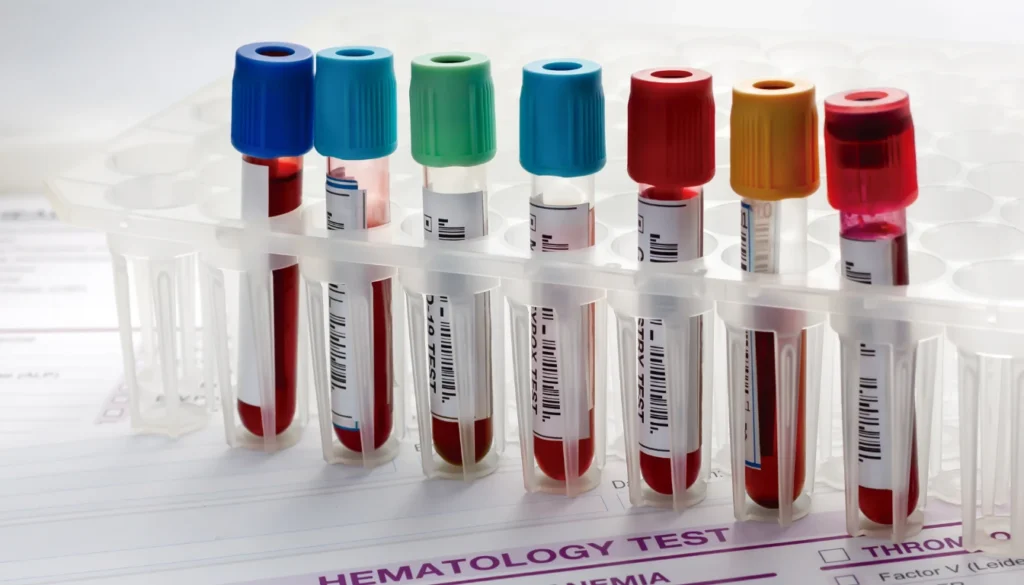
The main lab tests for tick-borne diseases fall into two groups: serology and NAAT/PCR. Serology looks for your immune response. PCR looks for genetic material from the organism itself.
For Lyme disease, the usual starting point is CDC-recommended two-tier testing. A lab runs an EIA or IFA first. If that screen is positive or uncertain, the lab reflexes to an immunoblot. Some labs now use a modified two-tier approach with two enzyme immunoassays instead. This is the standard route, but it has limits, especially in the first few weeks.
If a patient has a clear erythema migrans rash, treatment should not wait for a test. Early Lyme can test negative because antibodies often have not risen yet. That point gets missed all the time.
Other infections need different tools:
Babesia microti: PCR early on, blood smear in some cases, and antibody testing
Anaplasma phagocytophilum: PCR in early illness, then paired antibody testing
Ehrlichia chaffeensis: PCR early, plus acute and convalescent serology
Rickettsia rickettsii: paired antibody testing for Rocky Mountain spotted fever
Borrelia miyamotoi: PCR is often more useful early than antibody testing
In patients with fever, headache, sweats, air hunger, low platelets, or strange symptom swings, I often think beyond Lyme first. Co-infections change the picture fast. That is why broader Co-Infections Testing for Lyme can matter when a basic Lyme screen looks incomplete.
A simple way to ask your clinician for the right workup is this:
“Was this antibody testing, PCR, or both?”
“Was the timing early enough that this could be falsely negative?”
“Did you test for Babesia, Anaplasma, Ehrlichia, and RMSF too?”
“Do I need repeat testing in 4 to 6 weeks?”
Research indexed through the National Library of Medicine has repeatedly shown that test choice and test timing change sensitivity. That is why one normal lab panel does not close the case.
If you are staring at a lab order today, start by listing your symptoms, the date of the bite or rash if known, and any travel or outdoor exposure from the last 6 weeks. Do that before your appointment. It takes 10 minutes and often changes what gets ordered.
And if you still have the tick that bit you, sending it to the best tick testing lab can complement your human lab workup by providing critical exposure data your blood test alone cannot reveal.
We have helped thousands of people in Colorado, Wyoming, New Jersey, Pennsylvania, Texas, Wisconsin restore their health and quality of life by diagnosing and treating their Lyme Disease.
A positive antibody test usually means exposure. It does not always prove active infection. And a negative test early on does not rule infection out.
This is where many patients get lost. I have seen people with migrating joint pain, drenching night sweats, head pressure, tingling, and a known tick bite get dismissed because one screening test came back negative at week two. That is not good medicine. Early Lyme sensitivity can be under 40% in the first weeks, which means the test can miss more cases than most patients realize.
Here is the practical way to read results:
Positive Lyme serology: suggests immune exposure to Borrelia burgdorferi
Negative early serology: may simply mean your body has not made enough antibodies yet
Positive PCR: can support active infection, but a negative PCR does not rule it out
Persistent antibodies after treatment: can remain for months or years
Paired titers for RMSF, ehrlichiosis, or anaplasmosis: a rising level over time can matter more than one single result
The bigger clinical picture includes:
Tick exposure or outdoor risk
Rash history, even if you never saw a bull’s-eye
Symptom pattern
Co-infections
Immune status
Prior antibiotic use
A lot of people with chronic symptoms also have overlap with mold illness, mast cell activation, thyroid issues, or gut damage. That does not mean the tick-borne piece is irrelevant. It means sequence matters. If your doctor only looks at one lab and ignores the rest of your story, they can miss the root cause.
This is also why comparing options like the Best Lyme Disease approach or reviewing Understanding the ELISA Test can help patients ask smarter questions before they spend more money.
Even mainstream patient resources such as WebMD note that Lyme testing works best when it matches symptoms and timing. That sounds basic, but in real life it is often skipped.
If you are in Austin and your symptoms spike after hiking the Greenbelt or traveling to the Northeast, put that exposure on paper. Bring a one-page timeline to your visit. Do this today in 15 minutes. A clean symptom timeline often matters more than a long speech in the exam room.
Sometimes lab tests for tick-borne diseases miss real illness. That is frustrating, expensive, and honestly common.
The reasons are usually plain:
The test was done too early
The wrong pathogen was tested
The lab used a narrow method
Antibodies had not formed yet
The infection burden was low in the sample
A co-infection drove symptoms more than Lyme did
I learned this the hard way in my own work with complex chronic illness. Early on, I put too much weight on a single negative result in a patient with textbook Babesia symptoms: air hunger, chest pressure, night sweats, and crushing fatigue at 3 p.m. every day. Later testing and the clinical response made it obvious we were not looking wide enough. That case stayed with me.
When suspicion stays high, the next steps are usually more useful than arguing over one report:
For Lyme and several other infections, retesting in 4 to 6 weeks can catch antibody development that early testing missed.
If symptoms include fevers, sweats, low white blood cells, anemia, or neurologic changes, expand the workup. Pages on Anaplasma and Ehrlichia and broader lab tests for tick borne diseases reflect how often mixed infections complicate the picture.
PCR can help in the early phase for Babesia, Anaplasma, Ehrlichia, and B. miyamotoi. In select cases, multiplex antibody platforms may detect a wider list of organisms.
Do not delay treatment for suspected RMSF just because a first test is negative. Waiting can be dangerous.
That means someone who can connect symptoms, exposures, exam findings, and lab limits. This is especially true for people with chronic fatigue, brain fog, dizziness, or symptoms that bounce between systems.
If you are in Austin, Cedar Park, or Round Rock, and you keep getting told “everything looks normal,” take a different step. Gather every prior lab, make a symptom calendar, and ask whether repeat Lyme serology, PCR, or a broader panel makes sense. Start that file tonight. It takes about 20 minutes and can save months of guesswork.
Bottom line: tests are tools, not verdicts. Use them, but do not let a poorly timed negative test erase a strong clinical story.
We have helped thousands of people in Colorado, Wyoming, New Jersey, Pennsylvania, Texas, Wisconsin restore their health and quality of life by diagnosing and treating their Lyme Disease.
Lab tests for tick-borne diseases mainly include serology, which detects antibodies, and NAAT/PCR tests that identify pathogen genetic material. These help diagnose infections like Lyme disease, anaplasmosis, babesiosis, ehrlichiosis, and Rocky Mountain spotted fever.
Early Lyme disease tests can be negative because antibodies often haven’t developed within the first few weeks, resulting in under 40% test sensitivity. Clinical context and timing are essential to avoid false negatives and guide re-testing or treatment decisions.
A positive Lyme antibody test indicates exposure to Borrelia burgdorferi but does not necessarily confirm active infection, as antibodies may persist for months or years after treatment. Clinical symptoms and exposure history should guide diagnosis and care.
PCR testing is particularly helpful early in illness for detecting active infections like Babesia microti, Anaplasma phagocytophilum, Ehrlichia chaffeensis, and Borrelia miyamotoi because it detects pathogen DNA before antibodies form.
If suspicion remains high, repeat testing after 4 to 6 weeks is recommended. Expanding testing to include co-infections through panels or PCR, and consulting a clinician who integrates symptoms, exposure, and lab results can improve diagnosis and treatment.
Yes, multiplex testing panels like the TBD Serochip can detect antibodies to multiple pathogens including Lyme disease and co-infections, providing a broader evaluation that may be necessary in complex or unclear cases.
We have helped thousands of
people restore their health
and quality of life by diagnosing
and treating their Lyme Disease.
“Dr. Mueller’s approach to medicine is refreshing! There is only so much you can do with western medicine and in my life I was needing a new approach. By addressing the whole body, nutritional diet factors, environmental factors, blood work, and incorporating ideas I had not previously known, I was able to break through with my conditions. I am not only experiencing less pain in my life, but through the process of healing guided by Dr. Diane Mueller, I am now happy to say I have more consciousness surrounding how I eat, what to eat and when things are appropriate. Living by example Dr. Mueller has a vibrancy that makes you want to learn and know more about your body and overall health. I highly recommend her to anyone looking for new answers, a new approach to health, or in need of freedom from pain and limitations.”
-Storie S.
Kihei, HI