Written by Dr. Diane Mueller, ND, DAOM
Maybe your treatment is “working” on paper. Your labs look a little better. Infection markers are shifting. You’re taking the right antimicrobials, refresh support, supplements, the whole spreadsheet. And yet you still feel awful. You keep crashing. Your sleep is a mess. Your body startles at everything. Chemicals, light, noise, food, treatment… suddenly all of it feels like too much.
If that’s you, I want to say this clearly: this does not automatically mean treatment is failing. Very often, it means your nervous system has become part of the illness.
That’s the missing piece many Lyme, Bartonella, mold illness, POTS, and dysautonomia patients never hear explained well. Chronic illness can rewire the nervous system into a persistent survival pattern. In plain English, your internal smoke alarm gets stuck on high alert. And when you treat infection without treating the nervous system, it’s a major reason patients plateau around 70%.
That’s where limbic system retraining comes in. It exists to help calm a brain-body danger response that has become overlearned through infection, inflammation, trauma, and years of medical dismissal. It does not aid infection. But for many patients, it helps their body finally tolerate treatment and move forward.
In Dr. Mueller’s 4-Phase Method, this is Phase 2, and it’s how she treats every patient. Most practitioners skip it. She doesn’t.
Key Takeaways
Limbic system retraining targets the brain’s overactive threat response caused by chronic illnesses like Lyme disease and mold exposure, helping patients tolerate treatment better.
The limbic system regulates safety signals; when dysfunction occurs, symptoms like insomnia, sensitivity, and crashes persist despite improved labs or treatments.
Dr. Mueller’s 4-Phase Method emphasizes limbic system retraining as a crucial Phase 2 step to reset nervous system survival patterns that many practitioners overlook.
Retraining involves daily, consistent brain-body exercises that use neuroplasticity principles to reduce hypersensitivity and improve resilience over months.
Limbic system dysfunction explains why patients with chronic illness often feel stuck in fight-or-flight mode, reacting intensely to minor triggers and treatment changes.
Integrating limbic system retraining with proper infection treatment and supportive care increases the chance of recovery beyond the common 60-70% plateau.
Have Chronic Illness or Pain?
We have helped thousands of people in Colorado, Wyoming, New Jersey, Pennsylvania, Texas and Wisconsin restore their healthand quality of life by diagnosingand treating their Chronic Illness and Pain.
Table of Contents
What Is the Limbic System?
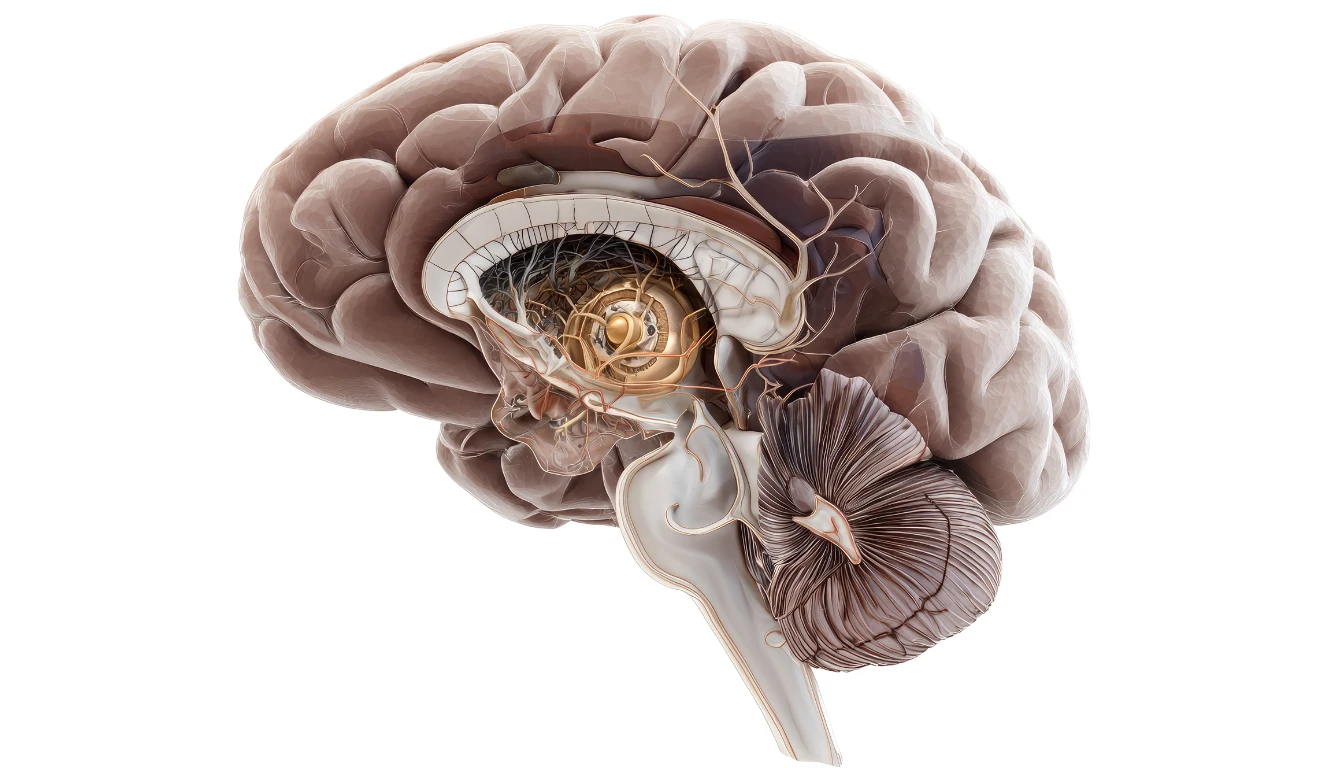
The limbic system is a network in your brain that helps decide one very important thing all day long: am I safe, or am I not?
It includes structures like the amygdala, hippocampus, and hypothalamus. Those names sound technical, but the jobs are pretty relatable:
Amygdala: your alarm system
Hippocampus: your memory and context center
Hypothalamus: your command hub for hormones, temperature, sleep, and stress signals
When everything is working well, the limbic system helps you respond to real danger and then settle back down. You hear a loud bang, jump, realize it’s just the trash truck, and your system resets.
With chronic illness, that reset can stop happening.
Think of it like a smoke alarm that got so sensitized by real smoke that now it screams when you make toast. The alarm isn’t imaginary. It’s just firing too easily.
That matters because the limbic system talks constantly with the autonomic nervous system, the HPA axis, immune signaling, and the vagus nerve and chronic illness picture we see so often in practice. If your brain keeps reading danger, your body may stay in fight-or-flight, freeze, or sympathetic overdrive even when you’re resting in bed.
This is part of why limbic system and chronic illness are so tightly linked. You can be physically exhausted but feel internally revved, tired and wired, shaky, hyper-alert, tearful, unable to sleep, and weirdly reactive.
That reaction is physiological, not moral, not weakness, and not “you being dramatic.” Even mainstream patient resources like medical health guidance describe the close relationship between the brain, stress signaling, and body symptoms. The deeper issue here is that infections like Lyme and mold exposure can train the alarm system to stay on.
And once that pattern sticks, your body can start living like danger is happening 24/7.
What Is Limbic System Dysfunction? Signs and Symptoms
Limbic system dysfunction means your threat-detection network is no longer responding in a flexible, accurate way. It becomes overprotective.
This is where patients get told, “It’s just anxiety,” and understandably want to throw something across the room.
But limbic dysfunction is not a psychiatric dismissal. It does not mean your symptoms are made up or purely emotional. It means the brain-body circuits that regulate danger, interoception, autonomic tone, and sensory filtering have gotten distorted by prolonged illness.
Common limbic system dysfunction symptoms
These symptoms often show up together:
insomnia or light, unrefreshing sleep
adrenaline surges or a “jolted awake” feeling
sound, light, smell, or chemical sensitivity
treatment intolerance or strong Herx-like reactivity
food reactivity that seems to keep expanding
air hunger, palpitations, or shakiness
crashes after stress, travel, or minor exertion
brain fog, panic-like sensations, and a sense that your body is always bracing
For many patients, brain fog and the limbic system are deeply connected. Your thinking feels muddy not because you’re lazy or unmotivated, but because a survival brain doesn’t prioritize clear executive function.
Why symptoms can feel so extreme
When your limbic system is stuck in threat mode, your autonomic nervous system can swing hard:
Sympathetic overdrive: racing heart, sweating, agitation, hypervigilance
Freeze response: shutdown, heaviness, numbness, low motivation
Poor parasympathetic healing: trouble digesting, recovering, sleeping, or feeling safe
This is where polyvagal theory chronic illness gets mentioned. Dr. Stephen Porges’ work suggests the nervous system constantly scans for danger and shifts state based on perceived safety. That doesn’t explain everything, but it’s useful shorthand for why you may feel “stuck” in defense physiology even when you want to relax.
And yes, nervous system regulation chronic illness work can change this over time. That’s the whole idea behind neural retraining, amygdala retraining, and a structured chronic illness nervous system reset.
Have Chronic Illness or Pain?
We have helped thousands of people in Colorado, Wyoming, New Jersey, Pennsylvania, Texas and Wisconsin restore their healthand quality of life by diagnosingand treating their Chronic Illness and Pain.
Why Lyme Disease, Mold, and Chronic Illness Cause Limbic Dysfunction
Lyme disease, Bartonella, mold illness, and related conditions can push the nervous system into a prolonged state of threat for one simple reason: they are biologically stressful on every level.
You’re not dealing with just “stress.” You’re dealing with infection, inflammation, immune activation, disrupted sleep, hormonal strain, sensory overload, trauma from feeling awful for years, and often the emotional gut-punch of not being believed.
That stack matters.
The chronic illness version of a stuck alarm
In Lyme and mold patients, the body may receive repeated danger signals from:
inflammatory cytokines
neurotoxins and mycotoxins
pain and sensory overload
dysautonomia and blood flow changes
repeated Herx reactions
unpredictable symptom flares
years of failed or partial treatment
Over time, the brain learns: everything is dangerous now.
That’s why you might react to a supplement that used to be fine, feel wiped out after a simple errand, or spiral after one poor night of sleep. The system has lost nuance.
Research also supports that Lyme can affect the nervous system directly. A recent review on Lyme neuroborreliosis notes measurable neurologic and neuroinflammatory effects, helping explain why patients can experience ongoing autonomic and cognitive symptoms even beyond the initial infection process.
Why this shows up in POTS and treatment intolerance
Many patients exploring POTS limbic retraining are really asking: why does my body overreact to everything now?
Because the illness has changed your threshold.
If you also have dysautonomia, posture changes, heat, dehydration, exertion, or emotional stress can provoke outsized symptoms. That’s why POTS and limbic dysfunction often overlap clinically.
And if you’ve wondered why Lyme treatment can stop working, nervous system dysfunction is one reason. Sometimes the labs improve while the system itself remains locked in defense.
This is also why mold illness limbic retraining and brain retraining for Lyme disease get so much attention. Not because infection isn’t real, but because infection can train the body to keep acting like the emergency never ended.
What Is Limbic System Retraining?

Limbic system retraining is a structured form of brain-body practice designed to reduce an overlearned danger response and support more accurate signaling between the brain and body.
In simpler terms: it helps teach your smoke alarm to stop going off every time you burn toast.
It’s based on neuroplasticity, the brain’s ability to change with repetition and experience. Norman Doidge popularized this concept in The Brain That Changes Itself, but the underlying principle is mainstream neuroscience: repeated patterns can strengthen, and new patterns can also be built.
What retraining is, and what it is not
Let’s be very clear:
It is not proof your illness is “all in your head.”
It is not a replacement for Lyme or mold treatment.
It does not aid infection.
It is a tool that may help reduce hypersensitivity, improve resilience, and make treatment more tolerable.
That distinction matters. Patients who’ve been medically gaslit are often allergic, fairly, to anything that sounds like positive-thinking with a nicer logo.
Good limbic retraining for chronic illness is not that.
What it usually includes
Most programs combine some version of:
brain pattern interruption
visualization and attention redirection
somatic regulation
breathwork or vagal exercises
incremental exposure to triggers
language shifts that reduce threat signaling
repetition, repetition, repetition
Some clinicians also weave in somatic healing chronic illness tools, interoception work, or trauma-informed methods such as EMDR or somatic experiencing from Dr. Peter Levine’s framework when appropriate.
There is emerging, though still limited, research on these approaches. For example, an amygdala and insula retraining study found improvement in symptom burden in a chronic illness population using a structured retraining intervention. That does not mean every program works for every patient. It does mean the concept isn’t pulled out of thin air.
The real question isn’t whether brain rewiring chronic illness is possible. It is. The better question is: when, for whom, and alongside what other treatment?
That’s where clinical guidance matters a lot.
Have Chronic Illness or Pain?
We have helped thousands of people in Colorado, Wyoming, New Jersey, Pennsylvania, Texas and Wisconsin restore their healthand quality of life by diagnosingand treating their Chronic Illness and Pain.
DNRS, Gupta Program, and Why Dr. Mueller’s Approach Is Different
If you’ve looked into limbic retraining, you’ve probably come across the DNRS program by Annie Hopper and the Gupta program by Ashok Gupta.
Both are legitimate, well-known neuroplasticity-based tools. Both aim to reduce maladaptive brain threat signaling. And both have helped some patients.
So this is not a hit piece. Not even close.
DNRS vs. Gupta: the short version
Here’s the practical difference many patients notice:
Program | General emphasis | Good fit for |
|---|---|---|
DNRS | Structured repetition, pattern interruption, daily practice | People who like clear routines and consistent scripts |
Gupta Program | Neuroplasticity plus meditation-style regulation and coaching elements | People who want a gentler or more reflective style |
Both can be useful forms of neural retraining. But for Lyme, Bartonella, mold, and complex dysautonomia patients, the issue often isn’t just the program itself. It’s integration.
Why Dr. Mueller’s Phase 2 approach is different
Dr. Mueller uses a 4-phase protocol because sequence matters. A lot.
Most practitioners either:
Ignore the nervous system completely, or
Hand patients a standalone retraining program too early and hope for the best.
Neither works well for complex chronic illness.
Dr. Mueller’s proprietary Neuro Reset Program is built into Phase 2, after the body has enough stabilization to engage the work and before deeper treatment gets derailed by constant survival signaling. That timing is one of the biggest differentiators.
Why? Because starting too early can backfire. If you’re severely inflamed, malnourished, in a major mold exposure, or too unstable to regulate, your brain may interpret retraining exercises as one more stressor. Starting too late can also blunt results because the nervous system has had months or years to keep reinforcing danger patterns.
The goal is not to replace root-cause care. The goal is to pair brain retraining for Lyme disease with proper treatment sequencing, refresh support, infection work, autonomic support, and a clinician-guided roadmap.
That’s also why discussions around herx reactions and nervous system matter so much. Sometimes what looks like “I can’t tolerate treatment” is partly a limbic/autonomic amplification problem, not just a dosing problem.
How to Know If You Need Limbic Retraining
Not every patient needs the same level of limbic work. But many chronic illness patients need more of it than they realize.
Here’s the simplest test: are your symptoms only being driven by the infection, or is your whole system now reacting like danger is everywhere?
You may need limbic retraining if…
your labs or infection markers have improved, but you still feel terrible
you plateau around 60-70% and can’t seem to move past it
you react strongly to supplements, medications, refresh, or antimicrobial changes
your sleep stays broken even when you’re exhausted
your body feels stuck in fight or flight chronic illness mode
you have POTS, dysautonomia, startle responses, or adrenaline surges
smells, mold, light, noise, or crowded spaces hit you harder than they used to
you crash after emotional stress as much as physical stress
you’ve been sick so long that your body seems to expect the worst
A small reality check
If you read that list and thought, “Well… that’s annoyingly accurate,” you’re not alone.
Years of illness can train the nervous system. So can years of being told nothing is wrong. That repeated mismatch, you feel awful, everyone says you’re fine, is its own kind of trauma accumulation. It teaches the body to brace.
It may be less about mindset and more about state
This is the part many skeptical patients find relieving: you do not have to “believe your way better.” You do not need to become a relentlessly positive person. You need a safer physiological state.
That’s why nervous system regulation chronic illness work is often more effective when it’s practical and body-based rather than overly abstract. Think patterned repetition, sensory input, orienting, breath, pacing, and reducing threat loops, not pretending you’re fine when you’re clearly not.
If that’s your pattern, limbic system retraining for chronic illness may be worth discussing as an adjunct. Not because your infection is fake. Because your nervous system has adapted to it a little too well.
What Limbic Retraining Looks Like in Practice

This is the question everybody asks next: okay, but what do I actually do?
Fair. Because “retrain your brain” can sound suspiciously like wellness soup.
In real life, limbic retraining usually involves short daily exercises done consistently over months, not one dramatic breakthrough session under a Himalayan salt lamp.
A realistic daily practice
A typical plan may include:
10-15 minutes of a guided retraining practice once or twice daily
pattern interruption when symptoms spike
brief visualization or memory-based safety exercises
body-based regulation work for vagal tone
pacing and trigger reduction
gradual exposure to previously triggering inputs when appropriate
Some patients also use journaling, orienting exercises, gentle movement, or trauma-informed support. The exact method varies, but the point is repetition plus regulation.
What it feels like at first
Honestly? Sometimes awkward. Sometimes emotional. Sometimes boring.
And that’s normal.
If your system has been in survival mode for years, asking it to feel safe can feel strangely unsafe at first. You might notice resistance, grief, irritability, fatigue, or a “this is ridiculous” inner monologue. I’ve seen all of it. That doesn’t automatically mean it’s the wrong approach.
Time commitment, duration, and progress markers
Here’s a grounded expectation set:
What to expect | Typical range |
|---|---|
Daily time | about 15-30 minutes |
Early adaptation period | 2-6 weeks |
Meaningful pattern shifts | often 2-6 months |
Common first wins | better sleep, fewer crashes, less reactivity, improved treatment tolerance |
Progress is rarely linear. It often looks like:
fewer “everything is too much” days
less sensory overload
improved resilience after stress
fewer flares from minor exposures
a little more space between trigger and reaction
That last one is huge.
In Dr. Mueller’s model, this work is guided within a broader protocol so you’re not left wondering whether a setback is infection, refresh strain, autonomic dysregulation, or poor timing. That’s the advantage of a clinician-guided chronic illness nervous system reset over trying to piece together YouTube videos at 1:00 a.m. while your heart is racing.
Conclusion
Your nervous system is not a bystander in chronic illness. Over time, it can become part of the illness itself.
That’s why treating infection alone, without addressing limbic system dysfunction, is such a common reason patients plateau. The labs may improve while your body still acts like the fire is burning.
Dr. Mueller’s 4-Phase approach is designed to treat both pieces together. Phase 2 is where nervous system retraining and regulation come in, and it’s included because most practitioners skip this step when patients need it most.
Dr. Mueller’s proprietary Neuro Reset Program is included in every membership. It is not a separate add-on. If your nervous system has been stuck in survival mode and your current treatment is not producing the results you expected, it may be time to add Phase 2.
Medical disclaimer: This article is for education only and is not a substitute for personal medical care, diagnosis, or emergency treatment.
Have Chronic Illness or Pain?
We have helped thousands of people in Colorado, Wyoming, New Jersey, Pennsylvania, Texas and Wisconsin restore their healthand quality of life by diagnosingand treating their Chronic Illness and Pain.
Frequently Asked Questions
Yes. Neuroplasticity — the brain’s ability to form new neural pathways — is well-established neuroscience. Research on PTSD, trauma recovery, and chronic pain supports nervous system retraining approaches. The application to chronic illness specifically is a newer and growing area of research, with several peer-reviewed studies on DNRS and similar approaches showing significant symptom improvement.
No. Limbic retraining addresses the nervous system component of chronic illness, it is not a treatment for the underlying infection. It is a critical adjunct that improves treatment outcomes, reduces symptom burden, and helps patients hold their progress. The infection still needs to be treated directly.
This varies significantly. Some patients notice improvements within weeks; others require months of consistent practice. The duration and severity of the nervous system dysregulation, and the extent to which underlying infections are being addressed simultaneously, both affect the timeline.
They share common principles: neuroplasticity, pattern interruption, nervous system regulation. Dr. Mueller’s Neuro Reset Program is specifically designed for patients with Lyme disease, mold illness, and chronic co-infection, and is integrated within a full clinical protocol rather than being a standalone program. It’s included in membership, not an extra charge.
References:
Newton, J. L., Okonkwo, O., Sutcliffe, K., Seth, A., Shin, J., & Jones, D. E. J. (2007). Symptoms of autonomic dysfunction in chronic fatigue syndrome. QJM: An International Journal of Medicine, 100(8), 519–526. https://doi.org/10.1093/qjmed/hcm057
Ashar, Y. K., Gordon, A., Schubiner, H., Uipi, C., Knight, K., Anderson, Z., … & Wager, T. D. (2022). Effect of Pain Reprocessing Therapy vs Placebo and Usual Care for Patients With Chronic Back Pain: A Randomized Clinical Trial. JAMA Psychiatry, 79(1), 13–23. https://doi.org/10.1001/jamapsychiatry.2021.2669
Zhang, X., Ge, T., Yin, G., Cui, R., Zhao, G., & Yang, W. (2018). Stress-induced functional alterations in amygdala: Implications for neuropsychiatric diseases. Frontiers in Neuroscience, 12, 367. https://doi.org/10.3389/fnins.2018.00367
Free Lyme/Mold Webinar: "Why Am I Still Sick?"
Have Lyme Disease or suspect that you do?
We have helped thousands of
people restore their health
and quality of life by diagnosing
and treating their Lyme Disease.
“Dr. Mueller’s approach to medicine is refreshing! There is only so much you can do with western medicine and in my life I was needing a new approach. By addressing the whole body, nutritional diet factors, environmental factors, blood work, and incorporating ideas I had not previously known, I was able to break through with my conditions. I am not only experiencing less pain in my life, but through the process of healing guided by Dr. Diane Mueller, I am now happy to say I have more consciousness surrounding how I eat, what to eat and when things are appropriate. Living by example Dr. Mueller has a vibrancy that makes you want to learn and know more about your body and overall health. I highly recommend her to anyone looking for new answers, a new approach to health, or in need of freedom from pain and limitations.”
-Storie S.
Kihei, HI
Lyme Disease is Often Misdiagnosed as Fibromyalgia, Chronic Fatigue, Depression,
or Other Illnesses
Have Chronic Illness or Pain?
We have helped thousands of people in Colorado, Wyoming, New Jersey, Pennsylvania, Texas and Wisconsin restore their healthand quality of life by diagnosingand treating their Chronic Illness and Pain.