
Mold in gut symptoms can show up as bloating, loose stools or diarrhea, cramping, and new reactions to foods you used to tolerate, often alongside fatigue or brain fog. Mycotoxins, the chemicals some molds produce, can damage the gut lining and shift gut bacteria in laboratory and animal research. Human evidence for mold in a home or office causing gut symptoms is thinner and mostly comes from clinical reports.
If your digestion fell apart around the same time you found water damage, and every GI test came back normal, your symptoms are real, and the timing is worth investigating.
In a testimonial about long-standing IBS, not mold, our patient Brian K. from Colorado wrote that Dr. Diane “found a gut issue I’d never been tested for, even after being told I had ‘IBS’ since I was 13.”
IBS (irritable bowel syndrome) is a diagnosis for recurring belly pain and bowel changes when standard tests find no structural cause.

Patients describe bloating, loose stools, cramping, and new food reactions, and the clinical literature lists gastrointestinal problems among typical symptoms of water-damaged building illness. A 2013 clinical review of water-damaged building illness by Hope in The Scientific World Journal describes patients, “many of whom have developed significant gastrointestinal symptoms as a result of their exposure.”
The digestive side can show up in five ways.
If nausea is your main symptom, see our guide on whether mold exposure can cause nausea.
Mycotoxins can injure the cells that line the intestine and change which bacteria thrive there, based mostly on animal and cell research.
Mycotoxins are toxic compounds naturally produced by certain molds. The World Health Organization describes exposure by eating contaminated food, directly or through animal products such as milk.
The WHO mycotoxin fact sheet describes gut effects in people for more than one group. Trichothecenes, which include deoxynivalenol, “can be acutely toxic to humans, causing rapid irritation to the skin or intestinal mucosa and lead to diarrhoea.” For patulin, a toxin found in rotting apples, it says “nausea, gastrointestinal disturbances and vomiting have been reported.” A 2019 Toxins editorial by Alassane-Kpembi and colleagues calls the gastrointestinal tract “the first physiological barrier against food contaminants, as well as the first target” in its overview of mycotoxin effects on the intestine.
A 2018 review by Liew and Mohd-Redzwan, covering trichothecenes, ochratoxins, and aflatoxins, found the reported microbiome effects largely negative, with “beneficial bacteria are eliminated accompanied by an increase of the gut pathogen.” The same 2018 review adds that a healthy, balanced microbiome can clear mycotoxins on its own, and that the microbiome findings came from animal studies (Liew 2018).
Dysbiosis is an imbalance in gut bacteria, where helpful species decline and less helpful ones grow.
For the whole-body picture beyond digestion, see our overview of mycotoxin illness symptoms and recovery.
Mycotoxins can loosen the seals between intestinal cells in cell and animal studies, which raises intestinal permeability, often called leaky gut. Dose and route are the main caveats.
Leaky gut (intestinal permeability) is a state where the tight junctions between cells lining the intestine loosen, so more material passes from the gut into the bloodstream than it should.
Tight junctions are protein seals that hold neighboring intestinal cells together and control what passes between them.
The 2019 Toxins editorial states that mycotoxins “have been shown to impair intestinal permeability in species as different as humans, fish, and pigs.” A 2026 perspective in Frontiers in Fungal Biology cautions that “many experiments use high doses and non-human models,” while real exposure is usually chronic and low-dose (Garcia-Cela 2026).
Repairing an irritated gut lining is its own topic, and our explainer on larazotide and tight-junction repair covers one approach under study.
Mold exposure causing SIBO is a reasonable hypothesis, and no controlled human study has confirmed it. SIBO and mold illness can still show up in the same person.
SIBO (small intestinal bacterial overgrowth) is a condition in which too many bacteria grow in the small intestine, often causing bloating, gas, and changes in stool.
Some clinic and test-company pages, including the leading search result on this topic, suggest mold could contribute to SIBO. Our September 2026 Europe PMC search found no controlled human study testing that question.
The 2013 Hope review notes that antibiotics and steroids used during illness “can result in profound alteration in gastrointestinal flora,” which can reduce the gut’s own handling of mycotoxins. If SIBO is part of your picture, food choices matter while the root cause gets addressed, and our SIBO diet guide for chronic illness walks through that.
Mold and Candida are both fungi, and they are different organisms with different roles in the gut.
Candida is a yeast that normally lives in the gut, mouth, and skin, and causes symptoms only when it grows out of control, according to the CDC.
| Feature | Environmental mold | Candida |
|---|---|---|
| Type of fungus | Filamentous mold (for example Aspergillus, Penicillium) | Yeast |
| Main way it affects the gut | Mycotoxins, mostly through food in the research | Overgrowth of your own yeast |
If you have taken long antibiotic courses, our page on gut health after antibiotics explains that side of the story.
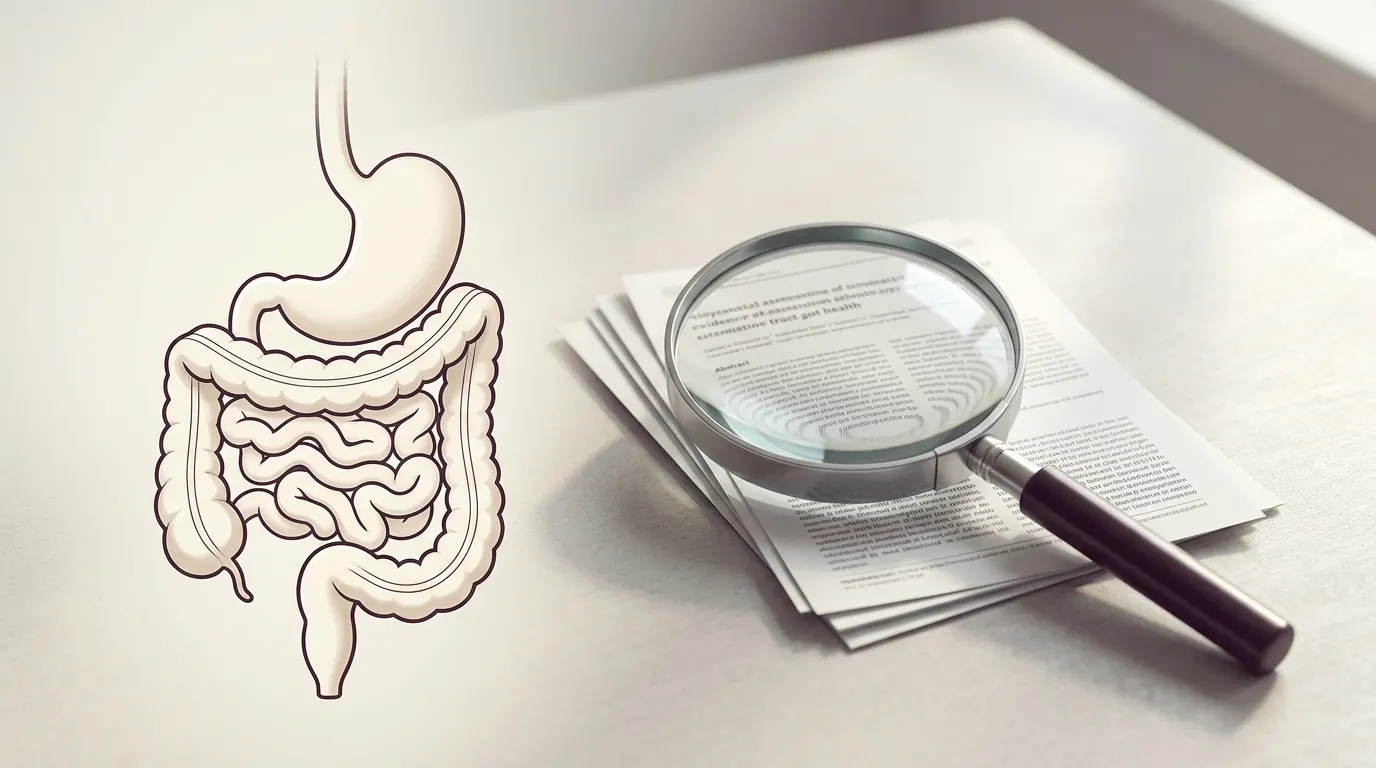
Research supports mycotoxins harming the gut in food and animal studies, while evidence for indoor mold causing gut symptoms in people is limited. Here is how each common claim holds up.
| Claim | Strongest evidence | Source |
|---|---|---|
| Damp, moldy buildings are linked to cough, wheeze, and asthma symptoms in sensitized people | Human population studies, rated sufficient evidence of association | WHO 2009 guideline |
| Some food-borne mycotoxins cause diarrhea in people | Human reports after eating contaminated food | WHO mycotoxin fact sheet |
| Mycotoxins raise intestinal permeability | Cell and animal studies, with human data cited in the editorial; dose relevance questioned | Toxins 2019 editorial; Garcia-Cela 2026 |
| Mycotoxins shift gut bacteria | Animal studies only | Liew 2018 review |
| Indoor mold exposure causes gut symptoms | Narrative clinical review plus one small questionnaire study; no controlled trial | Hope 2013 review; Hyvonen 2020 |
| Mold exposure causes SIBO | Hypothesis, no controlled human study found | Europe PMC search, September 2026 |
The World Health Organization’s 2009 dampness and mould guideline set aside outcomes like nausea because limited research had been reported on them. It concluded that the evidence for mycotoxins causing health problems through indoor air is “extremely weak” (WHO 2009 guideline).
A 2015 US Consumer Product Safety Commission staff statement noted that “much of the documented human exposure to molds and mycotoxins has been via food,” and that inhalation data are very limited (CPSC 2015).
A small human study adds some weight. In a 2020 Finnish questionnaire study, gastrointestinal problems were reported by 51% of 47 pupils at a water-damaged school, compared with 4% of 56 pupils at a healthy school (Hyvonen 2020). The study was small and relied on self-report, so it shows an association rather than proof of cause.
Weak evidence is not the same as no effect. Your symptoms are real either way, and the practical question is what is driving them in your body.
Gut symptoms that started or worsened in a specific building, and ease when you are away from it, point toward mold as a contributor. Other causes still need a look.
These are clues clinicians often ask about, not proof.
The 2013 Hope review lists gastrointestinal problems among the symptoms of a typical patient with water-damaged building illness, next to fatigue, neurocognitive symptoms, headache, and insomnia.
CIRS (chronic inflammatory response syndrome) is a multi-system inflammatory illness that some clinicians link to exposure to water-damaged buildings.
Mast cell activation is a pattern where mast cells, a type of immune cell, release histamine too easily, affecting the gut, skin, and breathing.
Rule out these other drivers with your care team.
The WHO’s 2009 guideline recommends that dampness and mould-related problems be prevented, and remediated when they occur, because they raise the risk of hazardous exposure to microbes and chemicals. The EPA mold guide suggests keeping indoor humidity below 60 percent, ideally between 30 and 50 percent. A building inspection tells you whether the home has a mold problem, while a lab test looks at your body. Urine mycotoxin panels are popular and have real limits, which our breakdown of what a urine mycotoxin test can and cannot show explains.
We address mold in gut symptoms with Dr. Mueller’s 4-Phase Method, which builds the body first and leaves targeted microbe balancing, including the gut microbiome, for last. As general guidance on exposure, the 2013 Hope review writes that “complete removal from exposure and contaminated items cannot be emphasized enough although it is often not sufficient for some people to regain health.”
The 4-Phase Method is her general method rather than a gut-specific protocol.
Enterohepatic circulation is a loop in which compounds released into bile reach the intestine and are reabsorbed back into the body.
The detox step deserves care. The 2013 Hope review in The Scientific World Journal describes mycotoxins that “enter enterohepatic circulation,” and binding agents as nonabsorbable materials “capable of binding toxins in the gastrointestinal tract.” Binders can also bind nutrients and medications. Our guide to binders for mold detox compares the options, and this page does not publish a dosing protocol.
A useful next step for mold in gut symptoms is an evaluation that looks at your exposure history, your gut, and the rest of your symptoms together. Dr. Mueller builds the body first, before anything aggressive. If you want help sorting out your own case, you can book a visit with Dr. Mueller.
We see patients by telehealth in Colorado, Oregon, Wyoming, New Jersey, Pennsylvania, Texas, Wisconsin, New Hampshire, Alabama, South Dakota, and Vermont, with our office in Colorado.