

Written by Dr. Diane Mueller
Free tick testing near me sounds like the perfect next step after a bite. You find the tick, send it off, and hope the answer will settle your nerves. But the truth is less comforting: a tick test can give useful clues, yet it cannot tell you whether you will get sick.
That gap matters. I’ve seen too many people wait for a lab report while early Lyme symptoms quietly build, fatigue, chills, neck pain, a rash that never looks like the textbook bull’s-eye. If you live in the Seattle area, this gets even more confusing because truly free local tick testing is hard to find, and many “near me” results lead to paid mail-in labs instead.
This guide will help you sort signal from noise. You’ll learn what tick testing can show, where to look for low-cost options in Seattle, and what to do right away so you do not lose valuable time.
Searching for free tick testing near me often leads to paid mail-in labs, especially in Seattle where truly free local programs are hard to find.
Tick testing can identify the tick species and possible pathogens, but it cannot diagnose whether you were infected or predict if you will get sick.
A negative tick test does not rule out Lyme disease, so track symptoms like rash, fever, fatigue, joint pain, and brain fog for at least 21 days.
After a tick bite, remove the tick properly, document the bite with photos and dates, and contact a doctor quickly if you have an engorged tick, rash, or flu-like symptoms.
If you suspect Lyme disease, use the tick result as one clue and base next steps on your symptom timeline, exposure history, and a timely medical evaluation.
We have helped thousands of people in Colorado, Oregon, Wyoming, New Jersey, Pennsylvania, Texas, Wisconsin, New Hampshire, Alabama, South Dakota, and Vermont restore their health and quality of life by diagnosing and treating their Lyme Disease.
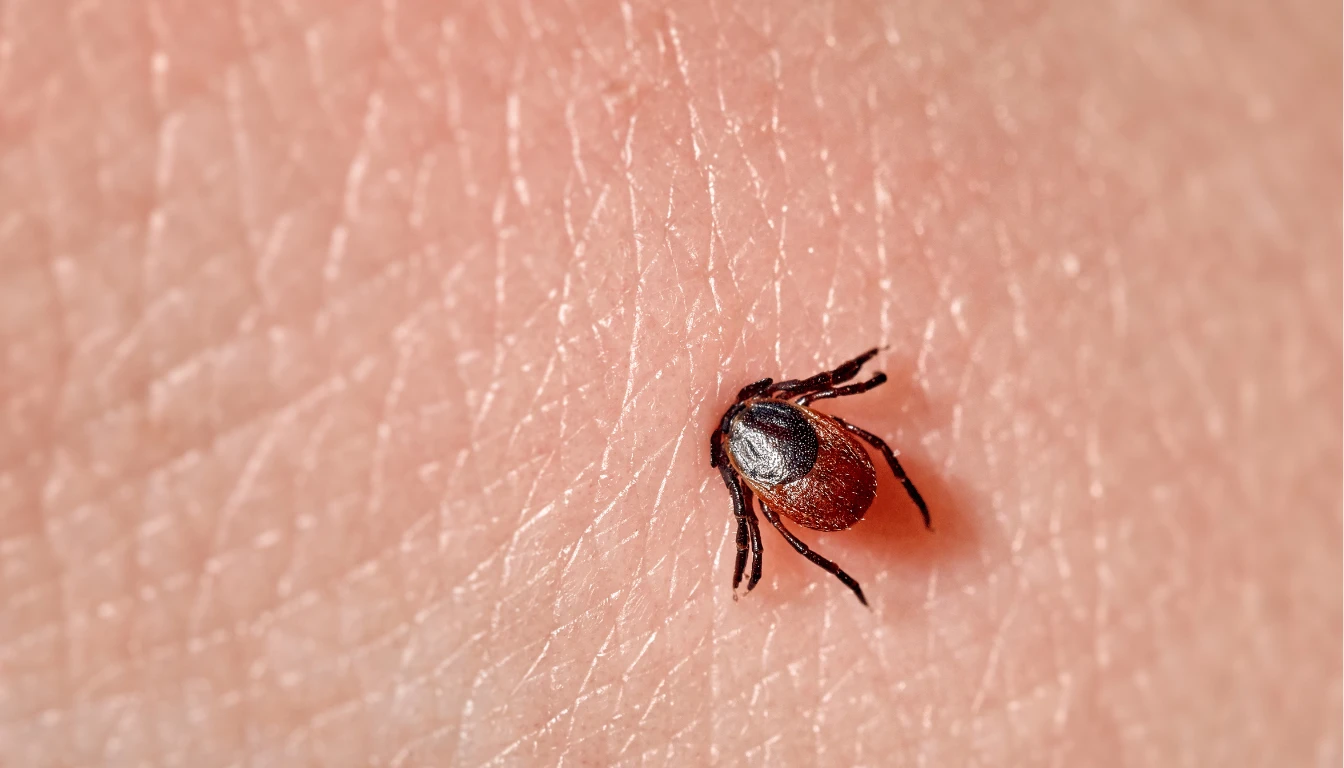
A tick test can identify what was in the tick. It cannot confirm whether the infection entered your body, how long the tick fed, or whether your immune system is already reacting.
That distinction is the whole story. People often assume a positive tick result means they have Lyme disease, or a negative result means they are safe. Neither is true.
Most tick testing labs use methods such as qPCR or microscopy to identify:
Tick species
Level of engorgement
Pathogens in the tick, such as Borrelia burgdorferi
Sometimes co-infections like Babesia, Anaplasma, or Ehrlichia
In practice, the process is simple. You remove the tick, seal it in a container, complete a form, and mail it to a lab. National services such as TickCheck, Ticknology, IGeneX, and Tick Report usually charge a fee, even when people search for free tick testing near me.
If you are also trying to compare human testing options, this guide on choosing the right Lyme testing approach can help you sort through timing, test type, and common blind spots.
The key point is this: tick testing is environmental information, not a diagnosis. The National Library of Medicine supports this general principle across infectious disease research: lab findings need clinical context to mean much.
Do this today: If you want to test a tick, decide in the next 15 minutes whether the result would change your actions. If not, focus first on symptom tracking and medical advice.
This is where people get burned. A negative tick report can create false calm.
A lab can miss an organism for several reasons:
The tick was damaged in removal or shipping
The lab panel did not include every pathogen
The organism load was too low to detect
The tick that bit you was not the only tick
And there is a deeper issue. A person can still get sick even when the tested tick is negative. Maybe that was not the only exposure. Maybe symptoms started before you found the tick. Maybe you were bitten days earlier and never saw it.
I’ve seen this pattern in patients who spent weeks reassuring themselves with one negative report, then developed migrating pain, air hunger, or crushing fatigue later. By then, the story was bigger than the tick.
If you want to understand why human testing often needs more nuance than a simple yes-or-no result, review this overview of Lyme disease testing.
Do this today: Start a symptom log on your phone. It takes 5 minutes. Write down the bite date, body location, rash changes, fever, joint pain, and fatigue levels.
We have helped thousands of people in Colorado, Oregon, Wyoming, New Jersey, Pennsylvania, Texas, Wisconsin, New Hampshire, Alabama, South Dakota, and Vermont restore their health and quality of life by diagnosing and treating their Lyme Disease.
Here’s the surprise: in the Seattle area, truly free tick testing is hard to find. Many search results look local, but they lead to paid mail-in services or general public health pages that do not test ticks.
That can feel frustrating, especially if you live near Green Lake, Capitol Hill, or out toward the Eastside and expected a county program to handle it. Right now, most people in Seattle end up using paid national labs.
Public health offices often track outbreaks. They do not always offer public tick testing.
In Seattle, Public Health – Seattle & King County offers many useful services, but current sources do not show a free tick-testing program for residents. That means a search for free tick testing near me may not lead to an actual county option.
Some urgent care centers can help with tick removal or evaluate a rash, but that is not the same as testing the tick itself.
Your low-cost path may include:
Calling your county health department and asking about vector surveillance
Checking whether your state public health lab accepts ticks for monitoring
Asking urgent care if they remove ticks and document engorgement
Comparing mail-in lab pricing before you ship
Do this today: Spend 20 minutes calling local public health and one urgent care near you. Ask one direct question: “Do you test ticks from the public, or only offer medical evaluation after bites?”
University and extension programs sometimes collect ticks for research. But in Seattle, current information does not show a clear public-facing free option.
That means most residents still rely on national services. If you are in Western Washington, from Ballard to Bellevue, the practical choice is usually a paid mail-in lab. Be careful with outdated blog posts that imply free local testing exists when it no longer does.
When you compare services, look at:
Pathogens included in the panel
Turnaround time
Whether they identify species and engorgement
Cost for single-pathogen vs multi-pathogen panels
If your bigger question is whether you should test yourself rather than the tick, start with this review of at-home Lyme disease test options and this breakdown of Lyme disease testk kit.
Do this today: Before paying for a panel, compare three labs side by side. Note price, pathogens tested, and whether the result would change your next step.
The first 10 minutes after a tick bite matter more than most people think. Good removal, good documentation, and early symptom tracking can save you days of confusion later.
Do not wait passively for lab results. Act now.
Use fine-tipped tweezers. Grab the tick as close to the skin as possible, then pull upward with steady pressure. Do not twist, crush, burn, or coat it with oil.
After removal:
Clean the skin with soap and water or rubbing alcohol
Put the tick in a sealed bag or vial
If the lab requires it, store it as instructed: some accept ticks in alcohol, others do not
Write down the date, body site, and likely exposure location
Take a clear photo of the bite and the tick
Transmission risk rises with feeding time, and many sources use about 36 hours as an important reference point for Lyme transmission risk. But you will not always know how long the tick was attached. That uncertainty is exactly why symptoms and clinical judgment matter.
Do this today: Remove the tick now if it is still attached. Then set a 2-minute timer and photograph the tick, the bite, and any rash.
The early signs can feel almost insultingly mild. A little fever. A weird nap-crash at 3 p.m. A stiff neck you blame on sleep.
Watch for:
Rash, including one that does not look like a bull’s-eye
Fever or chills
Headache
Fatigue
Muscle or joint pain
Swollen lymph nodes
Brain fog or unusual light sensitivity
Many patients miss the first window because symptoms look like a summer virus. I made this mistake early in my own work with complex tick-borne cases too, I used to ask only about the classic rash. That was too narrow. Real cases are messier.
Do this today: Track symptoms once a day for 21 days. Use a notes app. Score fatigue, pain, fever, and cognition from 0 to 10.
Some situations need prompt care. Do not “watch and wait” if clear warning signs are already present.
Seek medical care quickly if you have:
An engorged tick and you suspect long attachment
A spreading rash
Flu-like symptoms after a bite
Severe headache, neck stiffness, shortness of breath, or fainting
New facial droop, chest pain, or palpitations
This advice is for people with fresh bites and new symptoms. It is not enough for someone with months or years of chronic illness. That group often needs a broader review.
Do this today: If you have rash, fever, or an engorged tick, call urgent care or your doctor within the next hour and ask whether you need same-day evaluation.
We have helped thousands of people in Colorado, Oregon, Wyoming, New Jersey, Pennsylvania, Texas, Wisconsin, New Hampshire, Alabama, South Dakota, and Vermont restore their health and quality of life by diagnosing and treating their Lyme Disease.
A tick report is a clue. Your symptoms are the case.
That is the simplest way to say it. Doctors diagnose and treat people, not insects.
Early Lyme can look ordinary. That is why it gets missed.
One patient told me her first week felt like “a bad travel day that never ended.” She had chills, a sore scalp, and bone-deep fatigue, but no obvious bull’s-eye rash. Another had only sudden anxiety, neck pain, and a strange sense of heat in one knee. Both would have been easy to brush off.
Symptoms can include:
Fatigue that feels out of proportion
Migrating aches
Low-grade fever
Headache
Dizziness
Sleep disruption
Mood changes or brain fog
And yes, standard testing can miss early infection, especially before antibodies rise.
Do this today: If you feel “off” after a bite, stop minimizing it. Write one sentence that describes the change in plain language: “Since Tuesday, I need a nap after climbing one flight of stairs.”
This is the core mistake behind many searches for free tick testing near me. People expect the tick result to act like a shortcut for human diagnosis.
It does not. Tick testing asks: Was a pathogen found in this tick? Human testing asks: Is your body showing evidence of infection or immune response? Those are different questions.
A person with symptoms may still need:
Clinical evaluation
A review of exposure history
Human Lyme testing based on timing
Assessment for co-infections
Follow-up if symptoms persist even though normal early labs
For readers who feel stuck between “your test is negative” and “you still feel terrible,” this is where root-cause medicine matters. On My Lyme Doc, the focus is not just one lab value. It is the full symptom pattern, test timing, and what else may be driving illness.
Do this today: Bring both facts to your appointment: the tick details and your symptom timeline. One without the other gives an incomplete picture.
If you suspect Lyme disease, use a step-by-step plan. That lowers panic and helps you act while the facts are still fresh.
I use this sequence because order matters. People lose time when they chase the tick result but ignore the person.
Ask direct questions. Specific questions often get better answers.
Use this short list:
How long does this tick appear to have been attached?
Does the bite, rash, or symptom pattern justify treatment or prophylaxis?
When should human Lyme testing be done for best accuracy?
Should I be watched for co-infections too?
What changes mean I should call back right away?
This advice is for people with a recent bite or new symptoms. It is not a substitute for emergency care.
Do this today: Copy those five questions into your phone before your appointment. It takes 60 seconds and keeps brain fog from derailing the visit.
Here is the hard truth: sometimes the tick bite is only the beginning of the story. If symptoms continue, you may need a broader review than “Was this one tick positive?”
Persistent fatigue, neuropathy, sleep disruption, air hunger, dizziness, or post-exertional crashes can point to a more complex picture. In some patients, Lyme is part of a larger pattern that also includes mold exposure, gut issues, immune strain, or nervous system dysregulation.
That does not mean every chronic symptom is Lyme. But it does mean a narrow workup can miss the real driver.
A broader root-cause workup may look at:
Lyme and common co-infections
Mold or mycotoxin exposure history
Thyroid and hormone function
Gut health and nutrient status
Inflammation and detox capacity
Nervous system stress patterns
This is especially relevant for people who have been told “everything is normal” while their body says otherwise. Those are the patients we see most often at My Lyme Doc.
Do this today: If symptoms have lasted more than 4 to 6 weeks, make a timeline of your health decline. Include bites, water-damaged buildings, major infections, and new symptoms. That document can save weeks in your workup.
Searching for free tick testing near me makes sense. You want a fast answer after something unsettling. But the safest approach is to treat tick testing as one data point, not the final word.
If you are in Seattle, expect that most real options will be paid, mail-in services rather than truly free local programs. More important, do not let a tick result, positive or negative, override what your body is telling you.
If you have symptoms, act on the symptoms. If you keep getting dismissed, push for a fuller evaluation. And if the story no longer fits a simple post-bite question, get a broader root-cause workup so you can stop guessing and start getting real answers.
Usually no. In the Seattle area, current sources do not show a truly free public tick-testing program for residents. Most “free tick testing near me” results lead to paid mail-in labs such as TickCheck, Ticknology, Tick Report, or IGeneX, while local urgent care clinics may help with removal but not test the tick.
A tick test can identify the tick species, estimate engorgement, and detect pathogens inside the tick, often using qPCR or microscopy. It cannot tell you whether the infection entered your body, how long the tick fed with certainty, or whether you will develop Lyme disease or another tick-borne illness.
A negative result can miss infection for several reasons: the tick may be damaged, the lab panel may not include every pathogen, or the organism level may be too low to detect. You also may have had another unnoticed bite. That is why symptoms and medical evaluation matter more than the tick result alone.
Use fine-tipped tweezers and pull upward with steady pressure as close to the skin as possible. Do not twist, burn, or crush the tick. Clean the area, then place the tick in a sealed bag or vial and follow the lab’s storage instructions, since some accept alcohol and others do not.
Watch for rash, fever, chills, headache, fatigue, swollen lymph nodes, muscle or joint pain, brain fog, or light sensitivity in the days and weeks after the bite. Early Lyme symptoms can look like a mild flu and may not include a classic bull’s-eye rash, so daily symptom tracking is helpful.
Seek medical care promptly if you have an engorged tick, a spreading rash, flu-like symptoms after a bite, or warning signs such as severe headache, neck stiffness, shortness of breath, fainting, facial droop, chest pain, or palpitations. Tick testing is not a diagnosis, so do not delay care while waiting on results.
We have helped thousands of
people restore their health
and quality of life by diagnosing
and treating their Lyme Disease.
“Dr. Mueller’s approach to medicine is refreshing! There is only so much you can do with western medicine and in my life I was needing a new approach. By addressing the whole body, nutritional diet factors, environmental factors, blood work, and incorporating ideas I had not previously known, I was able to break through with my conditions. I am not only experiencing less pain in my life, but through the process of healing guided by Dr. Diane Mueller, I am now happy to say I have more consciousness surrounding how I eat, what to eat and when things are appropriate. Living by example Dr. Mueller has a vibrancy that makes you want to learn and know more about your body and overall health. I highly recommend her to anyone looking for new answers, a new approach to health, or in need of freedom from pain and limitations.”
-Storie S.
Kihei, HI