


By Dr. Diane Mueller, ND, LAc, DAOM
Semax is a synthetic peptide, an analog of a small fragment of ACTH, developed in Russia. It is studied for its ability to raise brain-derived neurotrophic factor, or BDNF, a protein your brain needs for neuroprotection and to repair and grow new neural connections. Delivered as an intranasal spray, it is not FDA-approved in the United States. Here, it is used as a compounded, investigational research tool, most often to support memory, focus, and mental clarity in people whose brain fog has not responded to conventional care.
You have already been told your labs are normal. You still cannot find the word you’re looking for mid-sentence, or you read the same paragraph three times and none of it lands. That disconnect, between “your bloodwork is fine” and “your brain clearly isn’t,” is exactly what brain fog means clinically, and it is the gap this research is trying to close.
Semax is a synthetic heptapeptide, a chain of seven amino acids, built from a fragment of adrenocorticotropic hormone (ACTH). It has been modified to keep its effects on the brain while removing its hormonal action on the adrenal glands.
Researchers at the Institute of Molecular Genetics of the Russian Academy of Sciences developed Semax in the 1980s, and it has been used clinically in Russia for decades for stroke recovery and cognitive decline. It has never gone through FDA review in the United States, so it is classified here as an investigational, research-use compound rather than an approved drug. That regulatory gap does not mean the underlying biology is unstudied. It means the clinical trial infrastructure that exists in Russia has not been repeated at the same scale in a US-based, peer-reviewed pipeline yet.
Semax belongs to the broader category of peptide therapies used in Lyme and chronic infection care. The goal there is not to kill a pathogen directly but to re-signal a system that has stopped functioning the way it should.
Semax’s best-documented action is on brain-derived neurotrophic factor, the protein that tells your neurons to survive, branch, and form new connections in a process researchers call neuroprotection. In a controlled rat study, a single intranasal dose produced a 1.4-fold increase in hippocampal BDNF protein. Gene expression in the same brain region, tied to memory consolidation, rose 3-fold. A related study from the same research group reports an effect on BDNF that extends beyond the hippocampus to other regions of the rat brain. The original data are not independently retrievable to verify the specifics, so treat that broader, multi-region claim as reported but unconfirmed rather than established.
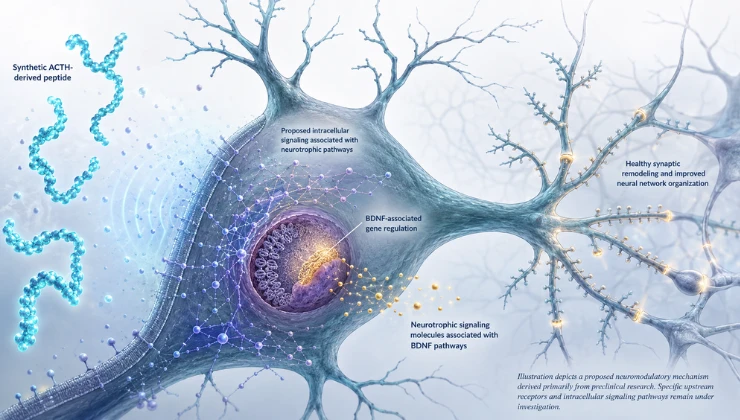
Peptides work as signaling molecules, not as replacement chemicals. Semax does not add BDNF to your brain the way a supplement adds a vitamin. It nudges your own cells to produce more of it, the same logic behind growth hormone peptides that signal your pituitary to release growth hormone your body is already capable of making. Rather than supplying growth hormone directly, the peptide simply sends the signal to make more.
Alongside BDNF, it is reported to influence dopamine and serotonin activity, which is the proposed mechanism behind its effects on attention and mood regulation. None of this evidence comes from large US trials. It comes primarily from Russian clinical and preclinical research, and that context should shape how confidently any claim gets stated, including the ones on this page.
We have helped thousands of people in Colorado, Wyoming, New Jersey, Pennsylvania, Texas, Wisconsin restore their health and quality of life by diagnosing and treating their Lyme Disease.
Semax is discussed for brain fog because neuroinflammation, the immune activation that persists after Lyme disease or mold exposure, degrades the same BDNF-driven signaling capacity it is studied to support. Patients who come through our door describing brain fog rarely mean simple tiredness. They mean losing a word they use every day, walking into a room and forgetting why, or feeling like their thoughts are moving through fog that never lifts no matter how much they sleep. If you are living this and every specialist has told you your labs look fine, you are not imagining it, and you are not alone in it.
Brain fog in Lyme disease and mold illness is frequently driven by ongoing neuroinflammation. The immune system stays activated long after the initial infection or exposure, and that low-grade inflammatory state interferes with normal neural signaling.
Chronic mold exposure and CIRS follow a similar pattern, where inflammatory mediators disrupt the same neural pathways that BDNF is meant to support and repair. This is where the Semax research becomes clinically relevant beyond the nootropic-biohacker framing it usually gets. If neuroinflammation is degrading signaling capacity in the brain, a peptide studied for restoring that capacity is a legitimate, if still investigational, tool to consider.
It is not a starting point. Getting rid of brain fog that has built up over months or years of chronic infection almost never resolves from a single intervention layered onto an unaddressed root cause. It is discussed here because patients ask about it by name, not because it belongs at the front of a treatment plan.
Semax comes up frequently in searches tied to focus and attention, and the honest answer is that the evidence here is thinner than the evidence for its cognitive effects generally. One published paper proposed it as a potential agent for ADHD, reasoning that it can augment dopamine release and stimulate BDNF synthesis. Because ADHD involves dysregulated dopamine signaling, the mechanism is plausible enough to warrant study. That paper is a hypothesis paper, a reasoned proposal for future research, not a completed clinical trial in ADHD patients. Treat “semax for adhd” claims you see elsewhere with real skepticism if they present this as settled science. It isn’t yet.
We have helped thousands of people in Colorado, Wyoming, New Jersey, Pennsylvania, Texas, Wisconsin restore their health and quality of life by diagnosing and treating their Lyme Disease.
Most peptides cannot survive an oral dose. Stomach acid and digestive enzymes break the amino acid chain apart before it ever reaches the bloodstream. That is why most therapeutic peptides are given by injection or, for a smaller group including Semax and Selank, intranasally. The nasal cavity sits close to olfactory nerve pathways that provide a more direct route toward the central nervous system, letting the peptide reach brain tissue without needing to survive the digestive tract first.
BPC-157 is the notable exception in this peptide category: its structure allows an oral capsule to survive digestion intact because its primary target, intestinal tissue, is exactly where an oral dose lands. Semax does not share that structural advantage, so intranasal administration is the standard delivery method in both the research literature and clinical use.
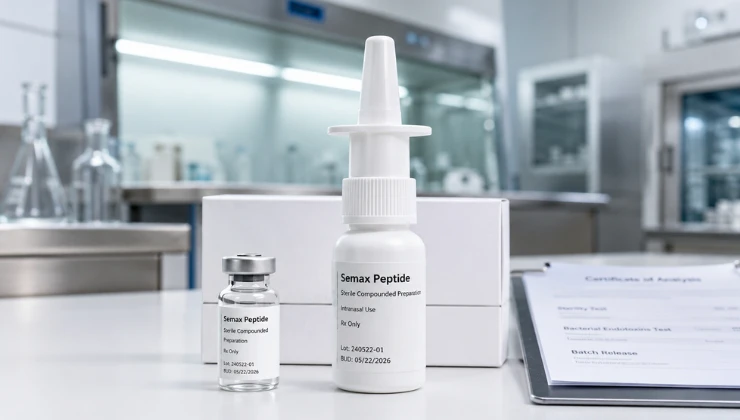
Short-term studies describe Semax as generally well-tolerated, with mild nasal irritation as the most commonly reported side effect. That safety picture, though, depends entirely on where the peptide comes from, and this is the part of the conversation most peptide content skips.
Peptides sold as “research chemicals” through online research-only suppliers are not held to pharmaceutical manufacturing standards. That gap matters because these facilities can carry lipopolysaccharide (LPS) contamination, an endotoxin left over from the bacterial production process. LPS contamination has been linked to disruption of the blood-brain barrier and to driving leaky gut and autoimmune inflammation. Injecting or spraying a contaminated peptide directly into a system you are trying to calm down can undo the work you came in to do.
A licensed compounding pharmacy working from a physician’s prescription is a fundamentally different supply chain: sterile compounding standards, verified purity testing, and accountability that a research-only vendor simply does not carry. Whether peptides are safe is almost always a sourcing question before it is a molecule question, and it is worth asking directly wherever you are considering peptide therapy.
Two additional safety notes worth knowing. First, growth hormone peptides, a different category than Semax, should never be used by anyone with active or a history of cancer, since GH signaling can theoretically support tumor growth. Second, immune-stimulating peptides like LL-37 and thymosin alpha-1 carry Herxheimer risk and require caution in autoimmune conditions, where the immune system is already over-activated. Its profile is different, since it acts on neural signaling rather than immune activation. But the general principle holds across the whole category: peptides are potent enough to require medical oversight.
We have helped thousands of people in Colorado, Wyoming, New Jersey, Pennsylvania, Texas, Wisconsin restore their health and quality of life by diagnosing and treating their Lyme Disease.
At MyLymeDoc, we do not reach for peptides first. Our four-phase approach builds the body’s foundation before adding targeted repair tools:
Most clinics jump straight to killing the pathogen. That is exactly why so many patients crash, herx hard, and give up. We build the body first, so that by the time a tool like Semax enters the picture, the nervous system has the capacity to actually use the signal it’s being given.
For patients whose chronic illness carries significant anxiety alongside the cognitive symptoms, Selank is frequently considered alongside Semax. Both are intranasal peptides from the same research lineage, but Selank’s primary studied effect is anxiolytic (calming) rather than cognitive.
If brain fog, anxiety, or cognitive fatigue from chronic infection or mold illness sounds familiar, book a consultation to talk through whether it fits your specific case.
| Semax | |
|---|---|
| Category | ACTH(4-10) analog, neurotrophic peptide |
| Primary studied effect | BDNF/trkB upregulation, cognitive and memory support |
| Delivery | Intranasal spray (standard); injectable (alternative) |
| FDA status | Not FDA-approved; investigational in the US |
| Best-supported use | Cognitive fatigue, memory, focus support |
| Weakest evidence | ADHD (hypothesis-stage only) |
| Where it fits at MLD | Phase 4, after foundational and detox phases |
| Sourcing requirement | Compounding pharmacy, physician-prescribed only |
Semax is legal to possess and use as a research compound, but it is not FDA-approved as a drug for any condition. In clinical use, it is prescribed and compounded through a licensed pharmacy under physician oversight rather than purchased as an approved medication.
Human trial data on onset timing is limited. The available preclinical research shows BDNF changes in animal models after a single dose, not a verified human treatment-cycle timeline, so no specific “days to results” figure is currently supported by the evidence. Individual response varies, and any timeline should come from your prescribing provider, not a generic protocol.
There is no clinical trial testing Semax specifically in Lyme or mold-illness populations. What exists is mechanistic evidence that it raises BDNF and supports neural signaling, which is biologically relevant to the neuroinflammation-driven brain fog these patients describe. It is one consideration among several, not a proven fix on its own.
Reported side effects are generally mild: nasal irritation, occasional headache, or changes in alertness. Long-term safety data outside Russian clinical use remains limited, which is part of why sourcing and physician oversight matter.
Semax and Selank are frequently used together in a Russian-lineage intranasal peptide stack, one for cognitive support and the other for anxiety, without documented adverse interaction in the available literature. Any combination protocol should still be built and monitored by your provider.
We have helped thousands of
people restore their health
and quality of life by diagnosing
and treating their Lyme Disease.
“Dr. Mueller’s approach to medicine is refreshing! There is only so much you can do with western medicine and in my life I was needing a new approach. By addressing the whole body, nutritional diet factors, environmental factors, blood work, and incorporating ideas I had not previously known, I was able to break through with my conditions. I am not only experiencing less pain in my life, but through the process of healing guided by Dr. Diane Mueller, I am now happy to say I have more consciousness surrounding how I eat, what to eat and when things are appropriate. Living by example Dr. Mueller has a vibrancy that makes you want to learn and know more about your body and overall health. I highly recommend her to anyone looking for new answers, a new approach to health, or in need of freedom from pain and limitations.”
-Storie S.
Kihei, HI