


If you have spent years being told your labs are “normal” while your body feels anything but, you already know the standard workup misses things. Tesamorelin keeps surfacing in patient research for a reason: it has real FDA-approved data behind it, not just forum anecdotes. In my practice, I see tesamorelin benefits patients rarely hear about anywhere else.
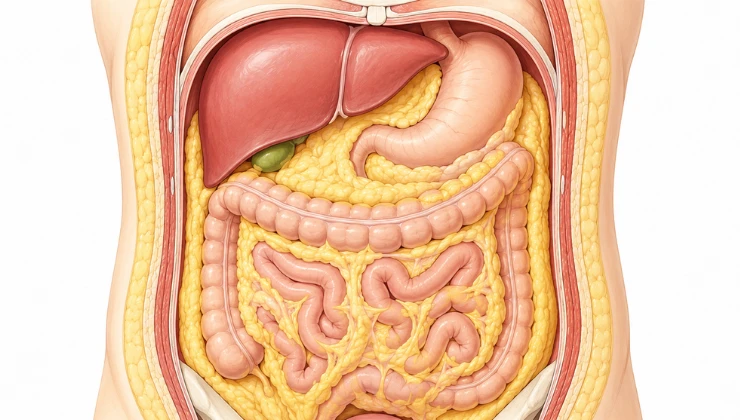
Tesamorelin benefits fall into two categories. The first is well documented. This growth-hormone-releasing peptide is FDA-approved, under the brand name Egrifta, to reduce visceral fat in adults with HIV-associated lipodystrophy. Clinical trials show measurable reductions in both visceral fat and liver fat. * The second category is less publicized but, in my experience treating patients with chronic infection, often matters more day to day: pain reduction and noticeably deeper sleep.
Most of what gets written about tesamorelin online comes from body-composition and longevity clinics, and it is not wrong. It is incomplete for anyone dealing with chronic Lyme disease, mold illness, or another infection-driven condition where fatigue, pain, and broken sleep are the daily reality.
Tesamorelin is a synthetic analog of growth-hormone-releasing hormone (GHRH), a 44-amino-acid peptide that signals the pituitary gland to produce and release more of the body’s own growth hormone.
Tesamorelin was approved by the FDA in 2010, under the brand name Egrifta, to reduce excess visceral fat in people with HIV-associated lipodystrophy, a condition where antiretroviral therapy causes abnormal fat redistribution. It remains one of the only peptides in this category with a human-trial-backed FDA indication, setting it apart from peptides supported mainly by animal studies or anecdotes.
Outside that approved use, tesamorelin is used off-label for body composition and recovery. In my practice, it is part of a broader Phase 4 peptide strategy for patients whose bodies are ready for targeted repair. That readiness comes only after the foundational work of building adrenal, thyroid, and gut function is already done.
Tesamorelin’s FDA-approved benefits center on measurable, trial-documented reductions in visceral fat and liver fat, evidence stronger than for most peptides on the market and exactly why it earned FDA approval in the first place.
A 2023 clinical study of adults with HIV on integrase-inhibitor therapy found that tesamorelin produced an 8.3 percent reduction in visceral adipose tissue, versus a 10.8 percent increase on placebo, a statistically significant difference. * The same study found a 31 percent relative reduction in liver fat among tesamorelin-treated participants. *
Documented benefits include:
These are the benefits most peptide clinic websites list, and they are accurate. What those sites will not tell you is what happens beyond body composition, particularly for patients whose baseline problem is chronic infection and immune exhaustion, not excess fat.
We have helped thousands of people in Colorado, Wyoming, New Jersey, Pennsylvania, Texas, Wisconsin restore their health and quality of life by diagnosing and treating their Lyme Disease.
Patients on tesamorelin describe measurably deeper, more restorative sleep, often within the first few weeks, and it is the benefit they bring up before I ever ask about it. It barely gets discussed anywhere else online.
Growth hormone is released in its largest pulses during deep, slow-wave sleep. * Chronic-infection patients, whether the driver is Lyme disease, Bartonella, or mold illness, very often have disrupted, shallow sleep. The nervous system stays in a low-grade alarm state, and deep sleep, the repair stage, gets shortchanged night after night.
A controlled study found that GHRH administration increased the amount of slow-wave sleep from 14.0 percent of total sleep time on placebo to 20.2 percent on GHRH, roughly a 44 percent increase in deep sleep. * I want to be precise about this: that trial studied GHRH in healthy male controls, not patients with chronic infection, and it measured sleep architecture generally, not tesamorelin’s effect on Lyme- or mold-related insomnia. The mechanism, more GHRH signaling driving more slow-wave sleep, carries over to tesamorelin. The study population does not. For a patient stuck in light, fragmented sleep for months or years, that shift still matters. It is often the change that makes every other part of treatment work better.
The second effect I see consistently, and the one you will not find discussed on peptide-vendor or med-spa websites, is pain reduction.
I want to be precise about this: there is not a large clinical trial measuring tesamorelin for pain in chronic-infection patients specifically. What I can tell you is what I have observed across hundreds of patients: a meaningful number report less body pain, joint pain, and muscle discomfort within weeks of starting.
There is a plausible mechanism worth naming honestly. Growth hormone supports tissue repair and recovery, and deeper sleep is independently linked to better pain regulation, since poor sleep amplifies pain sensitivity through the nervous system. Whether the improvement traces back to sleep, tissue repair, or both is not something current research has isolated. What I can say is this pattern shows up often enough in my clinical experience to matter. Patients dealing with the chronic fatigue and pain of Lyme disease or mold-related illness deserve to know it is worth discussing with their provider.
Chronic pain and broken sleep that no one has connected to your infection history? Peptide therapy is one tool we consider only after the foundational work, adrenal, thyroid, gut, and nervous system, is in place. That evaluation starts with understanding your full picture.
Telehealth evaluation for patients in CO, WY, NJ, PA, TX, and WI.
Chronic-infection patients frequently describe brain fog as one of the most disruptive symptoms they carry, and there is direct evidence tesamorelin’s mechanism reaches cognition, not just body composition.
A randomized, double-blind, placebo-controlled trial enrolled 152 adults ages 55 to 87, including 66 with mild cognitive impairment. Over 20 weeks, daily tesamorelin injections produced measurable improvements in executive function, primarily planning, focus, and selective attention, along with a more modest improvement in verbal memory. * The effect held across both healthy participants and those with cognitive impairment.

This does not mean tesamorelin treats chronic-infection brain fog specifically; no study has tested that use. But the mechanism, restoring a more youthful growth hormone and IGF-1 pattern, plus the sleep changes described above, give a biologically coherent reason why patients report clearer thinking alongside better sleep.
We have helped thousands of people in Colorado, Wyoming, New Jersey, Pennsylvania, Texas, Wisconsin restore their health and quality of life by diagnosing and treating their Lyme Disease.
Before we discuss any growth hormone peptide, I walk every patient through one distinction, because informed consent depends on it.
Growth hormone peptides are not growth hormone. Tesamorelin and similar peptides are signaling molecules. They tell your own pituitary gland to make and release more growth hormone, on a pattern closer to your natural rhythm, rather than introducing synthetic growth hormone from outside.
Tesamorelin binds to GHRH receptors in the pituitary, prompting the release of growth hormone. That hormone travels to the liver and other tissues, stimulating production of insulin-like growth factor 1 (IGF-1), which mediates most of growth hormone’s downstream effects on muscle, fat, and tissue repair.
This mechanism is why tesamorelin is injected subcutaneously rather than taken orally: stomach acid breaks down protein chains before they reach the bloodstream intact. BPC-157 is a notable exception, since it can survive digestion and act directly on the gut lining.
Tesamorelin has a real safety profile worth understanding before starting, and one contraindication is absolute.
Never use growth hormone peptides, including tesamorelin, if you have an active or recent history of cancer. Growth hormone and IGF-1 can, in theory, support the growth of existing malignant cells. Elevated cancer risk with ongoing use is listed among the serious concerns associated with tesamorelin. * This is not a theoretical caution; it is a hard contraindication that should be screened for before treatment begins.
Other contraindications include pituitary disorders, recent head trauma or radiation, and pregnancy, since tesamorelin can cause serious birth defects. *
Common side effects include injection-site reactions, joint pain, and muscle discomfort, typically mild and often resolving on their own. *
Serious side effects to watch for include allergic reactions, fluid retention, and symptoms of high blood sugar, such as increased thirst, fatigue, and blurred vision. *
Working with a physician who screens for these factors before prescribing, and who monitors bloodwork throughout treatment, is not optional. This is a prescription peptide with real physiological effects, not a supplement.
Tesamorelin is often confused with the CJC-1295 and ipamorelin combination, since both raise growth hormone through the pituitary. They are not interchangeable; the right choice depends on your picture.
| Tesamorelin | CJC-1295 + Ipamorelin | |
|---|---|---|
| Type | Single GHRH analog, FDA-approved (Egrifta) | GHRH analog + GH secretagogue, compounded combination |
| Strongest evidence | Visceral fat and liver fat reduction, cognitive function | Recovery, sleep support, general GH elevation |
| Typical use in my practice | Visceral fat, sleep depth, and the pain pattern described above | Broader recovery and sleep support, often as a gentler starting point |
| Regulatory status | FDA-approved indication exists | Compounded, off-label use only |
If your primary concern is visceral fat with documented trial data, tesamorelin has the strongest evidence base. If you want a gentler entry point into growth-hormone-axis peptides, CJC-1295 and ipamorelin is often where we start instead, both part of the same sequenced strategy across chronic Lyme, Bartonella, and mold-related illness.
We have helped thousands of people in Colorado, Wyoming, New Jersey, Pennsylvania, Texas, Wisconsin restore their health and quality of life by diagnosing and treating their Lyme Disease.
Tesamorelin should come from a licensed compounding pharmacy, prescribed and monitored by a physician, never from an online research-chemical supplier marketed for personal experimentation. Every patient needs to understand this before starting any peptide, and it is the one safety issue most peptide-vendor sites conveniently leave out.
Research-only peptide products are not held to pharmaceutical purity standards. They can carry lipopolysaccharide (LPS) and other endotoxin contamination, and that is not a minor quality issue. LPS can disrupt the blood-brain barrier and drive leaky gut and systemic inflammation, the last thing a patient already managing chronic infection needs to introduce.
If a source cannot tell you where the compound was manufactured or what quality testing it underwent, or cannot provide a prescription pathway through a licensed pharmacy, walk away regardless of the price. Read more about how to evaluate peptide safety and sourcing.
Peptides, including tesamorelin, are rarely the first thing we address in peptide therapy for chronic Lyme disease and mold illness. My four-phase approach builds the body’s foundation, adrenal function, thyroid, blood sugar, and mitochondrial support, first. Skipping straight to targeted peptides on an unstable foundation is one of the most common reasons patients crash instead of improve.
Tesamorelin, when it is the right fit, tends to enter the picture in Phase 4, once the foundation is stable and the body is ready for targeted repair. At that point, the tesamorelin benefits that matter most, visceral fat reduction, deeper sleep, and the pain reduction many patients report, can meaningfully accelerate recovery from chronic infection. It does not treat the infection itself; it supports the systems the infection has worn down.
Yes, for one specific indication: reducing visceral fat in adults with HIV-associated lipodystrophy, under the brand name Egrifta. * The other tesamorelin benefits covered on this page, body composition, sleep, and pain, are off-label: supported by clinical mechanism and, increasingly, clinical experience, but not by an FDA-approved indication for those uses.
Tesamorelin does not introduce growth hormone into your body. It signals your own pituitary gland to release more of the growth hormone you already produce, on a pattern closer to your natural rhythm. That is a meaningfully different mechanism from synthetic HGH injections, which bypass your body’s own regulatory signals entirely.
There is no clinical trial testing tesamorelin specifically for chronic fatigue syndrome or Lyme-related fatigue. In my experience, patients whose fatigue is tied to poor sleep sometimes see improvement as a downstream effect of deeper sleep. Tesamorelin is not a direct fatigue treatment, though, and should be considered only as part of a broader, sequenced plan.
Anyone with an active or recent history of cancer should never use tesamorelin or any growth hormone peptide. * It is also contraindicated in pregnancy, active pituitary disease, and recent head trauma or radiation. A full medical history and physician screening should always precede treatment.
In my practice, patients most often report the sleep and pain changes within the first two to four weeks. Visceral fat changes documented in clinical trials were measured over several months of continuous use. * Individual timelines vary based on baseline health, dosing, and whether the foundational work described above is already in place.
Peptide therapy works best sequenced within a full evaluation of your chronic infection, immune, and nervous system picture. Dr. Mueller evaluates via telehealth in CO, WY, NJ, PA, TX, and WI.
We have helped thousands of
people restore their health
and quality of life by diagnosing
and treating their Lyme Disease.
“Dr. Mueller’s approach to medicine is refreshing! There is only so much you can do with western medicine and in my life I was needing a new approach. By addressing the whole body, nutritional diet factors, environmental factors, blood work, and incorporating ideas I had not previously known, I was able to break through with my conditions. I am not only experiencing less pain in my life, but through the process of healing guided by Dr. Diane Mueller, I am now happy to say I have more consciousness surrounding how I eat, what to eat and when things are appropriate. Living by example Dr. Mueller has a vibrancy that makes you want to learn and know more about your body and overall health. I highly recommend her to anyone looking for new answers, a new approach to health, or in need of freedom from pain and limitations.”
-Storie S.
Kihei, HI