

If you keep asking “why won’t my doctor believe me?”, the answer is often that the tests ordered could not see what is making you sick. Standard Lyme testing looks for antibodies, and the CDC notes that it can take several weeks for the body to make enough of them to register. Routine blood work was not built to find Lyme co-infections or illness from a moldy building. You can close some of that gap with organized records, specific questions, and a second opinion when the plan stops making sense.
You are not imagining this, and you are not the only one.

Doctors can doubt symptoms for reasons that have little to do with you: routine tests come back in range, visits are short, and multi-system illness is hard to sort out in one appointment. If a doctor told you it’s all in your head, that label says more about the workup than about you.
People in Lyme patient communities describe the same moment online: labs that come back normal while they feel terrible, then the anxiety label, while they know something is physically wrong. If that is your story, it makes sense that you kept asking, and a guide on signs you may have Lyme disease can help you sort out whether Lyme fits.
Medical gaslighting is a term patients and researchers use for having real symptoms dismissed, minimized, or attributed to stress or mental illness without an adequate workup.
A 2024 study in the journal Healthcare surveyed 986 people with Lyme disease across 28 countries. Respondents saw a median of 10 doctors before diagnosis. The median time from infection to diagnosis was 7 years. The sample was self-selected online, so read it as a signal rather than a precise rate.
A doctor without training in tick-borne or environmental illness may not know which tests to order. That is a gap in the system, and it is fixable. Dr. Mueller wrote the book It’s Not in Your Mind for people living inside that gap.
Yes, Lyme disease can hide behind normal routine labs, because the standard Lyme test measures your immune response, not the bacteria. If your blood work is normal but you are still sick, the tests may have been looking for something else.
The CDC notes that antibody tests may appear falsely negative during the first few weeks of infection, typically when a person has an erythema migrans (bull’s-eye) rash.
Two-tier Lyme testing is the standard two-step blood test, a screening ELISA followed by a confirming test such as a Western blot, that the CDC describes as detecting “antibodies to the Lyme bacteria.”
Timing matters. A review published by the CDC in 2016 found two-tier testing is 30% to 40% sensitive during early infection, a window period while antibodies are still forming. The same review describes the usual sequence as an ELISA-type screen followed by a Western blot, with specificity above 95%. Once infection has spread, sensitivity rises to 70% to 100%. Our guide to a false negative Lyme test covers the mechanics.
| What was tested | What it looks at | What it can miss |
|---|---|---|
| Routine blood work (blood count, metabolic panel) | Blood cells, organ function, electrolytes | Not designed to detect Lyme, co-infections, or mold exposure |
| Thyroid screen (TSH) | Thyroid signaling | Tells you about the thyroid, not about infection |
| Two-tier Lyme test, early infection | Antibodies to Lyme bacteria | Infection in the first weeks, while antibodies are still forming |
| Two-tier Lyme test, any stage | Antibodies to Lyme bacteria only | Babesia, Anaplasma, and other tick-borne infections |
| Routine blood work, for mold | No marker of building exposure | Illness linked to a water-damaged home or workplace |
Co-infections are other tick-borne infections, such as Babesia or Anaplasma, that can be transmitted alongside Lyme disease and need their own separate tests.
The CDC confirms that the same blacklegged tick can transmit Lyme bacteria and Babesia, and that coinfections have been reported. A Lyme antibody test does not look for either of those other organisms. If you have had tick exposure, ask about testing for co-infections by name.
“Normal” is also a range. A value can sit inside a lab’s reference range and still be low for you, so we also read results through functional lab ranges as well.
Some people were treated for Lyme and did not fully recover. The CDC acknowledges that some people have “prolonged symptoms of fatigue, body aches, or difficulty thinking” after treatment.
Post-Treatment Lyme Disease Syndrome (PTLDS) is the CDC’s name for fatigue, body aches, or thinking problems that continue after standard Lyme treatment.
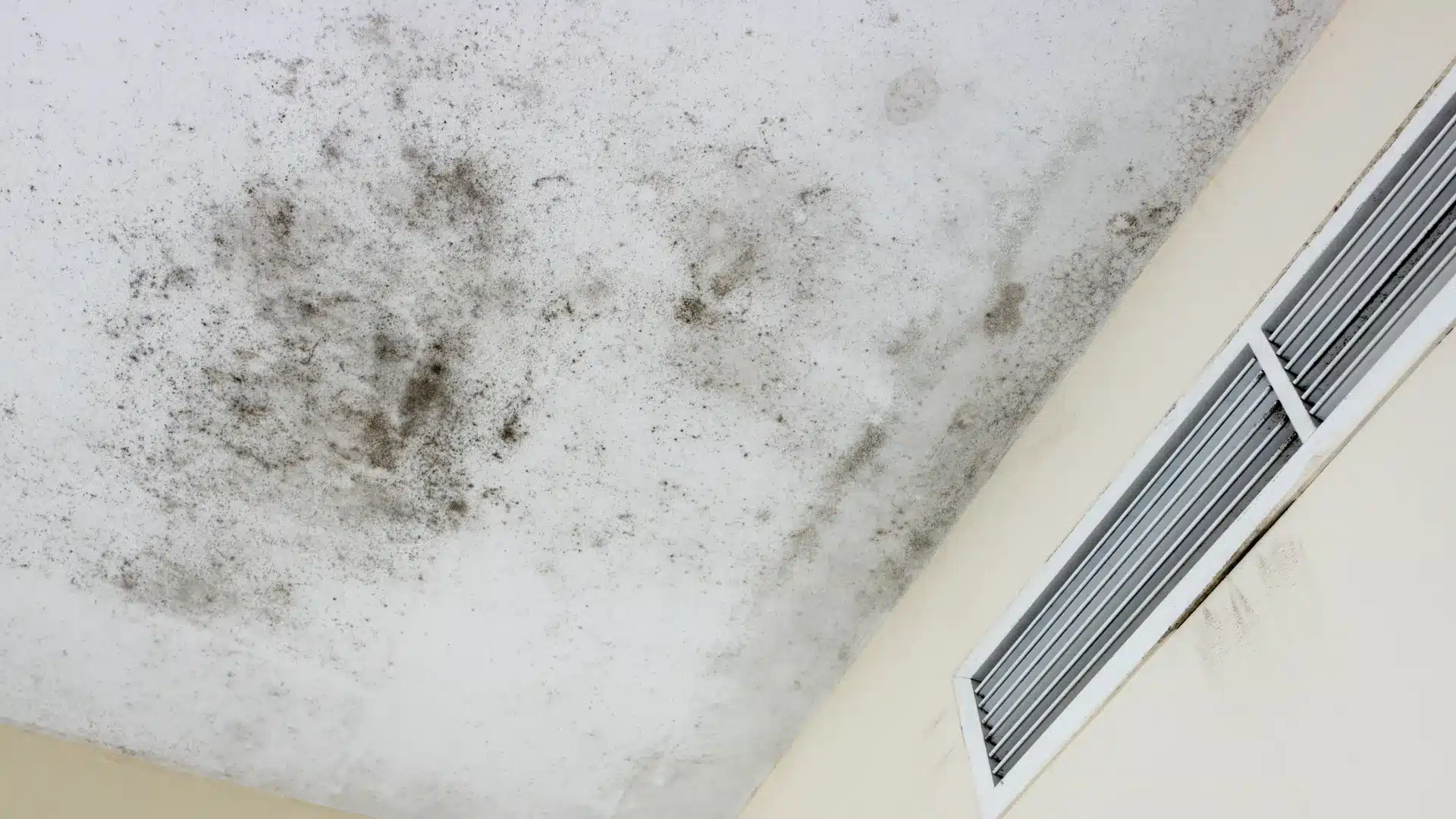
Routine labs are not designed to show mold-related illness, because no standard blood panel measures how a body reacts to a water-damaged building. Your home history often supplies the missing evidence.
Damp buildings affect health in measurable ways. WHO guidelines conclude that people in damp or moldy buildings have up to a 75% greater risk of respiratory symptoms and asthma. Patients with mold exposure also report fatigue and brain fog, though that link is less settled.
CIRS (chronic inflammatory response syndrome) is a proposed inflammatory illness in which exposure to a water-damaged building triggers ongoing, multi-system symptoms in susceptible people.
CIRS and mold testing are still debated in mainstream medicine, which is part of why patients get dismissed. Our overview of what CIRS is explains how we approach it. The practical step is to tell your doctor about any leaks, musty smells, or visible mold where you live or work, and when symptoms began relative to that exposure.
Bringing organized evidence helps a short visit go further: a one-page timeline, copies of prior results, and three questions. The CDC lists what a provider weighs for Lyme: your symptoms, your likelihood of tick exposure, and whether other illnesses could explain them. A good prep sheet answers all three.
Copy this Appointment Prep Checklist into your phone or notebook before the visit.
| Bring or do | Why it helps |
|---|---|
| One-page symptom timeline | Shows a multi-system pattern at a glance |
| Two-week symptom diary | Turns “I feel terrible” into trackable data |
| Exposure list (ticks, travel, water damage) | Gives your doctor a reason to order targeted tests |
| Copies of every past result | Stops repeat testing and shows what was ruled out |
| Medication and supplement list | Reveals what has and has not worked |
| Top three written questions | Keeps the visit on your priorities |
| Support person | Adds a witness and a note taker |
Ask for reasoning, not only results, and ask to have any declined test noted in your chart. Calm, specific questions tend to get specific answers.
These questions invite your doctor to show their thinking, which often reveals what was not tested. A test result alone may not settle it. In the Healthcare survey, 335 of 429 U.S. respondents who answered said a doctor stayed unconvinced by their test result. The authors found a positive blood test did not make doctors more likely to believe the patient (79% unconvinced with a positive test versus 74% for patients who had not had a blood test).
It is time for a second opinion when your symptoms keep going and no one can give you a working explanation or a plan. Wanting another set of eyes is a reasonable step.
Consider one if any of these fit.
In the Healthcare survey, 203 of 342 U.S. respondents who answered said a doctor had refused to test them for Lyme. That is about 6 in 10 in a self-selected group. If you are still asking why won’t my doctor believe me after several visits, our guide to why Lyme disease gets misdiagnosed walks through a practical second-opinion framework.
A doctor who believes you starts with your whole story, orders tests that match it, and explains what results can and cannot show. That first long conversation is where a plan starts.
Our patients have seen 20+ specialists on average before they find us. And 99% of our patients come in with missing root causes others have missed. One Colorado patient, Janet H., says other doctors told her it was all in her head.
“I used to lose up to 2 days a week to migraines and intense fatigue. Now I am on ZERO prescription medications.” Janet H., My Lyme Doc patient. Individual results vary.
Dr. Mueller’s 4-Phase Method builds the body first, supports the nervous system, detoxifies gently, and targets microbes only when the body is ready. You can see how a Lyme disease specialist evaluates complex cases and what to expect.
As one patient review put it: “She will sit with you, hear your whole story, and take it seriously.” We see patients by telehealth in 11 states. Those states are Colorado, Oregon, Wyoming, New Jersey, Pennsylvania, Texas, Wisconsin, New Hampshire, Alabama, South Dakota, and Vermont. Our only office is in Denver, Colorado. You can check the states where we see patients before you book.
An initial visit is $300. If you are tired of hearing “everything looks normal,” you can book an initial visit and bring your timeline.
You deserve a clear explanation and a real next step.