


By Dr. Diane Mueller, ND, LAc, DAOM
The GHK-Cu peptide, also called copper peptide, is a small naturally occurring molecule (glycyl-L-histidyl-L-lysine bound to a copper ion) best known for stimulating collagen and repairing skin when applied topically. Levels decline with age, and clinical research also links topical GHK-Cu to improved wound healing and hair follicle growth.¹ A second, far less discussed form, an oral capsule, is used by some functional and integrative physicians to support the gut lining itself, an application that matters most to patients whose chronic infections or mold exposure have already damaged intestinal barrier function.
If you have been dismissed for months of fatigue, brain fog, or gut symptoms that never show up clearly on standard labs, you already know the frustration of being told everything looks normal. GHK-Cu will not fix that alone, but understanding how it works, and where it actually fits into a broader chronic illness peptide protocol, is a piece of the picture worth having straight.
GHK-Cu is a naturally occurring tripeptide (three amino acids: glycine, histidine, lysine) bound to a copper ion, produced by the body and found in plasma, saliva, and urine, with levels that decline substantially with age.
GHK-Cu and “copper peptide” refer to the same compound. GHK-Cu is the more precise, chemical name, and copper peptide is the marketing shorthand used across the skincare industry, which is why most search results for this topic are skincare product pages rather than medical ones.
The molecule was first isolated from human plasma in the 1970s. Researchers noticed that older plasma had a reduced ability to stimulate liver cell regeneration compared to younger plasma, and GHK-Cu turned out to be a major reason why.¹ That original discovery, tissue regeneration signaling, is still the throughline connecting everything GHK-Cu is used for today, whether that is a wrinkle cream or an emerging gut-repair application.
The GHK-Cu peptide is not simply a way to get more copper into the body. It works as a signaling molecule. Once bound to copper, the peptide interacts with cell-surface receptors and influences gene expression. Research indicates it significantly affects the activity of roughly 31 percent of human genes studied, both turning some on and quieting others down.¹ Low tissue GHK-Cu, sometimes discussed alongside a broader copper deficiency, is one reason regenerative capacity declines with age in the first place.
Three mechanisms matter most clinically:
This is the same “protein signaling” logic that runs through most peptide therapies used in chronic infection care. GHK-Cu does not replace tissue directly. It signals the body to repair tissue it already knows how to build.
We have helped thousands of people in Colorado, Oregon, Wyoming, New Jersey, Pennsylvania, Texas, Wisconsin, and New Hampshire restore their health and quality of life by diagnosing and treating their Lyme Disease.
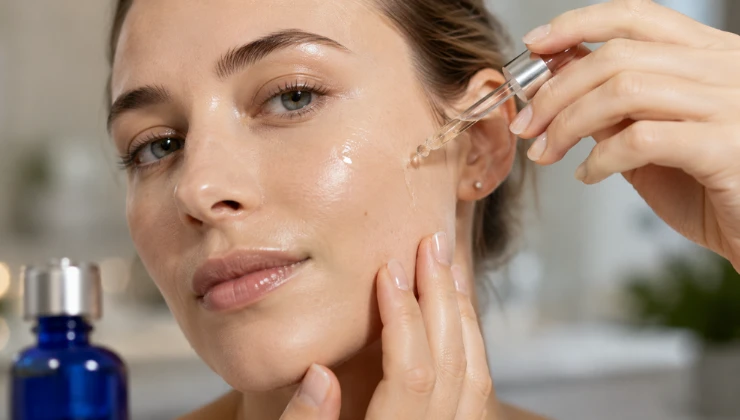
This is the application GHK-Cu is best known for, and the evidence base here is the strongest of any use of this peptide. In a pilot clinical study comparing four topical compounds, a copper-binding peptide cream produced a measurable increase in procollagen synthesis in 7 of 10 volunteers, compared to 5 of 10 for vitamin C, 5 of 10 for melatonin, and 4 of 10 for tretinoin.³ Broader review data shows topical GHK-Cu associated with improvements in skin laxity, clarity, firmness, and the depth and volume of fine lines and wrinkles.¹
| Delivery site | What the evidence shows |
|---|---|
| Facial skin | Increased procollagen synthesis, improved firmness and elasticity, reduced fine-line depth |
| Wound sites | Faster epithelialization and higher collagen density in animal wound-healing models |
| Scalp / hair follicles | Increased follicle size and stimulation of the hair growth phase in preclinical models |
None of this makes GHK-Cu a miracle anti-aging ingredient. It makes it one of the more consistently researched peptides in cosmetic dermatology, which is exactly why it dominates the search results for this keyword and why most of what you will find online stops at skincare.
The same collagen-and-repair signaling that helps skin also appears to support hair follicles. Preclinical research shows GHK-Cu increases hair follicle size, in part by acting on dermal papilla cells (the signaling cells at the base of the follicle that control hair growth cycles), and can push follicles out of the resting (telogen) phase and back into active growth (anagen).¹ Human data here is thinner than the skin research, mostly early-phase and follicle-culture studies rather than large trials, so this should be understood as a promising, evidence-informed application rather than a proven hair-loss treatment on the level of prescription options.
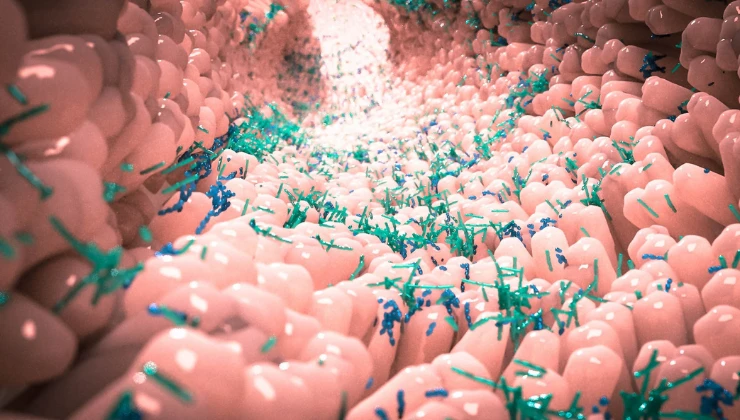
Here is where this page diverges from nearly everything else ranking for this keyword. Search “GHK-Cu peptide” and you will land almost exclusively on skincare guides and peptide-vendor pages built around topical creams and injectable vials. Almost none of them mention that GHK-Cu is also available as an oral capsule, and fewer still explain why a physician might use it that way.
Oral capsule GHK-Cu is a compounded, encapsulated form of the same peptide taken by mouth, formulated to target the gut lining directly rather than reaching general circulation the way an injectable dose does.
Most peptides do not survive stomach acid intact, which is why the majority (Semax, Selank, thymosin alpha-1, LL-37) require injection or intranasal delivery. Oral GHK-Cu is one of the exceptions worth understanding correctly: because the target tissue, the intestinal lining, is the first surface the capsule contacts, it does not need to survive digestion and reach the bloodstream to do its job. This is the same delivery logic behind oral BPC-157, another peptide capable of acting locally on gut tissue before systemic absorption becomes the limiting factor.
For patients with chronic Lyme disease, mold illness, or long-standing gut dysfunction, this matters more than a skincare framing ever will. Years of immune dysregulation, antibiotic courses, and inflammatory signaling can leave the intestinal lining compromised, a state commonly described as leaky gut.
Leaky gut (intestinal permeability) is a condition where the tight junction proteins holding intestinal cells together loosen, allowing partially digested food particles, toxins, and bacterial byproducts to pass into the bloodstream and trigger systemic inflammation.
Tight junction proteins are the protein structures, including occludin and ZO-1, that seal the spaces between intestinal cells. When they loosen, the gut lining becomes more permeable, the mechanism behind leaky gut.
We have helped thousands of people in Colorado, Oregon, Wyoming, New Jersey, Pennsylvania, Texas, Wisconsin, and New Hampshire restore their health and quality of life by diagnosing and treating their Lyme Disease.
The evidence for the GHK-Cu peptide’s gut effects is newer and thinner than the skin research, and it deserves to be represented honestly rather than oversold. A 2025 study published in Frontiers in Pharmacology examined GHK-Cu in a dextran sulfate sodium (DSS) induced colitis model in mice, a lab model used to study inflammatory bowel conditions such as ulcerative colitis in humans, though the study itself was conducted entirely in mice.² The findings were notable:
SIRT1/STAT3 refers to two cell-signaling proteins studied together in the 2025 mouse colitis research: SIRT1 (an enzyme linked to reduced inflammation) and STAT3 (a protein that, when overactive, drives inflammatory signaling). GHK-Cu appeared to increase SIRT1 activity while suppressing activated STAT3.
This was an animal model, not a human clinical trial, and that distinction matters for a YMYL topic like this one. No peptide should be represented as a proven treatment for ulcerative colitis or any other human colitis diagnosis on the strength of mouse data alone. What the study does support is a plausible, mechanistically grounded reason why a compounding-pharmacy oral GHK-Cu capsule might belong in a gut-repair protocol for a chronic illness patient, alongside better-established gut-healing tools like larazotide for tight-junction repair and oral BPC-157, and a physician may combine either or both depending on the full clinical picture.
Most clinics that reach for peptides jump straight to the compound that treats the pathogen, and patients crash because the body was never ready to handle that load. In the 4-phase method used at MyLymeDoc, gut repair sits in Phase 04, targeted microbe balancing and repair, and only after the body has been rebuilt (Phase 01), the nervous system stabilized (Phase 02), and detox pathways gently opened (Phase 03). GHK-Cu is not a first move. It is a repair tool deployed once the terrain is ready to hold the healing.
That sequencing matters clinically. A gut lining that is actively inflamed by an unaddressed mold exposure, for example, is fighting two problems at once if a repair peptide is layered on before the underlying trigger is managed. Patients dealing with mold illness in particular often need that upstream work done first.
If you want to see where a repair peptide like this would sit in your own case, learn more about getting started with Dr. Mueller’s team.
| Form | Primary target | Common use case | Survives digestion? |
|---|---|---|---|
| Topical cream | Skin, scalp | Collagen support, fine lines, hair | N/A, applied directly |
| Oral capsule | Intestinal lining | Gut barrier repair, leaky gut | Yes, acts locally before systemic breakdown |
| Injectable | Systemic circulation | Broader tissue repair signaling | N/A, bypasses digestion entirely |
The delivery system is not a minor detail. It determines which tissue actually receives the peptide’s signal, which is why a skincare cream and a gut-healing protocol can both legitimately be called “GHK-Cu” while doing almost nothing for each other’s target tissue.
We have helped thousands of people in Colorado, Oregon, Wyoming, New Jersey, Pennsylvania, Texas, Wisconsin, and New Hampshire restore their health and quality of life by diagnosing and treating their Lyme Disease.
Topical GHK-Cu has decades of use in cosmetic formulations without significant reported adverse effects, and review literature describes it as generally well tolerated.¹ The most commonly reported cosmetic side effect is temporary skin discoloration at the application site from copper oxidation, sometimes called “copper uglies” in skincare circles, which resolves after discontinuing use.
The bigger safety question, and the one almost no vendor site addresses honestly, is where the peptide comes from. Compounding pharmacies that prepare GHK-Cu (or any peptide) under a physician’s prescription follow pharmaceutical sterility and purity standards. Research-only peptide facilities selling directly to consumers do not carry that same obligation, and products from that channel can carry contamination, including bacterial endotoxin (LPS), that a chemical purity test alone will not catch. Endotoxin exposure is not a theoretical concern in a chronic illness population already managing inflammatory burden. This is the same sourcing caution that applies across every peptide discussed on this site, and it is worth taking seriously before starting any peptide, GHK-Cu included.
A few groups should be more cautious with GHK-Cu specifically:
GHK-Cu is a genuinely well-studied peptide for skin and connective tissue repair, and an emerging, honestly-still-early option for gut healing in patients whose chronic infections or mold exposure have damaged the intestinal lining. Neither application replaces the deeper work of identifying and addressing what caused that damage in the first place. If you have spent years being told your labs look fine while your gut, skin, or energy tells a different story, that gap between the paperwork and how you feel is the starting point, not a peptide.
If you are curious whether GHK-Cu, or another peptide, fits your specific case, schedule a visit with Dr. Mueller’s team.
Yes. GHK-Cu is the chemical name, and copper peptide is the common name used in skincare marketing. They refer to the identical compound.
Both forms exist. Topical GHK-Cu is the most studied and widely used form, applied to skin or scalp. A compounded oral capsule form is used by some integrative physicians specifically to target intestinal lining repair, a separate application from the topical skincare use.
Early research is promising but not yet proven in humans. A 2025 animal study found GHK-Cu reduced inflammation and strengthened intestinal tight-junction proteins in a colitis model. That is a reasonable mechanistic basis for physician-supervised use, not a confirmed human treatment.
Both are peptides used for tissue repair and both have oral forms capable of acting locally in the gut. BPC-157 has a longer track record specifically for intestinal healing, while GHK-Cu’s gut research is newer. A physician may use either or both depending on the patient’s full clinical picture.
Topical GHK-Cu has an extended track record of safe cosmetic use. Oral and injectable forms should only be used under physician supervision, sourced through a licensed compounding pharmacy, with regular monitoring as part of a broader treatment plan.
1. Pickart LR, Margolina A (2018). Regenerative and Protective Actions of the GHK-Cu Peptide in the Light of the New Gene Data. International Journal of Molecular Sciences.
2. Mao et al (2025). Exploring the beneficial effects of GHK-Cu on an experimental model of colitis and the underlying mechanisms. Frontiers in Pharmacology.
3. Abdulghani AA, Sherr A, Shirin S, Solodkina G, Morales Tapia E, Wolf B, Gottlieb AB (1998). Effects of topical creams containing vitamin C, a copper-binding peptide cream and melatonin compared with tretinoin on the ultrastructure of normal skin. Disease Management and Clinical Outcomes, 1(4), 136-141.
We have helped thousands of
people restore their health
and quality of life by diagnosing
and treating their Lyme Disease.
“Dr. Mueller’s approach to medicine is refreshing! There is only so much you can do with western medicine and in my life I was needing a new approach. By addressing the whole body, nutritional diet factors, environmental factors, blood work, and incorporating ideas I had not previously known, I was able to break through with my conditions. I am not only experiencing less pain in my life, but through the process of healing guided by Dr. Diane Mueller, I am now happy to say I have more consciousness surrounding how I eat, what to eat and when things are appropriate. Living by example Dr. Mueller has a vibrancy that makes you want to learn and know more about your body and overall health. I highly recommend her to anyone looking for new answers, a new approach to health, or in need of freedom from pain and limitations.”
-Storie S.
Kihei, HI