

Cholestyramine mold treatment uses a prescription cholesterol drug off-label, meaning outside its FDA-approved uses, as a binder that holds bile acids in the gut so they leave in the stool. The aim is to carry some mold toxins out with them. If you moved out of the moldy house and still feel sick, you may have seen cholestyramine, often called CSM, come up in patient forums. The reasoning is plausible and the evidence base is small: the best human data in mold illness is one placebo-controlled trial of 13 people. It requires a prescriber, it often causes constipation, and it can reduce the absorption of other medicines.
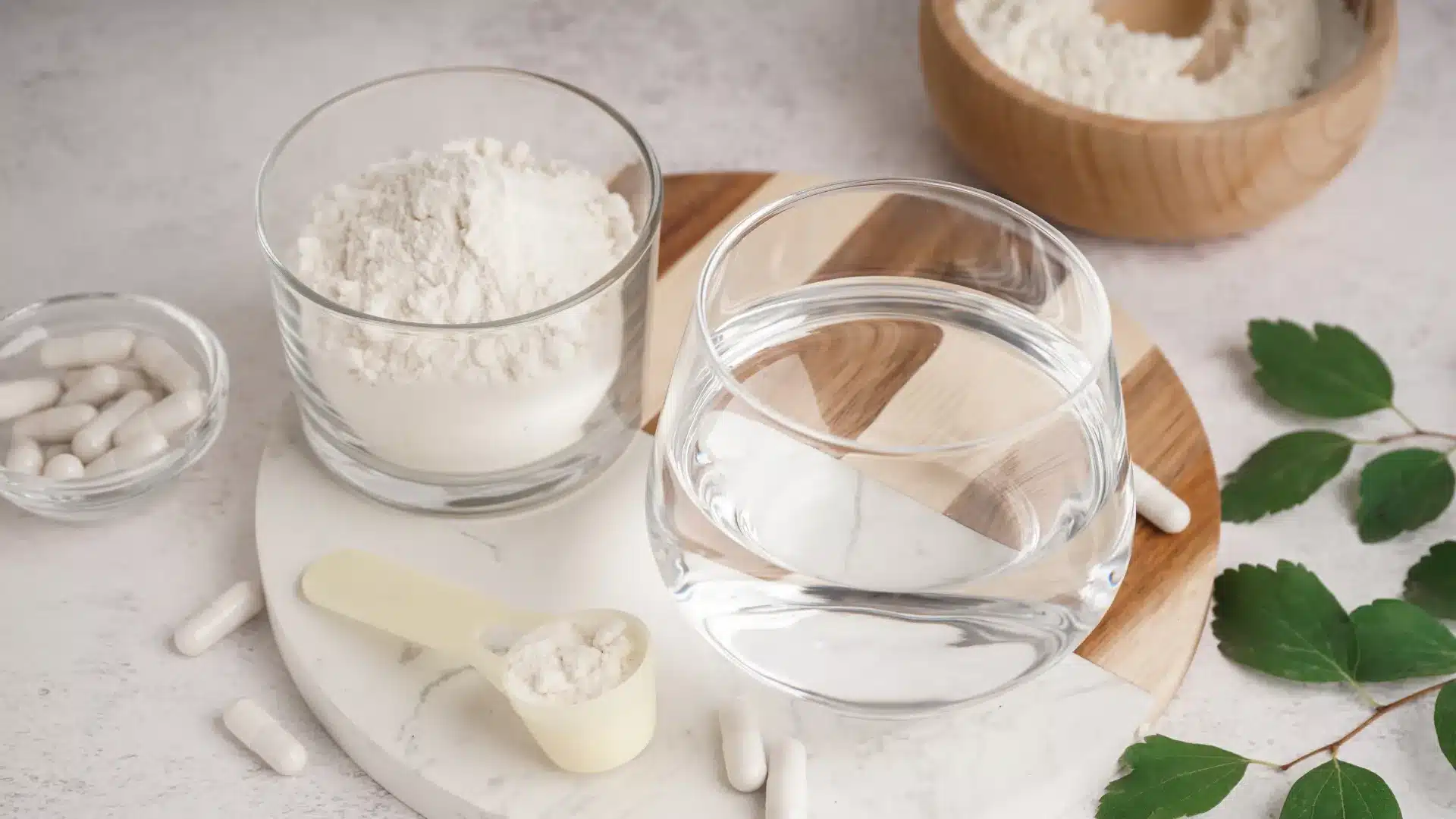
Cholestyramine is a prescription resin powder that the FDA approved for two uses, and mold illness is neither of them.
Cholestyramine is a bile acid sequestrant: a powdered resin, mixed into liquid, that stays inside the digestive tract and binds bile acids so they leave the body in stool instead of being reabsorbed.
The FDA label lists lowering high LDL cholesterol alongside diet, and “relief of pruritus associated with partial biliary obstruction,” meaning itching from a partly blocked bile duct. The label does not mention mold, mycotoxins, or chronic inflammatory response syndrome.
Chronic inflammatory response syndrome (CIRS) is a proposed multisystem inflammatory illness linked to exposure to water-damaged buildings, described mainly in the work of Dr. Ritchie Shoemaker.
When a clinician prescribes cholestyramine for CIRS and mold-related illness, that is off-label prescribing.
Off-label use is the prescribing of an FDA-approved drug for a condition, dose, or group of people that its approval does not cover.
The FDA explains that prescribers “generally may prescribe the drug for an unapproved use when they judge that it is medically appropriate” for a patient. So a prescriber can legally use it for mold illness, but the mold use was not part of the drug’s FDA approval.
As a mold binder, cholestyramine is thought to work by interrupting the loop that sends bile, and possibly some toxins carried in it, from the liver to the gut and back again. The resin itself is not absorbed, according to the FDA label.
Enterohepatic recirculation is the body’s recycling loop for bile: the liver releases bile into the intestine, and the body normally reabsorbs bile acids and returns them to the liver for reuse.
The proposed sequence:
Mycotoxins are toxic compounds made by certain molds; ochratoxin A is the mycotoxin tested in the rat and test-tube work cited here.
In rats fed ochratoxin A, adding cholestyramine “reduced plasma levels of the toxin” and protected their kidneys from its damage. In a test tube, 96 percent of ochratoxin A bound to the resin at the tested concentration. That supports the mechanism for one mycotoxin involved in mold illness in rats; the sources reviewed here include no human data showing direct toxin binding.
Dr. Ritchie Shoemaker’s protocol lists avoiding the exposure as its first step and uses cholestyramine as a binder.
The Shoemaker protocol is a stepwise CIRS treatment framework created by Dr. Ritchie Shoemaker that includes exposure avoidance, binder therapy, and later steps that target other markers.
In broad terms, the protocol includes:
Shoemaker’s group reported that re-exposure undid the gains. In the 2006 study, participants went back into their buildings for three days without cholestyramine, and “all participants reported relapse.” That result is consistent with the protocol’s first step, avoiding the exposure.
The human evidence for cholestyramine in mold illness is encouraging but thin: one small randomized trial in people from water-damaged buildings plus a few uncontrolled studies, nearly all from one research group. Here is each study, with its size and its limits.
Visual contrast sensitivity (VCS) is a vision test that measures how well you can see faint patterns, used in Shoemaker’s research as a marker of neurological effects.
| Study | Design | Who | What it found | Main limit |
|---|---|---|---|---|
| Shoemaker and House, 2006 | Double-blind, placebo-controlled trial inside a time-series study | 13 people from water-damaged buildings (7 drug, 6 placebo) | Symptoms and vision-contrast scores improved on cholestyramine, not on placebo | Very small; one research group |
| Shoemaker and House, 2005 | Time-series study, five time points | 21 enrolled, 19 completed | Average symptom count fell from 14.9 to 1.2 | Participants not randomly selected; no blinding |
| Shoemaker and Hudnell, 2001 | Case series | 5 people | Vision-contrast scores recovered during cholestyramine | Estuary toxin exposure, not mold |
| Kerkadi and colleagues, 1999 | Animal and lab study | Rats; resin in a test tube | Resin bound ochratoxin A and reduced kidney damage | Not a human study |
| Dooley and colleagues, 2024 | Literature review | 13 CIRS treatment articles | Shoemaker protocol described in 11 of the 13 | Literature review by CIRS clinicians; no new trial data |
A 2006 trial in 25 people with Lyme and Babesia gave cholestyramine to both groups, so it tested an anti-parasite drug, not the binder alone.
Not every researcher accepts the diagnosis itself. Two allergy and immunology researchers wrote in 2019 that “there is no scientific evidence that mold has anything to do with these symptoms.” You may meet clinicians who hold that view, and it helps to know it before you start.
The honest summary on cholestyramine mold research: the mechanism is plausible, the small trial was positive, and the placebo-controlled evidence reviewed here comes from one research group.
Constipation is the most common cholestyramine side effect on the FDA label, and most other reported effects are digestive. The label lists these effects.
The label suggests more fluid and fiber for constipation, noting that “a stool softener may occasionally be indicated.”
A Herxheimer reaction is a short-lived flare of symptoms after treatment kills large numbers of microbes.
If you already feel wiped out, you may wonder whether feeling worse on a binder is a Herxheimer die-off reaction. The FDA label does not describe one, so tell your prescriber if you feel worse.
Call your prescriber if constipation lasts, you notice unusual bleeding or bruising, or your symptoms get worse.

Other medicines can be bound in the gut by cholestyramine, which lowers how much your body absorbs, so timing and a full medication review matter. The FDA label names drugs whose absorption may be delayed or reduced.
The cholestyramine prescribing information gives specific spacing windows between it and other medicines. Your prescriber and pharmacist should set them for your list. Stopping cholestyramine can matter too. The label warns that stopping it can pose a hazard if a drug like digitalis was adjusted while you were taking it.
Cholestyramine may be a poor fit for people with certain bile duct, bowel, metabolic, or medication situations, and for anyone still living in the exposure. The first two items are the label’s contraindications.
Phenylketonuria (PKU) is an inherited condition in which the body cannot break down the amino acid phenylalanine.
Shoemaker’s published human trials used cholestyramine, and colesevelam (Welchol) is another prescription bile acid sequestrant. Over-the-counter binders are compared in our hub guide.
Colesevelam (Welchol) is a prescription bile acid sequestrant approved for lowering LDL cholesterol and improving blood sugar control in type 2 diabetes.
| Binder | Prescription? | FDA-approved uses | Human mold illness data | Main watch-out |
|---|---|---|---|---|
| Cholestyramine (CSM) | Yes | High LDL cholesterol; itching from partial bile duct blockage | Small trials, mostly one research group | Constipation, drug interactions |
| Colesevelam (Welchol) | Yes | High LDL cholesterol; type 2 diabetes | None cited in the sources reviewed for this page | Constipation, drug interactions |
Welchol also lists no mold use, according to the Welchol prescribing information, so its mold use is off-label too. For the full side-by-side of every option, see our guide to binders for mold detox.
Binders are a detox tool, so in Dr. Mueller’s 4-Phase Method they are considered within Phase 03, gentle strategic detoxification, which follows building the body. The Shoemaker protocol is a separate framework, and whether a binder fits you depends on your evaluation.
Dr. Mueller’s view is that many patients crash when treatment jumps straight to killing the pathogen, which is why she builds the body first. You can read more about Dr. Mueller’s approach to Lyme and mold and why it starts with phases one and two.
“I used to lose up to 2 days a week to migraines and intense fatigue … but Dr. Diane … changed my life by treating the ROOT of the problem.” Janet H., Colorado patient. Individual results vary.