Mold and thyroid problems are connected by plausible biology and a few small reports, not by evidence that mold causes Hashimoto’s or low thyroid hormone. The best human data is a nine-patient case series in people exposed to mold, and the mechanism data comes from cell and animal studies, so your thyroid deserves a clinician’s evaluation either way.
If you have ever thought, “my labs all come back normal but I feel terrible,” you are not imagining the mismatch. Thyroid symptoms and mold symptoms overlap, and normal thyroid numbers do not rule out other causes. This page sorts what has been studied from what gets repeated online. If fog is your main complaint, our guide to mold brain fog covers that side.
The research on mold and the thyroid falls into three layers, and each answers a different question, so it helps to read them separately.
Mycotoxins are toxic compounds made by some molds. They can be found in water-damaged buildings and in contaminated grains and other foods.
| Evidence type | Study | What it found | What it cannot show |
|---|---|---|---|
| Cell study | Garcia-Herranz 2019 | Deoxynivalenol, ochratoxin A, and beauvericin each strongly blocked the thyroid receptor in reporter cell lines | Cells in a dish are not a living body or a real exposure |
| Cell study | Kiss 2018 | Zearalenone slightly changed thyroid receptor expression in rat brain cell cultures | Results varied with the hormones and cell types present |
| Animal study | Van Middlesworth 1986 | In iodine-depleted mice, T-2 toxin caused loss of thyroid iodine, and the mice recovered when it stopped | With adequate iodine there was no significant effect |
| Human, food exposure | Lisieska-Zolnierczyk 2024 | Authors reported altered thyroid activity in cancer patients with zearalenone in their blood | 33 patients, all with cancer, and the exposure was dietary, not indoor mold |
| Human, indoor mold | Somppi 2017 | Nine mold-exposed patients with low-thyroid symptoms improved on a combined treatment | No control group, and several treatments were given at once |
| Human, immune markers | Gray 2003 | 209 adults from water-damaged buildings had higher odds of abnormal autoantibodies | The abstract reports no thyroid result |
A 2026 review of mycotoxins and chronic disease lists thyroid disorders among the conditions studied. It concludes that mycotoxins may act as environmental triggers and calls for more research.
The closest human report on indoor mold and thyroid hormones is a 2017 retrospective series of nine patients, and it is a clinician’s case review rather than a trial. The patients had a history of mold exposure, fatigue, cognitive problems, and hypothyroid symptoms while taking levothyroxine. Treatment combined changes to thyroid hormone therapy, adrenal support, and supplements. The author reported that all nine improved, and that those with leftover symptoms were still exposed to mold at work.
That is a real signal, and it has clear limits. Nine patients, no comparison group, and several treatments at once mean no single piece can be credited. This page does not suggest changing any thyroid medicine. Those decisions belong to the clinician who prescribes it.
Non-thyroidal illness syndrome (NTIS) is a pattern of low T3, often low T4, and a normal or slightly low TSH that appears during significant illness, without a primary thyroid gland problem.
The pattern is well documented in severely ill hospital patients, where low T3 with normal or slightly low TSH is typical. A 2021 review found insufficient evidence that thyroid hormone supplementation helps in NTIS and called for randomized trials. We found no controlled comparison of whether mold exposure produces this pattern more often than other chronic illness.
Hashimoto’s thyroiditis is an autoimmune condition, and no human study we found shows that mold exposure causes it. The American Thyroid Association says it is the most common cause of hypothyroidism in the United States. It describes thyroid antibodies that damage the gland, and notes the condition often runs in families.
Two things are documented and should not be blurred together. Mold-exposed adults in the 2003 study had higher odds of abnormal autoantibodies, which suggests immune changes. That study did not report thyroid antibodies in its abstract. So the idea that mold nudges immune function toward autoimmunity is plausible, and the specific step to Hashimoto’s remains an open question.
Be cautious with claims that Hashimoto’s is “common” in mold illness. We found no study that puts a number on it. Some wellness-practice and testing-company blogs state it without data, and that is not evidence.
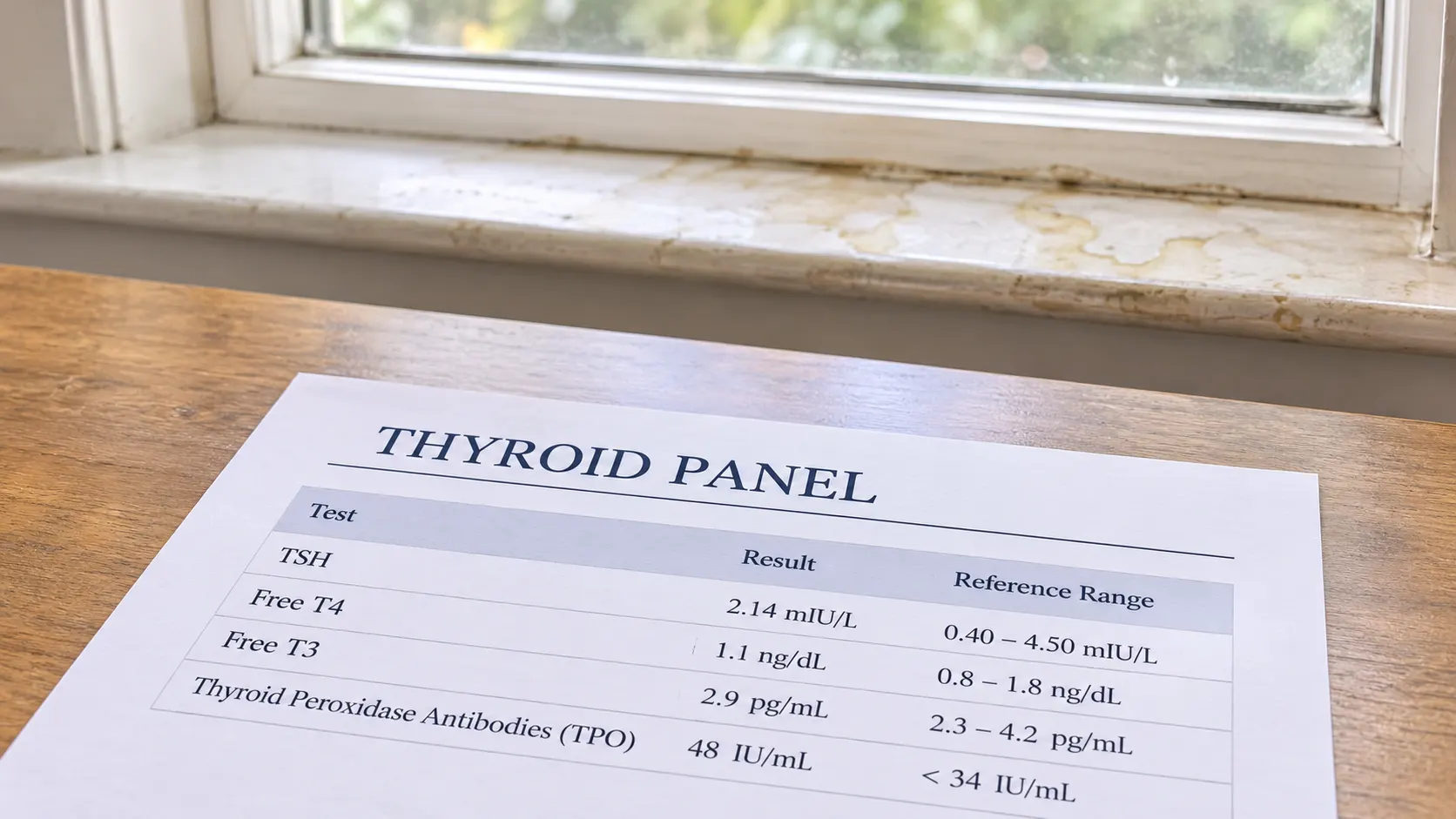
Thyroid symptoms and mold illness symptoms overlap enough that neither can be sorted out by how you feel. The American Thyroid Association lists feeling cold, tired, sad or down, constipated, and forgetting things easily as signs of low thyroid hormone. It adds that other health problems can cause them too, and that a blood test is the only way to know.
Fatigue and cognitive complaints also appear in people with mold exposure, which is why the two get confused. Our guide to mold illness symptoms lists the full pattern.
Being told “your thyroid looks fine” while you still cannot think clearly is a specific kind of dismissal. It does not mean your symptoms are unreal. It means one question was answered and another is still open. If exhaustion is the bigger problem, read about mold and fatigue. A normal TSH can be accurate and still leave the cause of your fatigue unexplained.
Lyme disease and mold exposure can each overlap with thyroid symptoms. If a tick bite is part of your history, our page on Lyme disease and thyroid symptoms covers that side in detail, including the TSH gray zone and the Lyme evidence.
This page stays with the mold side. If you have both histories, sorting out which exposure matters, and when, takes a full timeline rather than one lab value.
A short list of questions makes a conversation with a thyroid clinician more useful when you also have a mold history. Bring your records and ask for specifics.
Our guide to functional medicine lab ranges explains how some practitioners read thyroid numbers differently from standard lab ranges. Endocrinologists have not settled that debate.
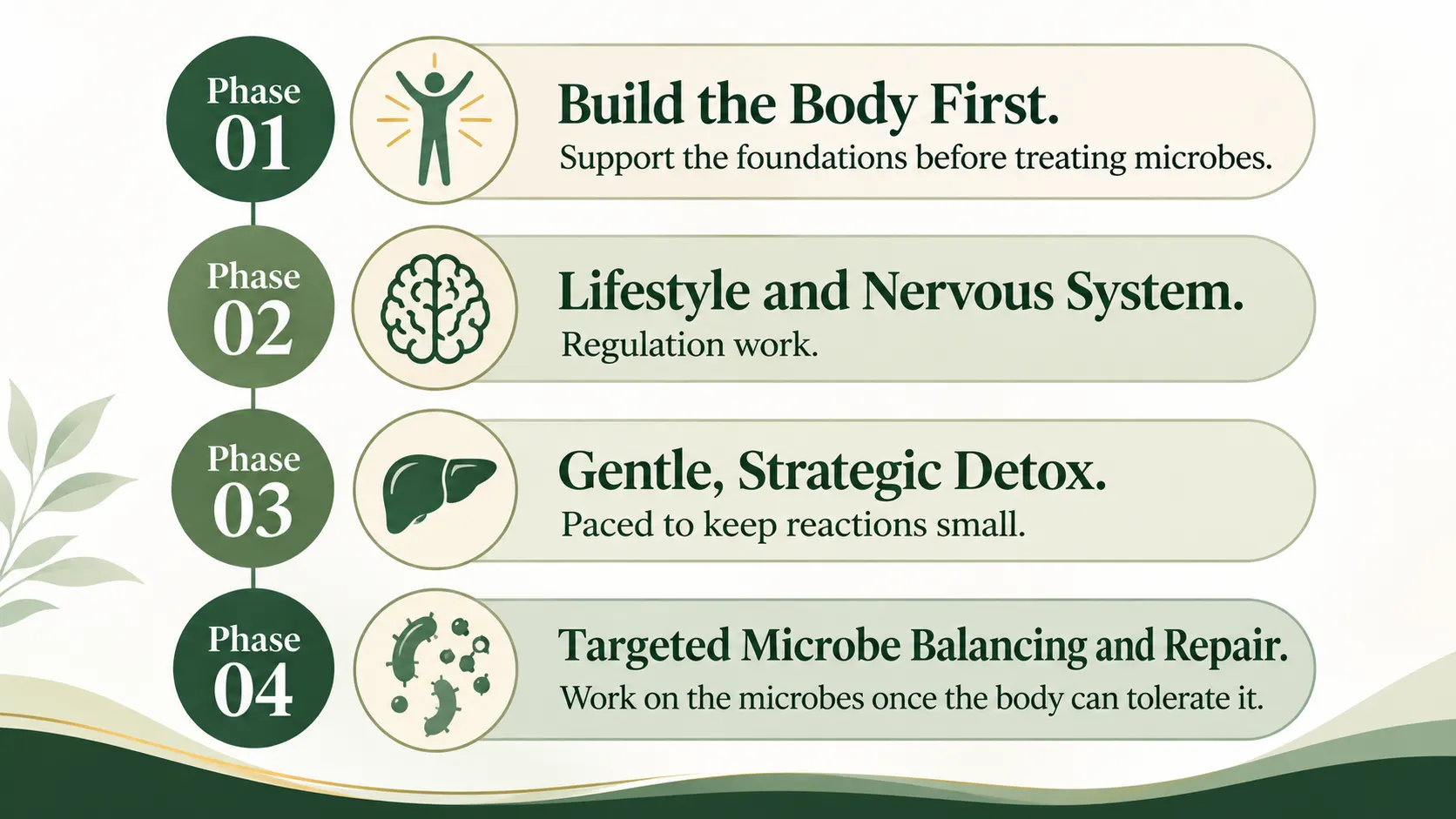
Dr. Mueller treats mold illness with a four-phase method, and thyroid questions are looked at as part of the whole picture. The phases are build the body first, lifestyle and the nervous system, gentle detox, and targeted microbe balancing.
The point of building the body before going straight at the microbe is to help patients avoid crashing. If you want the broader picture, our page on mycotoxin illness explains how mold illness is approached as a whole.
My Lyme Doc sees patients by video visit in 11 states. If your thyroid labs and your mold history have not been looked at together, you can book a consultation with Dr. Mueller to go through both.