


Powassan virus is a virus spread by infected ticks that can cause serious illness, including inflammation of the brain. The CDC reports most U.S. cases in the northeast and Great Lakes regions, and about 1 in 10 people with severe illness die. Many infected people have no symptoms. Others develop fever and headache, and a smaller group goes on to confusion, seizures, or loss of coordination. There is no specific treatment, so care is supportive and often happens in a hospital.
If you are reading this after a tick bite, take a breath. Powassan is rare, and this page covers what the CDC says to watch for.
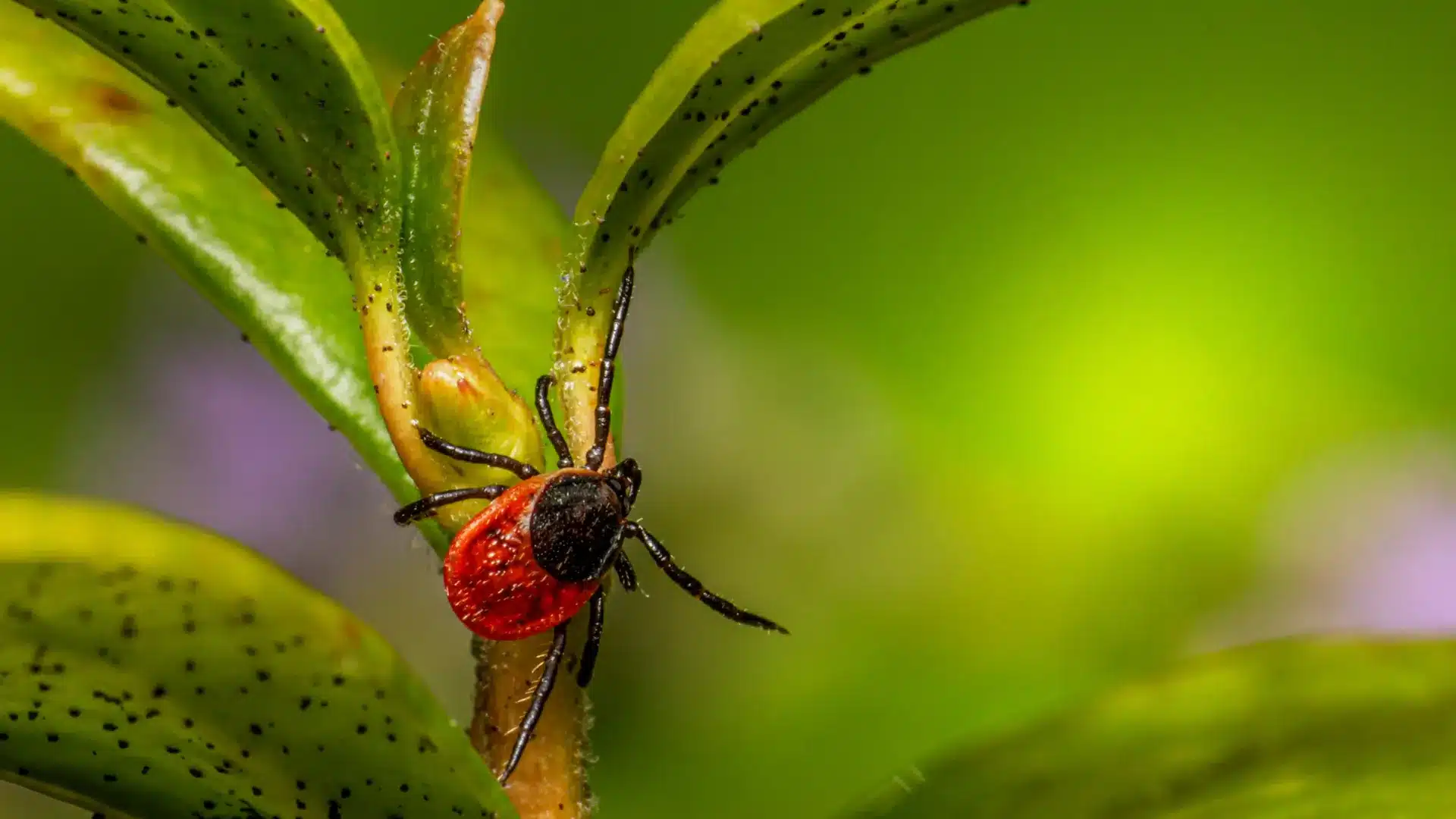
Powassan virus is a virus that infected ticks pass to people through their bites.
Powassan virus is a tick-borne virus that can infect the brain and spinal cord. The CDC says Powassan virus “spreads to people primarily through the bite of an infected Ixodes species tick.”
The CDC names three ticks that spread it: the groundhog tick (Ixodes cookei), the squirrel tick (Ixodes marxi), and the blacklegged or deer tick (Ixodes scapularis). Our deer tick guide covers how to identify the one that most people meet.
The CDC says the virus does not spread from person to person, except rarely by blood transfusion.
Powassan virus can be transmitted as quickly as 15 minutes after a tick attaches.
A 2017 CDC report states that “transmission of POWV occurs as quickly as 15 minutes after tick attachment.” That timing comes from experimental tick-attachment research the CDC cites. In the Connecticut infant case it described, the estimated attachment time was under 3 hours.
This matters because removing a tick within a day, the usual Lyme advice, does not fully protect you from this virus. Lyme timing is covered in our guide to a Lyme disease tick bite.
The CDC says Powassan cases in the United States have been reported primarily in the northeastern states and the Great Lakes region.
Cases cluster from late spring through mid-fall, when ticks are most active. The CDC calls Powassan uncommon, and a 2017 CDC report found a median of seven cases a year from 2006 to 2015.
That count is old. The CDC states that reported cases “have been increasing in recent years,” and its historic data page notes mild cases are more likely to go unreported than severe ones.
Many people infected with Powassan virus have no symptoms, and those who do usually start with fever, headache, vomiting, and weakness.
Symptoms begin about 1 week to 1 month after the bite on the CDC’s patient page. The CDC’s clinician page gives a range of 1 to 5 weeks. Because you may not remember the bite by then, the timing is easy to miss.
The CDC says Powassan can cause encephalitis (inflammation of the brain) or meningitis (inflammation of the membranes around the brain and spinal cord). Signs of severe illness include:
The CDC’s list of early symptoms does not include a signature rash. Our guide to tick bite symptoms walks through what shows up in the days and weeks after a bite.
Confusion, seizures, trouble speaking, or loss of coordination after a possible tick exposure call for emergency care right away.
Call 911 or go to an emergency room for confusion, seizures, trouble speaking, or loss of coordination. Tell the team about the tick bite or time spent in tick country, even if the bite was weeks ago.
If you think you or a family member might have Powassan, the CDC says to talk to your healthcare provider. Mention any recent tick exposure.
Powassan virus is a serious illness once it reaches the brain, and the CDC states plainly that people with severe disease often need to be hospitalized.
The CDC’s clinical pages report that approximately 10% of neuroinvasive cases are fatal. About half of survivors have long-lasting neurologic problems, including recurring headaches, muscle weakness, or memory difficulties.
Anyone can develop neuroinvasive disease. The CDC says older adults, children, and people who are immunocompromised are at higher risk.
Powassan virus is diagnosed mainly with antibody tests on blood or spinal fluid, and your state health department can help arrange them.
Per the CDC, the first step is an IgM antibody test (an ELISA). A positive result is confirmed with a neutralizing antibody test called PRNT at a state public health lab or the CDC. Samples can be serum or cerebrospinal fluid (CSF).
People who are immunocompromised may need a PCR test early in the illness. The CDC cautions that negative results do not rule out Powassan infection. Powassan needs its own tests, so ask your clinician about it by name.

The CDC states there is no specific treatment for Powassan virus disease, and clinical management is supportive.
Supportive care means treating the effects of the illness:
The CDC adds that people with confirmed infection should not donate blood for 120 days.
Powassan virus and Lyme disease can come from the same kind of tick, but they are different infections with different timelines and risks.
| Powassan virus | Lyme disease | |
|---|---|---|
| Cause | A virus | A bacterium (Borrelia burgdorferi) |
| Tick | Groundhog, squirrel, and deer ticks | Mainly the deer tick |
| Speed after attachment | CDC: as quickly as 15 minutes | Slower, see our deer tick guide |
| Early sign | Fever, headache, vomiting, weakness | Often an expanding rash, plus flu-like symptoms |
| Treatment | Supportive care only, per the CDC | Antibiotics, per the CDC |
| Brain involvement | Encephalitis in severe cases | Possible in later disease |
Lyme often begins with the bullseye rash, which is why it can be spotted early. A bite alone does not show which illness you have.
Our guide to a normal tick bite versus Lyme explains the first clues.
Powassan is also a different kind of illness from West Nile virus, which is another virus that can affect the nervous system but is spread by mosquitoes.
The CDC says no vaccine or medicine protects against Powassan, so lowering your exposure to ticks is the main protection.
Its guidance is to use repellents, wear long sleeves and pants, avoid bushy and wooded areas, and do thorough tick checks after time outdoors. Because the virus can pass quickly, the CDC’s clinical advice to use repellents “to discourage tick attachment” matters alongside tick checks.
Our review of the best tick repellent options covers what the evidence supports. Remove any tick you find as soon as you can, and write down the date.
My Lyme Doc can help with lingering symptoms after a tick bite or a Lyme and co-infection evaluation, by video visit.
My Lyme Doc sees patients by telehealth in 11 states. Powassan with brain symptoms is a hospital matter, so go to emergency care first. For ongoing symptoms after a bite, you can book a consultation with Dr. Mueller.