

TB-500 is a lab-made fragment of thymosin beta-4, a repair-signaling protein your body already makes, and it is not FDA approved for use in people. Nearly all of the healing talk around TB-500 comes from animal and lab studies, and the FDA says it has identified no human exposure data on it. You have probably tried a lot already, and wanting a tool that might help is reasonable. As of October 2026, TB-500 is sold online as “research use only,” sits in an unfinished FDA compounding process, and appears on the anti-doping list used in sport.
If you have thought, “at this point I’ll try anything,” you are in good company, and peptides come up often in Lyme and chronic illness communities. Our guide to peptide therapy for Lyme disease covers the wider picture, and this page takes one peptide apart in detail.
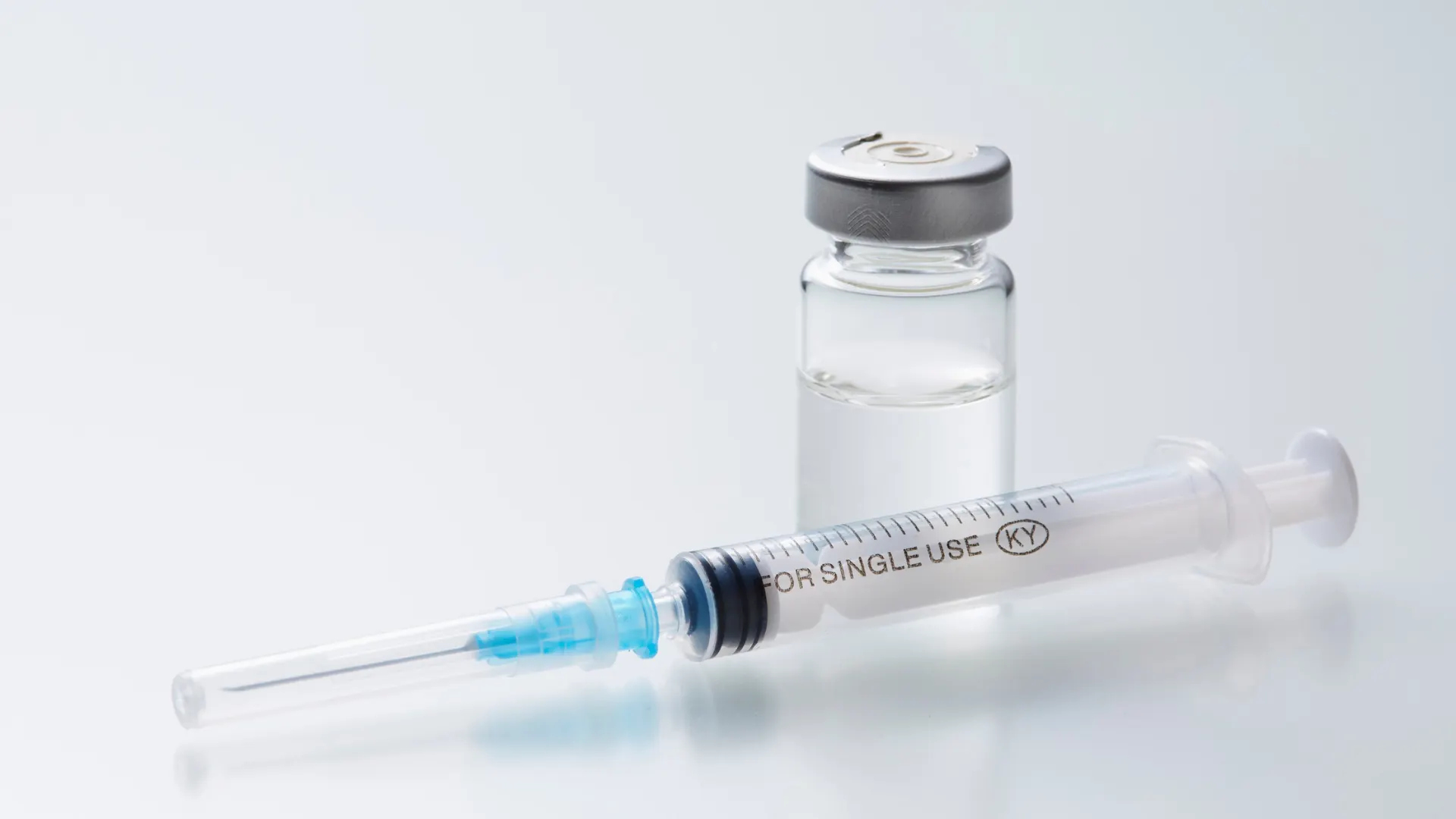
TB-500 is a synthetic copy of a very short stretch of thymosin beta-4, made in a lab rather than by your body.
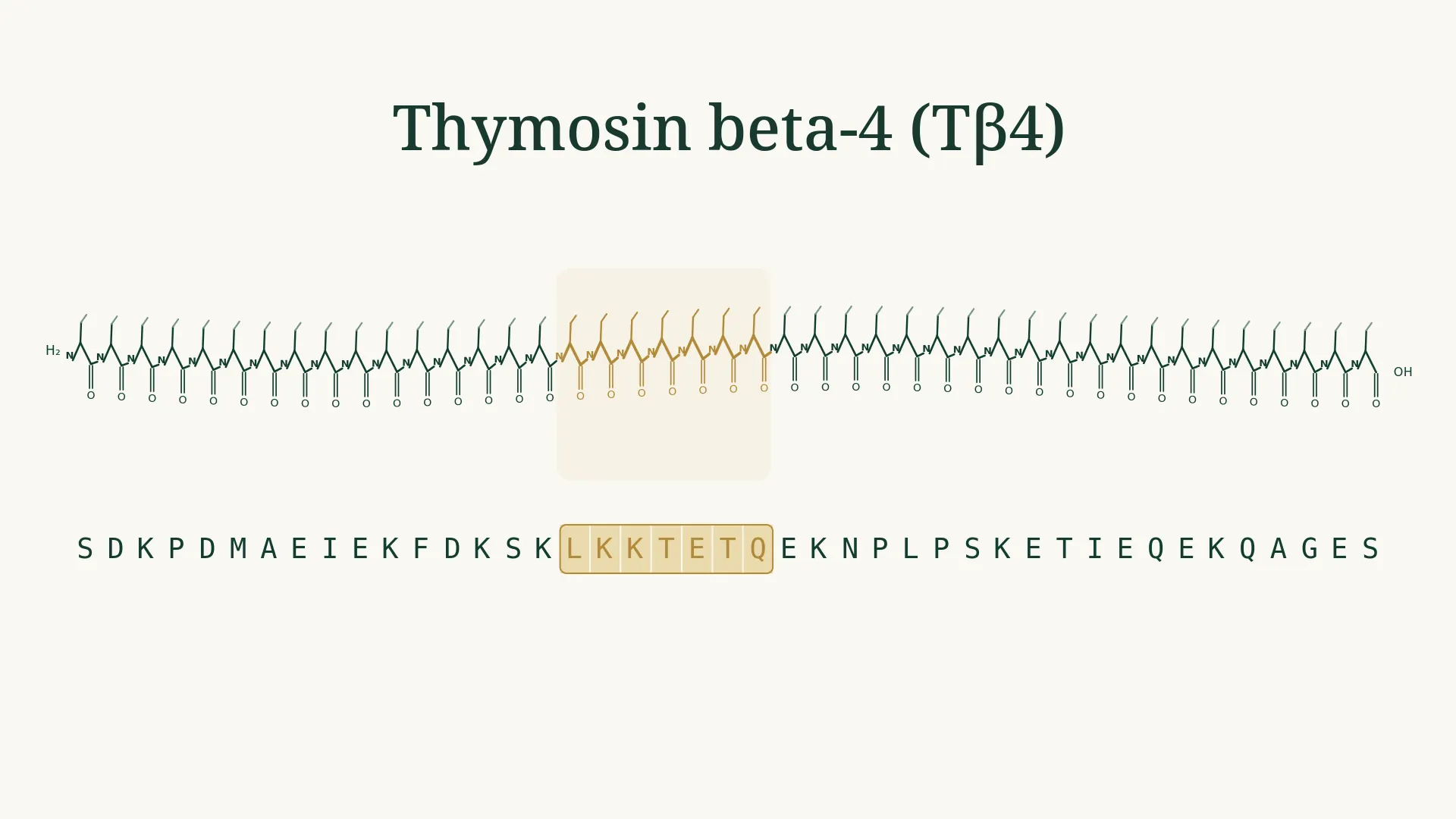
TB-500 is a lab-made, N-acetylated peptide of seven amino acids (LKKTETQ) that copies the part of thymosin beta-4 tied to actin binding, cell migration, and wound healing.
Thymosin beta-4 is a 43-amino-acid peptide your body makes naturally and releases after injury, where it helps cells move and tissues repair.
Peptide is a short chain of amino acids that can act as a signaling molecule, passing instructions between cells.
TB-500 appeared as a veterinary product. A 2012 doping-control study describes TB-500 as a veterinary preparation and built a lab test to detect its misuse in equine sports. The same paper says TB-500 is claimed to promote skin blood vessel growth, cell migration, collagen deposition, and less inflammation. Those are claims about the product, and the paper is a testing method, not a study of benefit in people.
Thymosin beta-4 and thymosin alpha-1 are different peptides with different jobs, so research on one does not carry over to the other.
Thymosin beta-4 studies in people do not tell us how TB-500 behaves. The fragment is a much smaller, chemically altered piece of the protein, and the FDA says it has found no human exposure data on it.
| Thymosin beta-4 (full protein) | TB-500 (fragment) | |
|---|---|---|
| Size | 43 amino acids | 7 amino acids (residues 17 to 23) |
| Source | Made by your body; lab-made copies used in trials | Made in a lab, with an acetyl group added to one end |
| Human data | Small human trials of topical products, including a Phase 2 leg ulcer trial | FDA found no human exposure data |
| Main evidence | Lab, mouse, and small human studies | Veterinary use and doping-control testing |
Sizes come from the 2010 venous ulcer trial report and the 2012 TB-500 doping study. The human-data row reflects the FDA’s entry for the fragment, which the page dates April 22, 2026.
The research on TB-500 is mostly animal and lab work, and the most detailed human data belongs to the full thymosin beta-4 protein, not the fragment.
A review of thymosin beta-4 biology describes it as a natural peptide that binds actin, promotes cell migration, and may reduce scar tissue in wounds. In a 2004 Nature study, mice given thymosin beta-4 after a coronary artery was tied off showed better early heart-cell survival and improved heart function. That result came from mice and the full protein.
In people, a Phase 2 trial tested topical thymosin beta-4 on venous leg ulcers. Seventy-three patients at eight European sites were randomized in a double-blind, placebo-controlled design. The authors judged the safety profile acceptable and comparable to placebo. They wrote that the 0.03% dose “may have the potential to accelerate wound healing.” Complete healing could be reached within 3 months in about 25% of patients, especially those with small to moderate wounds. The abstract does not report a placebo healing rate, so that figure is not a measured treatment effect.
Stat check: 73 patients, 8 European sites, Phase 2, topical full-length thymosin beta-4. About 25% reached complete healing within 3 months, mostly small to moderate wounds. No placebo healing rate is reported in the abstract.
That was a skin product, studied in a small trial, using the full protein. It says little about injecting a fragment into a joint or tendon.
For the fragment itself, the FDA states it “has not identified any human exposure data” on drug products containing it. We also searched PubMed on October 5, 2026 for thymosin beta-4 or TB-500 together with Lyme or Borrelia and found no studies.
Here is how the evidence stacks up, from weakest to strongest for people.
TB-500 is not FDA approved for use in people. A Holland & Knight analysis from August 2026 says it still cannot be lawfully compounded, and its status sits in an unfinished FDA process.
| Question | Status as of October 2026 |
|---|---|
| FDA approved for any use in people? | No. The FDA has not identified human exposure data on the fragment. |
| Can a pharmacy lawfully compound it? | Not yet. A Holland & Knight analysis says these peptides “still cannot be lawfully compounded.” |
| Where is the FDA process? | An advisory panel voted 8 to 6, with 1 abstention, to recommend it, and FDA scientists recommended against (McDermott Will & Emery; Frier Levitt). |
| Does “research use only” make it legal for people? | No. Harvard Health notes that many injectable peptides marketed online are not regulated or approved by the FDA. |
| Allowed in sport? | No. It has been named on the WADA Prohibited List since at least 2019. |
Here is how the process got here.
The same July panel reviewed BPC-157, which has its own page: BPC-157 and Lyme disease.
The WADA entry reads “Thymosin-beta4 and its derivatives e.g. TB-500” under growth factors in the January 2019 official list, prohibited in and out of competition. Competitive athletes should check the current list before taking anything.
The honest category for TB-500 safety is “unknown,” because the FDA says it lacks important information on whether the fragment would cause harm in humans.
Raise any of these with a clinician before considering TB-500.
Dr. Mueller’s sourcing rule applies to TB-500 as it does to every peptide: it should be prescribed and made by a safe compounding pharmacy, and not ordered from a research-only facility. For TB-500 specifically, see the legal status above: no lawful compounded route exists today.
She points to lipopolysaccharide (LPS), a toxin that comes from bacteria. In her words, it is “often found in some of these research-only peptide facilities.” LPS science supports the concern in general. A 2021 review found LPS can increase blood-brain barrier permeability in laboratory and sepsis research. That review studies LPS itself, not peptide products, so it explains why endotoxin matters and does not measure how often any peptide is contaminated.
Our guide to whether peptides are safe walks through sourcing, side effects, and who needs extra caution.
The fragment adds a wrinkle. Because its compounding status is unsettled, there is no established prescribed route to point you toward today. That is a reason to ask a clinician, and a reason to skip research-only websites.
TB-500 has no published research in Lyme disease that we could find. Any claim that it helps Lyme, mold illness, or post-infection recovery is an extrapolation from lab biology.
People with chronic illness ask about it for understandable reasons: lingering joint and tendon pain, slow recovery, and crashes after exertion. Patients come to Dr. Mueller after seeing 20+ specialists on average, so being drawn to anything that promises repair makes sense. The risk is that a vial can feel like an answer while the root causes stay untouched.
Dr. Mueller’s 4-Phase Method builds the body first. Phase 01 builds foundations such as vitamins, minerals, adrenal and thyroid support, blood sugar, and mitochondria. Phase 02 calms the nervous system and lifestyle load. Phase 03 uses gentle, strategic detox. Phase 04 targets microbe balance and repair. In that sequence, a peptide is a later-phase tool, not a first move, and our Lyme disease treatment page explains the full approach.
In a video on peptides for chronic infection, Dr. Mueller described “a lot of hope for the chronic infection community” because peptides can “re-signal the body for healing.” She paired that hope with cautions on sourcing, side effects, and who should avoid certain peptides. That video did not cover TB-500, so read it as her general view of peptides.
A clinician who knows your history can weigh TB-500 against your labs, your cancer and autoimmune history, your other treatments, and what the law allows today. Bring these five questions to that conversation.
Our overview of peptides for chronic illness shows how these tools fit into a wider plan.
My Lyme Doc sees patients by video visit in 11 states: CO, OR, WY, NJ, PA, TX, WI, NH, AL, SD, and VT. You can book a video visit with Dr. Mueller to talk through whether any peptide belongs in your plan.