


Mold and MCAS (mast cell activation syndrome) are linked in lab studies, where some molds trigger mast cells, but we found no human study showing that mold causes MCAS. Mold-driven MCAS is a hypothesis, and the studies behind it come from cells and animals.
If foods, scents, and supplements now set off flushing or hives, and mold is somewhere in your history, the mast cell question is a fair one to ask. You are not imagining the reactions. This page separates what studies show from what clinicians suspect, and it covers only the mold connection.
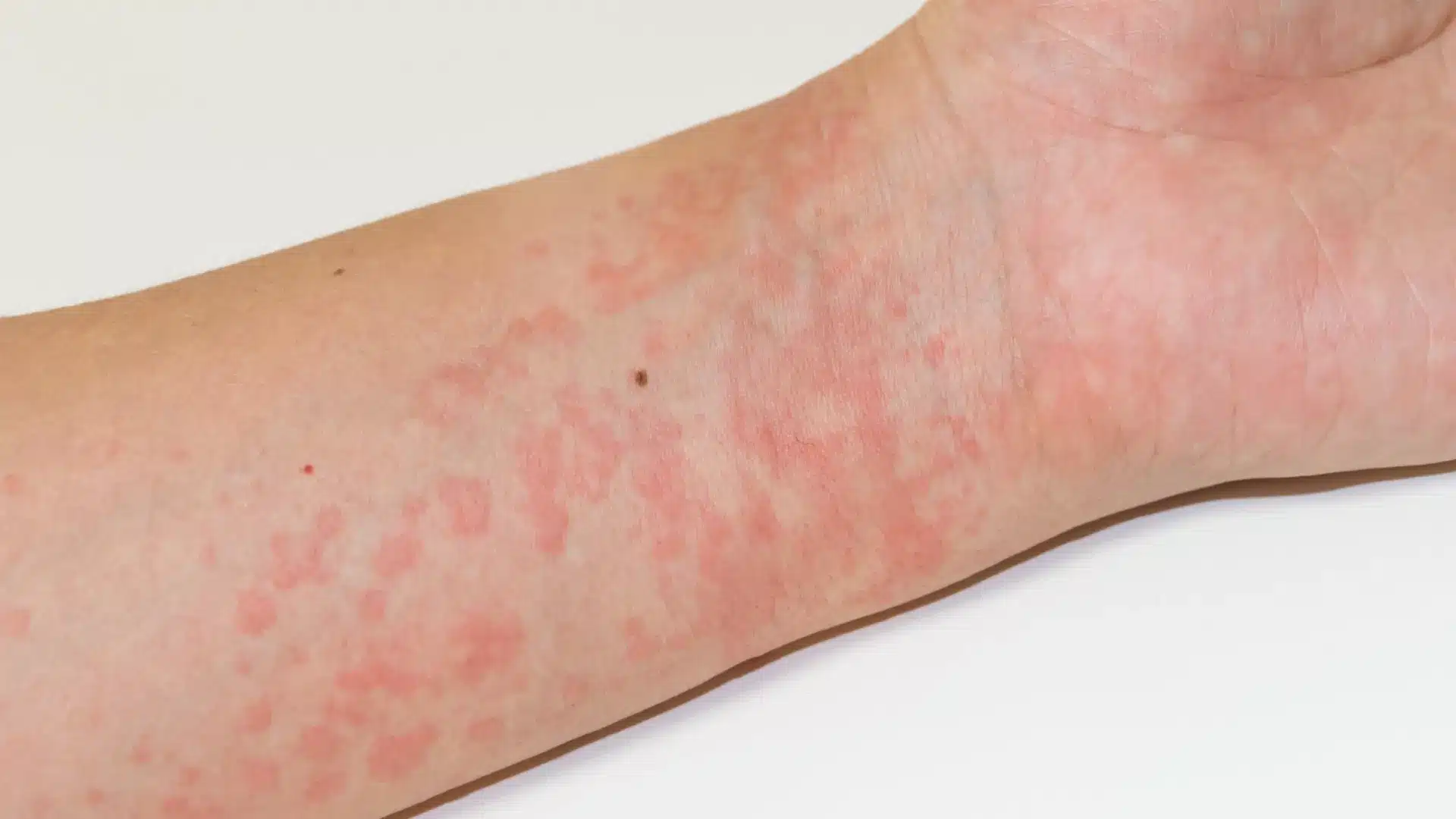
Mold and MCAS get linked because mast cells are the immune cells that react to allergens, and mold allergy is a recognized allergy.
Mast cells are immune cells in the skin, gut, and airways that release histamine and other chemical signals when they detect an allergen or a threat. That release is called degranulation.
MCAS (mast cell activation syndrome) is a diagnosis for people whose mast cells release those signals in severe, repeated episodes that resemble anaphylaxis.
The CDC says people with asthma or who are allergic to mold may have severe reactions, and it lists a stuffy nose, wheezing, and red or itchy eyes or skin among the symptoms. In an allergy, IgE (the allergy antibody) directs mast cells to release histamine. That is a standard allergy, and it differs from MCAS. Our guide to what MCAS is covers the definition in full.
Lab and animal studies show that some mold parts can activate mast cells, that others can quiet them, and that none of this was tested in people with MCAS.
| Study | What was tested | What it found | Limit |
|---|---|---|---|
| Urb et al., 2009 | Mast cells in a dish with Aspergillus fumigatus and other Aspergillus species | Mature A. fumigatus hyphae (the threadlike growth) made mast cells release their contents without IgE. Spores did not. Other Aspergillus species did much less | Cell culture, one mold group |
| Holck et al., 2007 | Blood cells from healthy volunteers and dust mite allergic patients, plus beta-glucans (a mold cell wall sugar) | Beta-glucans alone released no histamine, but they amplified histamine release when an allergy trigger was present | Lab test on blood cells, not a symptom study |
| Niide et al., 2006 | Mast cells with gliotoxin, a chemical made by Aspergillus and Candida | Gliotoxin suppressed mast cell degranulation and the release of inflammatory signals | Cell culture, and the effect ran opposite to activation |
| Doebler et al., 1992 | Rats injected with T-2 toxin, a mold toxin | Mast cell granules were depleted 8 hours later, which the authors read as mast cell activation | Injected doses of 0.5 to 1.5 times the dose lethal to half of animals |
| Harding et al., 2020 | Mice given Stachybotrys spores through the nose | Brain immune activation and memory deficits | The abstract reports general immune activation, not mast cell activation |
Taken together, these studies suggest mold can interact with mast cells in a dish, and the result depends on the mold, the mold part, and the dose. They do not show that household exposure causes MCAS in a person. For background on mold toxins and why exposure matters, read the mycotoxin illness guide.
Human studies show that damp, moldy buildings are linked to respiratory illness and that mold allergy is real, but none we found shows mold causes MCAS.
A 2007 meta-analysis of Institute of Medicine review studies and other related studies found that building dampness and mold were associated with about 30% to 50% increases in respiratory and asthma-related outcomes. Those outcomes are breathing problems, not mast cell syndromes. The mold illness symptoms guide lists the wider symptom picture.
Hives do not trace back to mold allergy in every case. In a 2009 study of 112 people with chronic hives, skin reactivity to seven common molds and mold-specific IgE levels were comparable to those of 35 healthy controls.
One study did look at a mast cell marker and a mold. In 76 people with cystic fibrosis, baseline tryptase was lower in those with IgE to Aspergillus and also tracked with their antibody responses. The authors suggest tryptase may reflect host and mold interaction in the lungs. That is cystic fibrosis lung disease, not MCAS.
A 2024 expert review in the Journal of Allergy and Clinical Immunology says the mechanisms that lead to mast cell activation in MCAS “remain to be elucidated.” Its full text does not mention mold. A short 2022 overview of mycotoxin illness says its symptoms overlap with MCAS, and the abstract reports no patient data.
The evidence connecting mold and MCAS is strongest for mold allergy, weaker for lab studies, and missing for a demonstrated cause-and-effect link in people.
| Question | What exists | Strength |
|---|---|---|
| Can mold allergy activate mast cells? | CDC guidance on mold allergy; standard IgE allergy biology | Established |
| Can mold parts activate mast cells in a dish? | Urb 2009, Holck 2007, Doebler 1992 | Lab and animal only, with mixed direction |
| Are damp, moldy homes linked to illness? | Fisk 2007 meta-analysis | Human population data, respiratory outcomes |
| Does mold exposure cause MCAS in people? | No study found in PubMed or in the 2024 review | Open hypothesis |
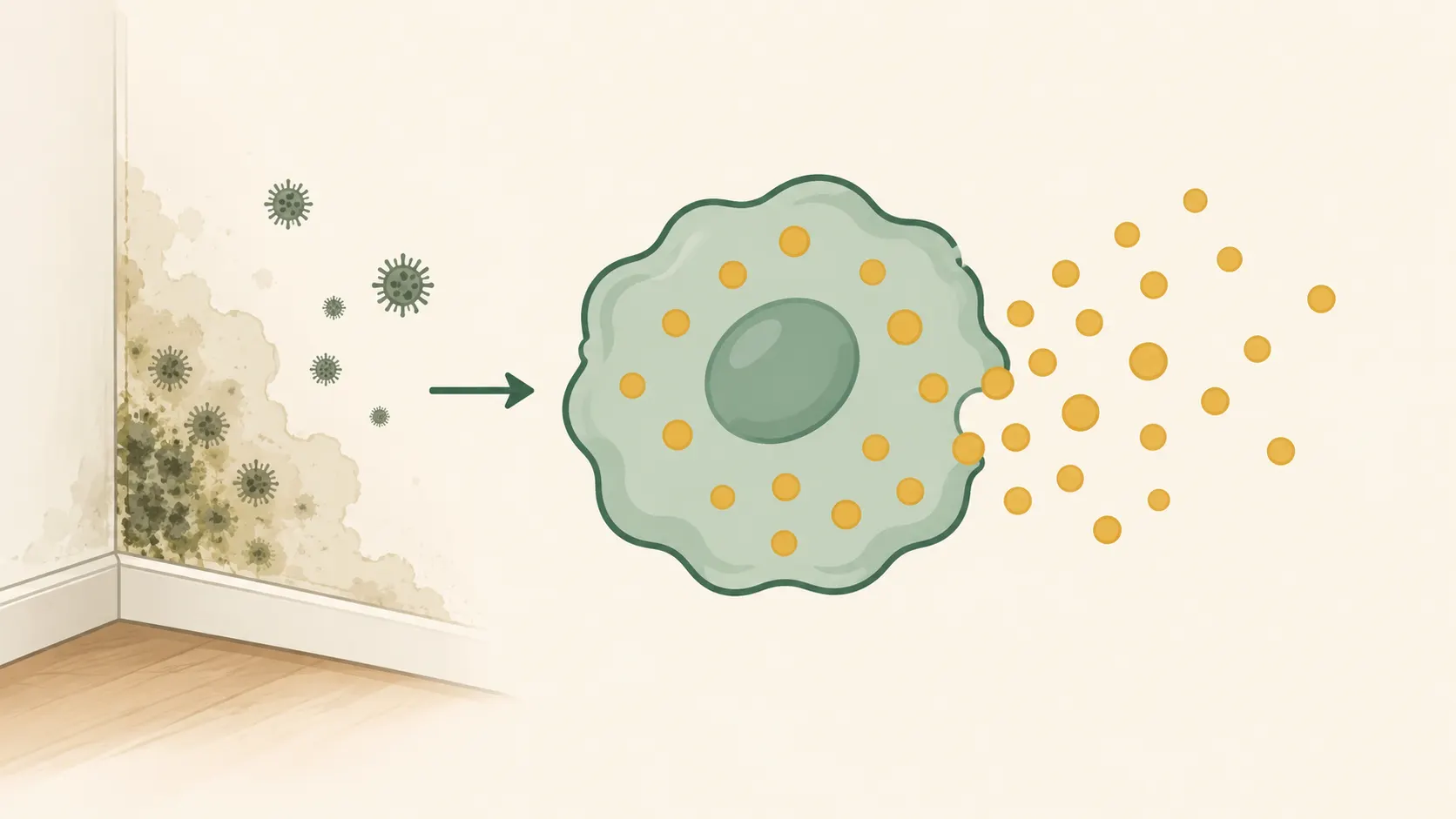
The research supports asking the question about mold and MCAS and leaves the answer open.
On your call, Dr. Mueller reviews your mold exposure, your reactions, and your results together, then outlines where care can start. Book your call to go through your history with her.
MCAS has three consensus criteria, and most people referred for a mast cell disorder do not meet them.
The 2024 review lists them. First, recurrent severe symptoms in at least two organ systems. Second, a significant temporary rise in a mast cell chemical during symptoms, such as tryptase (an enzyme measured in blood) or urinary histamine. Third, a response to medicines that block mast cell effects. The review calls current lab testing limited. The MCAS symptoms guide covers those labs in detail.
The same review says only a small fraction, under 5%, of patients met strict criteria for primary or idiopathic MCAS. A 2024 study of 703 referred patients found 31 with confirmed idiopathic MCAS, or 4.4%.
The review also says it is not well understood whether MCAS is a primary syndrome or a pattern of symptoms inside other inflammatory or allergic conditions. That uncertainty applies to mold too. A mast cell pattern in a mold-exposed person may be MCAS, mold allergy, or another cause.
Reactions to foods, scents, and supplements after mold exposure have several possible explanations, and mast cells are only one of them.
Chemical intolerance is a pattern of reactions to chemicals, foods, and drugs that produces symptoms in more than one body system.
A 2023 study of 544 MCAS patients found the majority also reported chemical intolerance, confirming an earlier report of about 60%. The authors note mold has been reported as an initiator of chemical intolerance. That finding starts from MCAS patients and asks about chemical intolerance, so it cannot show that mold causes either one.
Smells deserve their own caution. A 2024 report on house calls to patients with chemical intolerance proposed that fragrance chemicals trigger mast cell release in the brain’s smell pathways. The authors say fragrance sensitivity has not been confirmed by challenge studies, and the idea remains a proposal. The 2024 review adds that evidence for mast cell medicines in chemical sensitivity disorders is unconfirmed.
Autonomic problems can look like mast cell activation. The 2024 review says autonomic dysfunction can mimic flushing, palpitations, and stomach complaints. That overlap is explained in the dysautonomia and POTS guide.
Mold illness itself overlaps with these patterns, and chronic inflammatory response syndrome (CIRS) is one framework for it, explained in what CIRS is.
If you suspect mold and mast cells together, the next step is to separate the questions, gather timing data, and work with clinicians who go slowly.
If MCAS is confirmed, our MCAS treatment guide covers what comes next.
If Lyme is also in your history, the MCAS and Lyme disease guide covers that connection.
Dr. Mueller treats mold illness and Lyme disease. MCAS is not a service she provides as a standalone diagnosis, so a formal MCAS workup belongs with an allergist or immunologist.
Her 4-Phase Method builds the body first, then supports lifestyle and the nervous system, then moves to gentle detox, and ends with targeted microbe balancing. That order is the framework for mold and Lyme care at My Lyme Doc. Binders are a detox tool considered within the third phase, and our binders for mold detox guide explains them.
My Lyme Doc sees patients by video visit in 11 states. You can book a consultation with Dr. Mueller to review your mold history, your results, and your reaction pattern together.
Not shown in people so far. Lab studies show some molds can activate mast cells, and we found no human study showing mold causes MCAS.
In a dish, some can. A 2009 study found mature Aspergillus fumigatus hyphae triggered mast cell release, while gliotoxin suppressed it in a 2006 study. Mold allergy also activates mast cells through IgE.
Several causes are possible, including chemical intolerance, allergy, autonomic dysfunction, and MCAS. A 2023 study of 544 MCAS patients found the majority also reported chemical intolerance.
MCAS is a real but strictly defined diagnosis. Mold as its driver is an open hypothesis, because no human study we found shows the link.
Separately. MCAS uses your symptom pattern, mast cell chemical labs drawn during symptoms, and your response to treatment. Mold exposure is assessed on its own.
My Lyme Doc treats mold illness and Lyme disease. MCAS is not offered as a standalone diagnosis, so ask an allergist or immunologist about a formal workup.
Written and medically reviewed by Dr. Diane Mueller, ND, LAc, DAOM | Last reviewed: November 1, 2026
This article is for educational purposes and is not medical advice. It does not replace evaluation by a qualified clinician who knows your history. Work with your doctor before ordering tests or making any change to your care.
We have helped thousands of people in Colorado, Oregon, Wyoming, New Jersey, Pennsylvania, Texas, Wisconsin, New Hampshire, Alabama, South Dakota, and Vermont restore their health and quality of life by diagnosing and treating their Lyme Disease.
We have helped thousands of
people restore their health
and quality of life by diagnosing
and treating their Lyme Disease.
“Dr. Mueller’s approach to medicine is refreshing! There is only so much you can do with western medicine and in my life I was needing a new approach. By addressing the whole body, nutritional diet factors, environmental factors, blood work, and incorporating ideas I had not previously known, I was able to break through with my conditions. I am not only experiencing less pain in my life, but through the process of healing guided by Dr. Diane Mueller, I am now happy to say I have more consciousness surrounding how I eat, what to eat and when things are appropriate. Living by example Dr. Mueller has a vibrancy that makes you want to learn and know more about your body and overall health. I highly recommend her to anyone looking for new answers, a new approach to health, or in need of freedom from pain and limitations.”
-Storie S.
Kihei, HI