


The Gulf Coast tick has a somewhat misleading name. Yes, it was first documented along the Gulf Coast. But since around 2000, it has expanded dramatically across much of the eastern United States, into the Southeast, the Great Plains, and increasingly into the Mid-Atlantic and Northeast.
If you’re in the Southeast or Mid-Atlantic, this tick is part of your exposure world. And it carries a spotted fever rickettsiosis that many providers haven’t heard of.
The Gulf Coast tick (Amblyomma maculatum) is an ornate, reddish-brown hard tick native to the Gulf Coast that has spread across much of the eastern United States. It is the main U.S. carrier of a spotted fever illness called Rickettsia parkeri rickettsiosis.
The Gulf Coast tick (Amblyomma maculatum) has expanded from its original Gulf Coast range to much of the eastern United States since 2000, and is now established as far north as Connecticut, New York, and New Jersey
It is the primary U.S. vector for Rickettsia parkeri rickettsiosis, a spotted fever illness that looks similar to RMSF but typically follows a milder course
Infection rates in the ticks themselves are high: R. parkeri is commonly detected in 20 to 43 percent of Gulf Coast ticks across the Southeast, with some regional surveys reporting rates as high as 56 percent
The eschar at the bite site is the single most useful clue that separates R. parkeri rickettsiosis from RMSF
Adult females are the stage most likely to bite humans, with peak risk in spring and summer
Identification features: ornate reddish-brown body, 3 to 7 mm in adults
We have helped thousands of people in Colorado, Oregon, Wyoming, New Jersey, Pennsylvania, Texas, and Wisconsin restore their health and quality of life by diagnosing and treating their Lyme Disease.
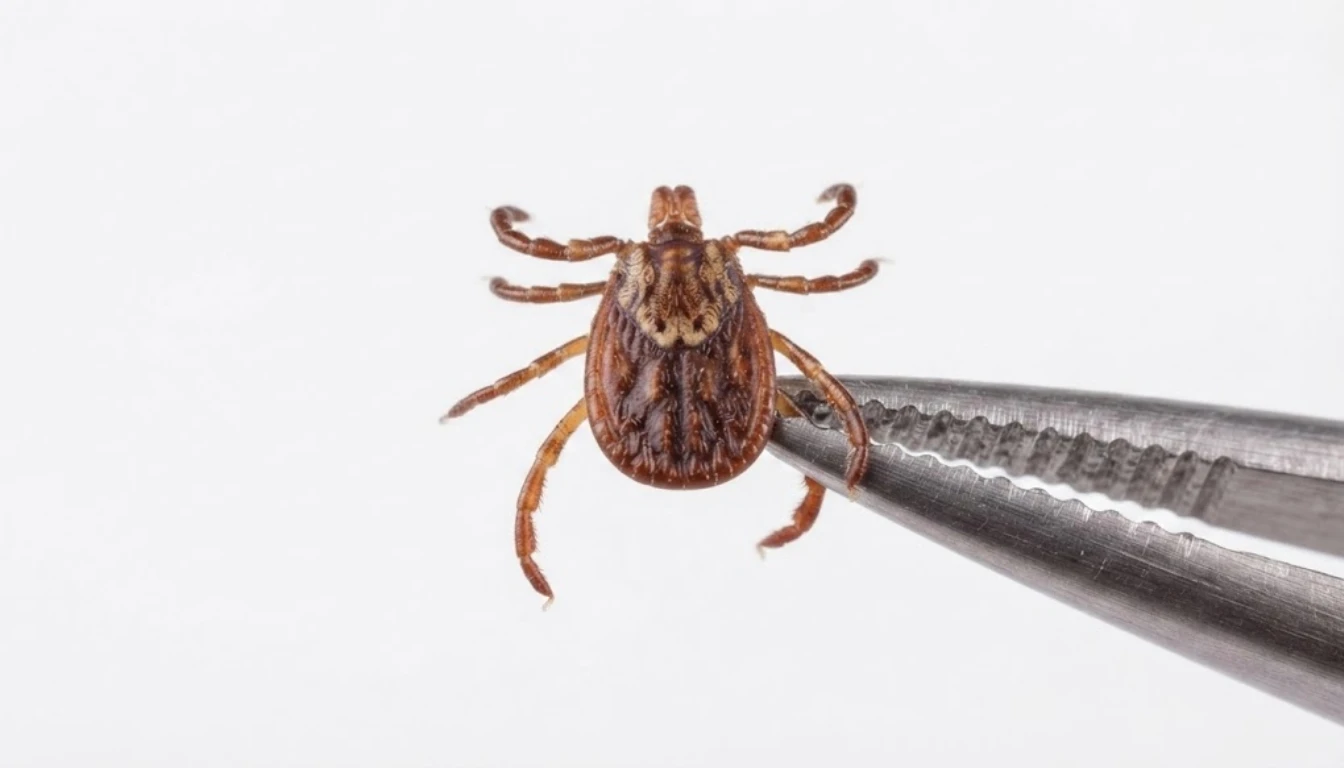
The Gulf Coast tick is an ornate tick. It has patterned markings rather than the plain brown of species like the deer tick or brown dog tick. Key features:
Reddish-brown body with ornate markings on the scutum
Size: Adults are approximately 3-7 mm unfed
A member of the Amblyomma genus, sharing the ornate appearance with the lone star tick, but without the lone star’s distinctive single white spot
Mouthparts are long relative to other tick genera, a common feature of Amblyomma species

The CDC describes Amblyomma maculatum as found primarily in the southeastern United States, with focal populations extending into the northeastern, midwestern, and southwestern United States. [3]
Ohio State University’s Extension service notes that since approximately 2000, this species has expanded dramatically across the eastern United States and is now commonly found in: [6]
The Southeast, from Texas east through Florida and north through the Carolinas
The Great Plains, Oklahoma, Kansas, and neighboring states
Isolated focal populations in the Mid-Atlantic, Midwest, and Northeast
For patients and providers: do not assume Gulf Coast tick exposure requires travel to coastal Texas or Louisiana. If you’re in Virginia, Oklahoma, or New York and were in grassy or transitional habitat in spring or summer, Gulf Coast tick exposure is plausible.
A 2024 CDC report confirmed established Gulf Coast tick populations in the northeastern United States, including Connecticut, New York, and New Jersey, in some cases in densely populated metropolitan areas where local human infections had not previously been documented. [9] This is not a tick that is “coming someday.” In much of the eastern United States, it is already here.
I see patients across Colorado, Wyoming, New Jersey, Pennsylvania, Texas, and Wisconsin, and this is exactly the kind of question that gets missed. If you live in Denver or Cheyenne, the Gulf Coast tick is not currently established in your backyard. But two things still put it on your radar.
First, travel. A long weekend in the Southeast, a work trip through Oklahoma or Kansas, a family visit to the Carolinas, any of these can produce a bite that shows up as fever and a strange dark lesion days after you’re home. Colorado and Wyoming providers see far more Rocky Mountain wood tick and American dog tick exposure, so a Gulf Coast tick bite acquired on travel is easy to overlook. If you develop symptoms after being in the Southeast or south-central states, the travel history is the detail that changes the diagnosis.
Second, range expansion. This species has moved steadily north and west over the last two decades. Focal populations already reach the Great Plains and the Midwest, and the Northeast now has established populations. [4] The map is not static, and the exposure boundary is moving outward.
The practical takeaway: if you or your provider are working through an unexplained fever with a rash and a recent tick bite, do not let geography alone rule out a spotted fever rickettsiosis. Where you were matters as much as where you live.
We have helped thousands of people in Colorado, Oregon, Wyoming, New Jersey, Pennsylvania, Texas, and Wisconsin restore their health and quality of life by diagnosing and treating their Lyme Disease.
The Gulf Coast tick is a three-host tick with four life stages: egg, larva, nymph, and adult. Completing the full cycle typically takes about two years. [7] Each active stage feeds on a different host, drops off, and molts before seeking the next one.
Egg: After a blood meal, the engorged female drops off her host, finds a sheltered microhabitat, and lays a single large clutch. A female converts 52 to 69 percent of her body weight into eggs and lays approximately 10,000 eggs per clutch, with the largest recorded clutches near 18,500 eggs. Egg-laying can take up to 26 days, after which the female dies. [7]
Larva (“seed tick”): The six-legged larva hatches and feeds on small animals such as ground-feeding birds and small mammals. Larvae can take up to 10 days to feed to full engorgement before dropping off to molt.
Nymph: The eight-legged nymph feeds on small mammals, rodents, and rabbits, then drops off and molts into an adult.
Adult: Adults feed on larger animals including dogs, deer, coyotes, and livestock, and adult females are the stage most likely to bite humans. On a host, males feed for roughly eight days and then release a pheromone that signals females for mating.
Why this matters for you: the stage that puts humans at risk is the adult, which is active in spring and summer. It is also the stage large enough that you have a realistic chance of finding it on a tick check before it transmits anything. The larval and nymphal stages feed mostly on wildlife, which is how Rickettsia parkeri is maintained and amplified in the environment between human cases.
Rickettsia parkeri Rickettsiosis
Rickettsia parkeri rickettsiosis is a spotted fever infection spread by the bite of a Gulf Coast tick. It usually causes fever, rash, and a dark scab at the bite site, and it tends to be milder than Rocky Mountain spotted fever.
This is the primary human health concern associated with the Gulf Coast tick, and it is one that most primary care providers have not encountered.
Rickettsia parkeri causes a spotted fever rickettsiosis, similar in mechanism and presentation to Rocky Mountain spotted fever, but typically following a milder clinical course in most patients. [1] Unlike RMSF, which can be rapidly fatal without treatment, R. parkeri rickettsiosis is rarely life-threatening when recognized and treated. [2]
An eschar is a small, painless, dark scab that forms where an infected tick bit you. It is the most reliable sign that points to R. parkeri rickettsiosis rather than Rocky Mountain spotted fever.
But, “milder” does not mean trivial. The typical presentation includes:
Eschar at the bite site, a painless black ulcerated lesion with a dark scab, which is more consistently present with R. parkeri than with RMSF (where an eschar is unusual)
Fever
Headache
Rash, typically maculopapular (flat red spots), often developing on the trunk and extremities
Fatigue, myalgia
The eschar is an important clinical clue. In a patient from the Southeast or expanding range of this tick who presents with fever, rash, and an eschar, R. parkeri rickettsiosis belongs in the differential.
Doxycycline is the treatment of choice, as with other spotted fever rickettsiae.
How Often Are These Ticks Actually Infected?
This is the part that surprises people. Unlike RMSF, where the fraction of infected ticks is generally low, a strikingly high percentage of Gulf Coast ticks carry Rickettsia parkeri. Across the Southeast, surveys commonly detect R. parkeri in 20 to 43 percent of Gulf Coast ticks. A study of ticks from Fairfax County, Virginia found 41.4 percent infected. [8] In the Northeast, 23 to 53 percent of adult specimens from Connecticut, New York, and New Jersey have tested positive, and some regional surveys of questing adults report infection rates as high as 56 percent. [9]
For context, that is a fundamentally different risk profile than the deer tick or the RMSF vectors, where single-digit infection rates are typical. When a Gulf Coast tick bites, the probability that it is carrying R. parkeri is meaningful, not remote. That is one more reason a bite from this species, and any illness that follows it, deserves to be taken seriously rather than waved off.
Tick Paralysis
The Gulf Coast tick is also a documented, though uncommon, cause of tick paralysis in both dogs and humans. Tick paralysis is not an infection. It is caused by a neurotoxin in the saliva of a feeding female tick, and it produces a progressive, ascending muscle weakness that can begin in the legs and move upward. Because it is toxin-driven rather than infectious, the defining feature is also the treatment: removing the attached tick typically leads to recovery, often within about 24 hours. This is one more reason to remove any attached tick promptly and completely, and to seek care quickly if unexplained weakness follows a known bite.
Hepatozoon americanum in Dogs
While not a human pathogen, Hepatozoon americanum, transmitted by the Gulf Coast tick, causes American hepatozoonosis in dogs, a disease that can be severe and is difficult to clear. [5] If you have dogs in Gulf Coast tick territory, veterinary awareness and tick prevention matter for your pet’s health as well as for household tick burden.
“Gotch Ear” in Livestock
“Gotch ear” is a swollen, crusted, drooping ear in cattle and other livestock caused by heavy Gulf Coast tick feeding inside the ear. It comes from mechanical tissue damage, not an infection.
One signature behavior of the Gulf Coast tick is where it prefers to feed: the ears. Adults preferentially attach inside and around the ears of their hosts, and in cattle, horses, and other livestock, heavy ear infestation produces a condition known as “gotch ear.” The ear becomes swollen, crusted, and reddened, and it can droop or curl. In extreme cases the damage progresses to necrosis and even loss of the ear, which reduces an animal’s market value.
The important clinical point is that gotch ear is not caused by a pathogen. No infectious agent is involved. The deformity is the result of mechanical tissue damage from the ticks feeding in that concentrated area. It is a vivid illustration of how much local damage this species can do when it feeds, and it is why ranchers and veterinarians in the tick’s range check ears closely. For pet owners, the same preference means the ears are a high-yield spot to check on dogs.

Patients who have heard of Rocky Mountain spotted fever sometimes assume it is the only spotted fever rickettsiosis in the United States. It is not. Several spotted fever group Rickettsia species are transmitted by different ticks across different regions, and their presentations overlap enough that the specific diagnosis is easy to miss.
The single most useful distinguishing feature is the eschar: a painless, dark, ulcerated lesion with a black scab that forms at the site of the bite. R. parkeri rickettsiosis produces an eschar in the large majority of cases. In classic Rocky Mountain spotted fever, an eschar is unusual. So when a patient in this tick’s range presents with fever, a spreading rash, and a dark scabbed lesion at a recent bite, that eschar is pointing you toward R. parkeri, not RMSF, and toward a very different prognosis.
Causative organism – R. parkeri Rickettsiosis: Rickettsia parkeri; Rocky Mountain Spotted Fever: Rickettsia rickettsii
Primary tick vector – R. parkeri Rickettsiosis: Gulf Coast tick (Amblyomma maculatum); Rocky Mountain Spotted Fever: American dog tick, Rocky Mountain wood tick, brown dog tick
Geographic range – R. parkeri Rickettsiosis: Southeast, Great Plains, Mid-Atlantic, now Northeast; Rocky Mountain Spotted Fever: Widespread across the continental United States
Eschar at bite site – R. parkeri Rickettsiosis: Usually present, key clue; Rocky Mountain Spotted Fever: Rare
Rash – R. parkeri Rickettsiosis: Maculopapular, trunk and extremities; Rocky Mountain Spotted Fever: Maculopapular, often starting at wrists and ankles
Severity – R. parkeri Rickettsiosis: Typically milder, rarely life-threatening when treated; Rocky Mountain Spotted Fever: Can be severe and rapidly fatal without prompt treatment
Treatment – R. parkeri Rickettsiosis: Doxycycline; Rocky Mountain Spotted Fever: Doxycycline
Two takeaways from this table. First, the treatment is the same, so a clinician who suspects any spotted fever rickettsiosis should not wait for confirmatory testing to start doxycycline. Second, the eschar and the tick species help set expectations: R. parkeri rickettsiosis is generally the milder of the two, but “milder” is a statistical statement, not a guarantee for any individual patient. Prompt recognition still matters.
We have helped thousands of people in Colorado, Oregon, Wyoming, New Jersey, Pennsylvania, Texas, and Wisconsin restore their health and quality of life by diagnosing and treating their Lyme Disease.
The CDC indicates the highest risk of being bitten occurs during spring and summer. More broadly, tickborne disease risk is greatest from late spring through early fall in most of the expanded range.
Adult Gulf Coast ticks are the life stage associated with human bites and R. parkeri transmission. As with other tick species, peak activity aligns with peak outdoor exposure season.
If you find a tick and later develop:
A dark, crusted lesion (eschar) at the bite site
Fever beginning within 2 weeks of the bite
Rash (flat red spots) developing within a few days of fever
Headache, fatigue, muscle aches
Seek medical evaluation and mention the tick bite, and, if you saved the tick or can identify it, mention that it may have been a Gulf Coast tick. This history guides appropriate testing and treatment.
As with all spotted fever rickettsiae, doxycycline should be started promptly when the diagnosis is clinically suspected.
For tick bite prevention protocols, see our tick prevention resource.
The Gulf Coast tick is the primary U.S. vector for Rickettsia parkeri rickettsiosis, a spotted fever illness characterized by fever, rash, and an eschar at the bite site. It also transmits Hepatozoon americanum to dogs.
No. R. parkeri rickettsiosis and Rocky Mountain spotted fever (RMSF) are both spotted fever group rickettsioses, but they are caused by different species. R. parkeri infections typically follow a milder course than RMSF and more consistently produce an eschar at the bite site. Both respond to doxycycline.
Despite its name, the Gulf Coast tick has expanded well beyond its original range. Since approximately 2000, it has spread across much of the southeastern United States, the Great Plains, and into the Mid-Atlantic and Northeast. If you’re in the eastern United States and were in grassy or transitional habitat in spring or summer, exposure is possible.
Typical presentation includes a dark, crusted lesion (eschar) at the bite site, followed by fever, headache, and a maculopapular rash. The eschar is a helpful clinical identifier, it is more consistently present with R. parkeri than with RMSF.
Gulf Coast ticks are ornate, medium-sized ticks (3 to 7 mm as adults) with reddish-brown bodies and patterned markings. They share the Amblyomma genus with the lone star tick but lack the lone star’s distinctive single white spot. Definitive identification often requires expert consultation.
High compared to most other U.S. ticks. Surveys commonly find Rickettsia parkeri in 20 to 43 percent of Gulf Coast ticks across the Southeast, with some regional studies reporting infection rates as high as 56 percent. That is much higher than the single-digit infection rates typical of the ticks that spread Rocky Mountain spotted fever.
Yes, though it is uncommon. Tick paralysis is caused by a neurotoxin in the saliva of a feeding female tick, not by an infection. It causes progressive muscle weakness that usually resolves within about 24 hours after the attached tick is removed. This is one reason to remove any attached tick promptly.
Gotch ear is swelling, crusting, and drooping of the ear seen in cattle and other livestock heavily infested by Gulf Coast ticks, which prefer to feed inside the ears. It is caused by mechanical tissue damage from feeding, not by a pathogen, and in severe cases can progress to loss of the ear.
Lone Star Tick: shares overlapping southern range; also a spotted fever group vector
American Dog Tick: another RMSF-transmitting tick active in overlapping eastern territory
Rocky Mountain Wood Tick: the primary RMSF vector in the Mountain West
Deer Tick (Black-Legged Tick): the primary Lyme vector; can overlap with Gulf Coast tick in Mid-Atlantic states
Types of Ticks: full guide to tick identification across all U.S. species
Standard prevention applies regardless of tick species:
Apply EPA-registered repellent to exposed skin: DEET (20-30%) or picaridin (20%) are the most studied options for tick prevention
Treat clothing and gear with permethrin (0.5% concentration). Let it dry completely before wearing. Treated clothing repels ticks on contact and remains effective through multiple washes.
Cover up in high-risk areas: long sleeves, long pants tucked into socks, and closed-toe shoes reduce skin exposure in wooded or grassy terrain
Perform a tick check within 2 hours of outdoor activity, focusing on warm and hidden areas: scalp, behind the ears, underarms, groin, and behind the knees
Shower promptly after time outdoors: this rinses off any unattached ticks and gives you a full-body tick check opportunity
Check pets before they come indoors; dogs can carry ticks into the home
If you find a tick attached to your skin, use fine-tipped tweezers to grasp it as close to the skin surface as possible and pull upward with slow, even pressure. Do not twist or jerk. Clean the bite area with rubbing alcohol or soap and water after removal.
Most cases of R. parkeri rickettsiosis respond well to a timely course of doxycycline, and for many people that is the end of the story. Start there, with prompt conventional treatment.
Where my work as a functional-medicine physician comes in is the smaller group of patients who do not simply bounce back. If you were bitten in Gulf Coast tick range, treated for a tickborne infection, and are still dealing with lingering fatigue, brain fog, joint pain, or a sense that your body never fully reset, that is worth a deeper look. Tickborne illness can leave downstream effects on the immune system, the gut, and energy metabolism that a single antibiotic course does not always resolve, and those patterns are treatable when they are actually investigated rather than dismissed.
If that describes you, you can book a consultation to work through your history, your exposures, and a root-cause plan. Bring any details you have about the bite, including where you were and whether you saved the tick.
The Gulf Coast tick is no longer confined to coastal Texas. It now has a broad presence across the eastern United States, carrying a spotted fever rickettsiosis that many providers haven’t encountered but need to consider in febrile patients with tick exposure history.
If you’re in an affected area and develop fever, rash, and an unusual dark lesion at a recent bite site, this tick and Rickettsia parkeri deserve to be on the differential.
Author: Dr. Diane Mueller, ND, LAc, DAOM
Medical Reviewer: Dr. Diane Mueller, ND, LAc, DAOM
Medical Disclaimer: This content is for educational purposes only and is not a substitute for professional medical advice, diagnosis, or treatment. Always consult a qualified healthcare provider with questions about your specific situation.
We have helped thousands of
people restore their health
and quality of life by diagnosing
and treating their Lyme Disease.
“Dr. Mueller’s approach to medicine is refreshing! There is only so much you can do with western medicine and in my life I was needing a new approach. By addressing the whole body, nutritional diet factors, environmental factors, blood work, and incorporating ideas I had not previously known, I was able to break through with my conditions. I am not only experiencing less pain in my life, but through the process of healing guided by Dr. Diane Mueller, I am now happy to say I have more consciousness surrounding how I eat, what to eat and when things are appropriate. Living by example Dr. Mueller has a vibrancy that makes you want to learn and know more about your body and overall health. I highly recommend her to anyone looking for new answers, a new approach to health, or in need of freedom from pain and limitations.”
-Storie S.
Kihei, HI