


By Dr. Diane Mueller, ND, LAc, DAOM · Reviewed by Dr. Diane Mueller, ND, LAc, DAOM · Last reviewed: July 28, 2026
There are more than 90 types of ticks in the United States. Only a handful account for nearly every human bite. They are the blacklegged deer tick, American dog tick, lone star tick, brown dog tick, Gulf Coast tick, Rocky Mountain wood tick, Asian longhorned tick, and a small group of soft ticks. Learning to tell these types of ticks apart matters, because each one favors a different region, feeds differently, and carries a different set of diseases. Identifying which type of tick bit you narrows down which infections to watch for and which tests to bring up with your doctor. In our practice, tick identification is not academic. It changes what we test for and how we treat.
Scutum is the hard, shield-like plate on a hard tick’s back. Its color, shape, and markings are the single fastest way to tell one type of tick from another.
If you have pulled a tick off your skin, or your child’s, or your dog’s, you are not overreacting. Different types of ticks carry different diseases, and identifying yours is the first step toward knowing what to watch for next.
All types of ticks fall into one of two families: hard ticks and soft ticks.
Hard ticks (family Ixodidae) are ticks with a rigid plate, called a scutum, on their back, and they feed slowly, often over several days, before detaching.
Hard ticks make up roughly 700 of the world’s tick species and cause the large majority of tick-borne disease in the United States, including Lyme disease, Rocky Mountain spotted fever, ehrlichiosis, and anaplasmosis. Their painless, slow-drip bite is part of what makes them dangerous: a person can host a feeding tick for a day or more without noticing, giving it time to transmit whatever it carries.
Soft ticks (family Argasidae) lack a hard scutum, have a leathery, rounded body, and typically feed for only minutes rather than days.
Roughly 200 soft tick species exist worldwide, and in the US they live almost exclusively in rustic, rodent-infested settings: mountain cabins, sheds, and caves. Their bite is often felt, unlike the hard tick’s, but it happens at night and resolves fast, so most people miss the connection to fevers that follow days or weeks later.
This table compares the medically important types of ticks in the US. Use it as a starting point, then read the section below on whichever species matches what you found.
| Tick | Where It's Found | Diseases It Can Carry | Key Identifier |
|---|---|---|---|
| Blacklegged Deer Tick | Northeast, Upper Midwest, expanding south and west | Lyme disease, babesiosis, anaplasmosis, Powassan virus | Small (about 1/8 inch), reddish-brown body, solid black legs |
| Western Blacklegged Tick | Pacific Coast (CA, OR, WA) | Lyme disease, anaplasmosis | Nearly identical to the deer tick, black legs, western range |
| American Dog Tick | East of the Rockies, with West Coast pockets | Rocky Mountain spotted fever, tularemia | Reddish-brown with an ornate, mottled gray-white scutum |
| Lone Star Tick | Southeastern and eastern US, expanding north | Ehrlichiosis, tularemia, STARI, alpha-gal syndrome | Round body, single bright white dot on the adult female's back |
| Brown Dog Tick | Nationwide, especially indoors and in kennels | Rocky Mountain spotted fever (Southwest), canine ehrlichiosis, babesiosis | Uniform reddish-brown, narrow body, rarely bites humans |
| Gulf Coast Tick | States bordering the Gulf of Mexico | Rickettsia parkeri rickettsiosis (milder spotted fever) | Ornate scutum, longer mouthparts than the American dog tick |
| Rocky Mountain Wood Tick | Rocky Mountain states, higher elevations | Rocky Mountain spotted fever, Colorado tick fever, tularemia | Mottled scutum, can survive up to 600 days unfed |
| Pacific Coast Tick | California and the western coastline | Rocky Mountain spotted fever group rickettsiosis, tick paralysis | Resembles the American dog tick, western range |
| Winter Tick | Northern US, especially New England and the upper Midwest | Rarely bites humans; harms moose, cattle, horses | Single-host life cycle, most active in fall and winter |
| Groundhog Tick | Northeastern US | Powassan virus | Small, targets groundhogs and other burrowing mammals |
| Asian Longhorned Tick | 20-plus eastern states and expanding (invasive species) | Under active US study; livestock pathogen risk overseas | Small, reddish-brown, can reproduce without mating |
| Soft Tick (Ornithodoros spp.) | Rustic western cabins and south-central caves | Tick-borne relapsing fever | Leathery body, no hard scutum, feeds in minutes at night |
Each type below has its own habitat, feeding pattern, and disease profile. Read the entry that matches what you found, then check "What to Do After a Tick Bite" below.
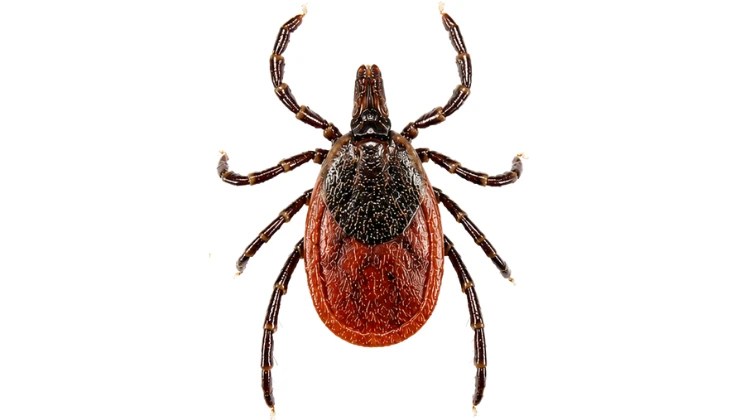
Lyme disease traces back to one type of tick more than any other: the blacklegged deer tick. Its range has grown dramatically over the past 70 years. In the Northeast, this tick went from occupying just 6% of counties in 1950 to more than 99% by 2015. In the Upper Midwest, it went from a single county in 1950 to 83% of counties by 2022. That spread was driven by reforestation, the rebound of the white-tailed deer population, and warmer winters that let more nymphs survive.[1]
All three life stages, larva, nymph, and adult, will bite a human. The nymph, about the size of a poppy seed, causes the most infections because it is hardest to spot. Beyond Lyme disease, this tick can transmit babesiosis, anaplasmosis, and Powassan virus, which is why co-infection testing matters so much after a confirmed deer tick bite.
Powassan virus is a rare but serious tick-borne infection that can be transmitted in as little as 15 minutes of attachment, far faster than Lyme disease.
Nearly identical to its eastern cousin, small, reddish-brown, black legs, this tick fills the same niche on the Pacific Coast that the deer tick fills in the East. It carries Lyme disease and anaplasmosis at generally lower rates and is most active in spring and early summer across most of California.
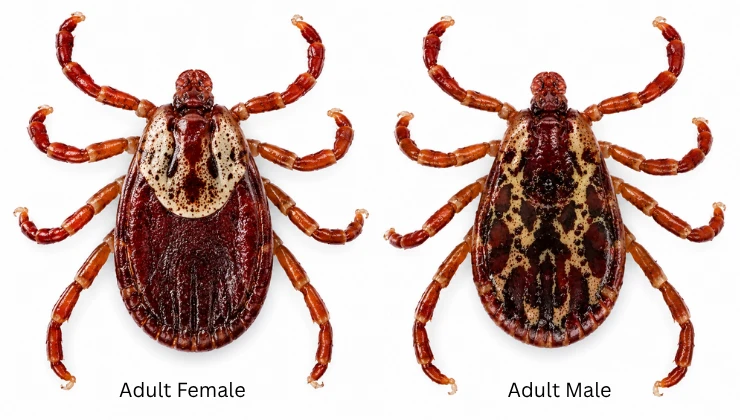
A mottled gray-white scutum over a reddish-brown body identifies the American dog tick, common across the eastern two-thirds of the country and scattered pockets west of the Rockies. Adult females, about 3/16 inch before feeding, bite most often. This classic vector for Rocky Mountain spotted fever and tularemia is most active in spring and summer.
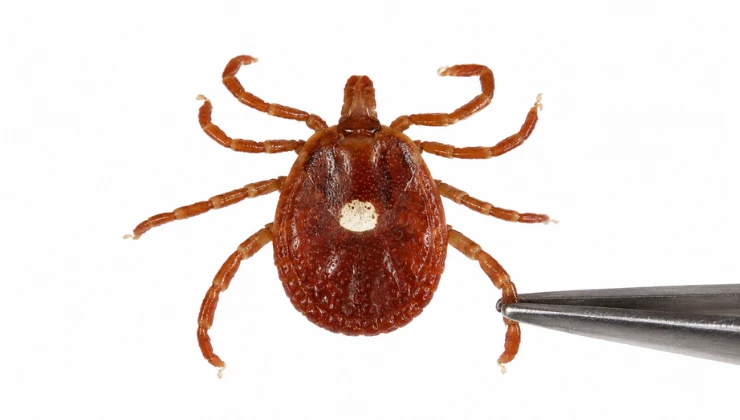
Spot a single bright white dot on a tick’s back and you have found the Lone Star tick, easy to identify once you know the marker (adult females carry it). Found predominantly in the southeastern and eastern US, this tick is aggressive: it actively pursues a host rather than waiting for one to brush past. It transmits ehrlichiosis, tularemia, and STARI, and is the species most strongly linked to alpha-gal syndrome, a delayed allergic reaction to red meat.
STARI (Southern Tick-Associated Rash Illness) is a bullseye-like rash that can follow a lone star tick bite, resembling early Lyme disease but with a distinct, not fully understood cause.

Alpha-gal syndrome is a delayed allergic reaction to red meat and other mammal products, triggered by a tick bite, most often from the lone star tick.
Alpha-gal syndrome develops when a lone star tick bite introduces a sugar molecule called alpha-gal into the bloodstream, and the immune system responds by building IgE antibodies against it. Tick saliva favors this type of immune response, which is why repeated bites raise risk.[2] Eating red meat, which naturally contains alpha-gal, can then trigger a delayed allergic reaction, sometimes anaphylactic, three to six hours later. Unexplained hives, stomach pain, or a severe reaction after eating meat, in lone star tick territory, is worth raising with your doctor.
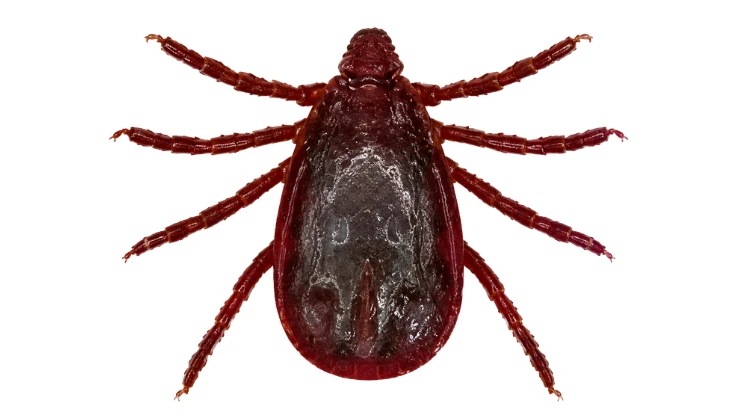
Unlike every other tick on this page, the brown dog tick has adapted to living indoors: kennels, homes, cracks in baseboards. Its uniform reddish-brown, narrow body makes it easy to overlook, and it rarely bites humans, though it is a major vector of canine ehrlichiosis and babesiosis in dogs. One exception: an emerging Southwest focus of Rocky Mountain spotted fever ties to brown dog ticks and has caused serious illness in tribal communities in Arizona. Epidemiologists identified this pattern in the early 2000s and continue to track it.[4]
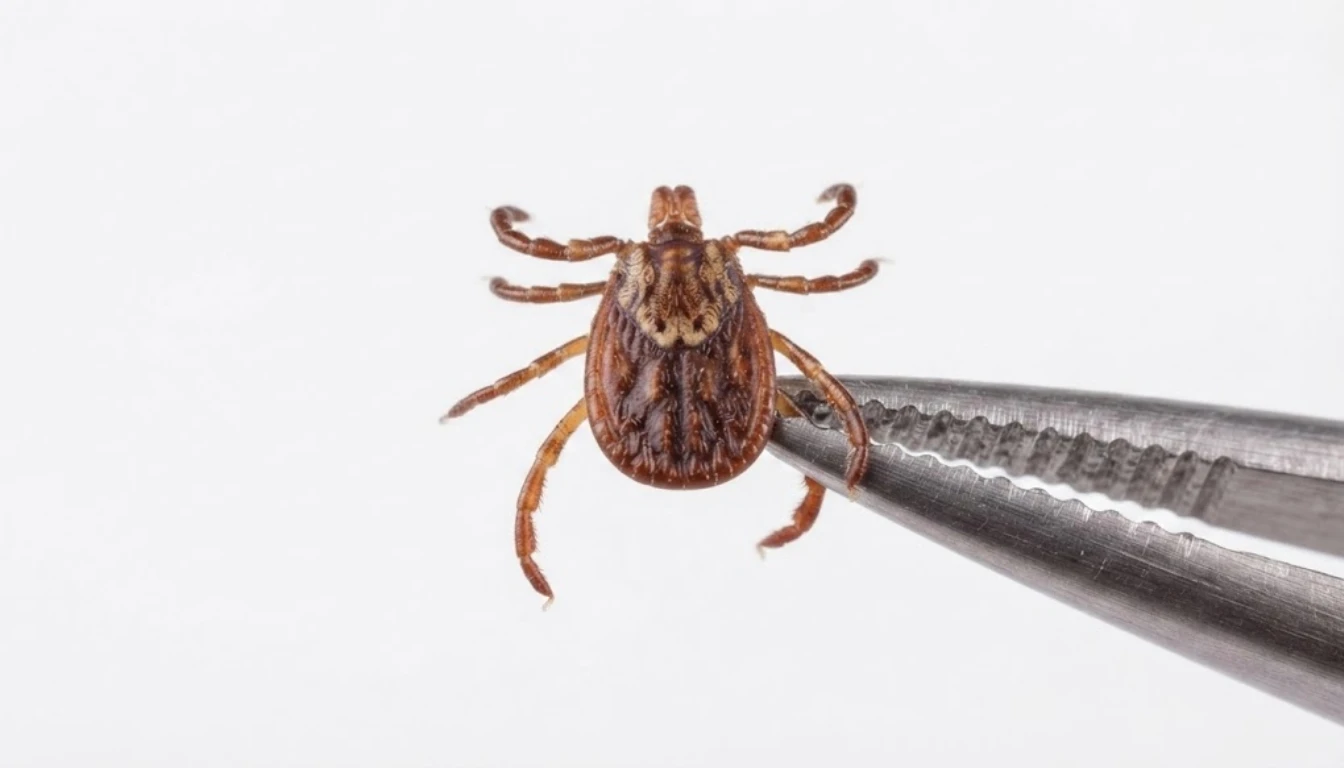
Longer mouthparts and an ornate scutum similar to the American dog tick's set apart the Gulf Coast tick, found along the Gulf of Mexico. It bites humans and livestock and transmits Rickettsia parkeri rickettsiosis, a spotted fever that runs milder than classic Rocky Mountain spotted fever but still needs treatment.
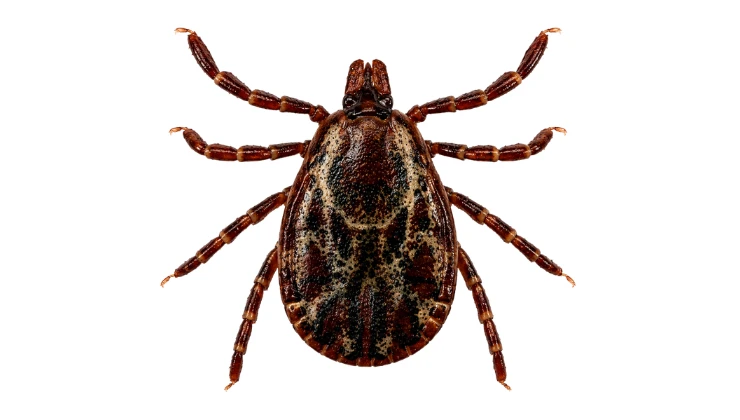
An unfed adult Rocky Mountain wood tick can survive up to 600 days waiting for a host, patience that explains why it persists at higher elevations across the Rocky Mountain states. It is most active from spring to early summer and carries Rocky Mountain spotted fever and Colorado tick fever. It is also the classic vector for tick paralysis, caused by a toxin in tick saliva rather than an infection.
Confusingly similar to the American dog tick, this tick shares its range along California's coastline and foothills and bites both humans and animals, most actively in spring. It has been associated with a Rocky Mountain spotted fever group rickettsiosis and, in some cases, tick paralysis.
Most types of ticks target humans readily; this one rarely does. It parasitizes moose, cattle, and horses almost exclusively as a one-host tick, meaning all three life stages feed on the same animal. Heavy infestations can seriously affect moose populations in the northern US and Canada.
Burrowing mammals, not people, are this tick's preferred host, found primarily in the northeastern US. When it does bite a human, the concern is Powassan virus, which it can transmit in as little as 15 minutes of attachment.
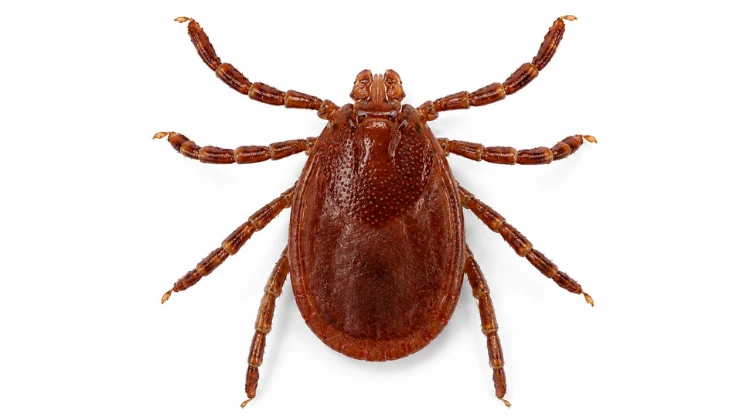
First confirmed in the US on a sheep in New Jersey in 2017, the Asian longhorned tick is the newest species here and has already spread to more than 20 eastern states. A single female can reproduce without mating, so one tick can start an entire population on its own. Its role in human disease is still under study, but it is already a documented livestock threat that researchers are watching closely.
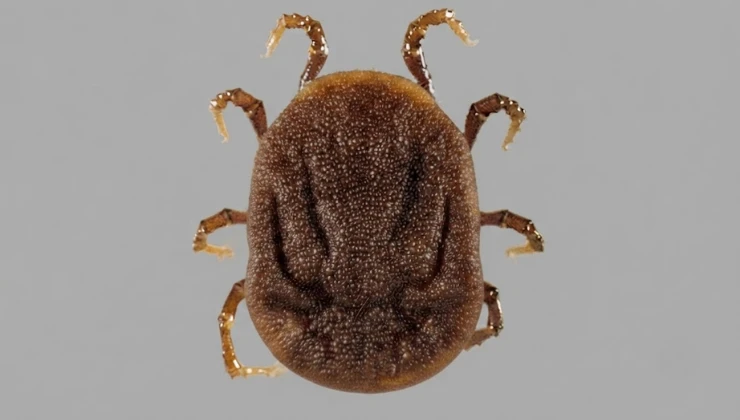
Soft ticks in the genus Ornithodoros are the outlier here: no hard scutum, a leathery rounded body, and life in rodent-infested cabins, sheds, and caves rather than grass and brush. They feed quickly, often for just minutes at night, so most people never feel the bite. Between 2012 and 2021, 251 cases of soft tick relapsing fever were confirmed across 11 states, and more than half of those patients were hospitalized, though no deaths occurred.[3] Two species carry it: Ornithodoros hermsi in rustic Western cabins, and Ornithodoros turicata in south-central caves.
Keeping ticks away from you is the best way to avoid tick bites in the first place, and our page on best tick repellent does a deep dive on which evidence-based repellent is most effective.
But if you do get bit by whichever of these types of ticks, the immediate steps are the same.
Not every tick-borne illness looks the same, whichever of these types of ticks caused it. Some patients get the classic bullseye rash and flu-like symptoms within days. Others feel fine for weeks, then develop fatigue, joint pain, or neurological symptoms no one connects back to a bite they barely remember. These guides go deeper into the presentations we see most often:
Chronic Lyme Disease Symptoms and Treatment
Neurological Lyme Disease Symptoms
Lyme Disease Symptoms in Children
Late-Stage Lyme Disease Treatment
Have Lyme disease, or suspect you do? We have helped over 1,000 patients across seven states restore their health by identifying the infections others missed. Work with a Lyme-literate doctor.
Whatever the types of ticks in your area, start with the scutum. A solid black shield on a small, reddish-brown body points to a blacklegged tick. A mottled gray-white pattern points to an American dog tick or Rocky Mountain wood tick. A single white dot on a round, reddish-brown body is the Lone Star tick's signature. When in doubt, save the tick and bring it, or a photo, to your doctor.
No. Only blacklegged ticks (the deer tick in the East, the Western blacklegged tick on the Pacific Coast) transmit Lyme disease in the US. Other types of ticks carry different infections: Rocky Mountain spotted fever, ehrlichiosis, tularemia, alpha-gal syndrome, and relapsing fever, among others.
It varies by pathogen and by the types of ticks involved. Lyme disease generally requires 24 to 48 hours of attachment, which is why prompt tick checks matter. Powassan virus can transmit within 15 minutes, and soft ticks transmit relapsing fever within minutes because feeding is so brief.
Hard ticks have a rigid scutum, feed slowly over days, and cause most tick-borne disease in the US, including Lyme disease and the spotted fevers. Soft ticks lack that shield, have a leathery body, and feed for only minutes, usually at night in cabins or caves, transmitting relapsing fever instead.
Yes. A bullseye rash is a hallmark of Lyme disease, but it does not appear in every case, and most other tick-borne illnesses produce no rash at all. Fever, chills, fatigue, headache, or joint pain after a known bite are reason enough to be evaluated, rash or not.
Standard Lyme testing looks for antibodies, which can be too low to detect early on, wane over time, or miss co-infections and Borrelia species entirely. This is the most common reason patients reach us after being told their labs are "normal." Identifying the tick species, when known, helps direct further testing.
Dr. Diane Mueller, ND, LAc, DAOM | Reviewed by Dr. Diane Mueller, ND, LAc, DAOM | Last reviewed: July 28, 2026
This article is for educational purposes only and is not a substitute for professional medical advice, diagnosis, or treatment. Tick identification and species range can vary by year and region. Always work with your doctor to evaluate a tick bite and determine appropriate testing or treatment.
Free Lyme/Mold Webinar: "Why Am I Still Sick?"
Have Lyme Disease or suspect that you do?
We have helped thousands of
people restore their health
and quality of life by diagnosing
and treating their Lyme Disease.
Found along the western coastline, the Pacific Coast Tick can cause tick paralysis, as well as transmit Rocky Mountain spotted fever and other rickettsial infections. Active primarily in the spring, it bites both humans and animals.
“Dr. Mueller’s approach to medicine is refreshing! There is only so much you can do with western medicine and in my life I was needing a new approach. By addressing the whole body, nutritional diet factors, environmental factors, blood work, and incorporating ideas I had not previously known, I was able to break through with my conditions. I am not only experiencing less pain in my life, but through the process of healing guided by Dr. Diane Mueller, I am now happy to say I have more consciousness surrounding how I eat, what to eat and when things are appropriate. Living by example Dr. Mueller has a vibrancy that makes you want to learn and know more about your body and overall health. I highly recommend her to anyone looking for new answers, a new approach to health, or in need of freedom from pain and limitations.”
-Storie S.
Kihei, HI
Lyme Disease is Often Misdiagnosed as Fibromyalgia, Chronic Fatigue, Depression,
or Other Illnesses
Have Lyme Disease or suspect you do?