


There is a category of tick most people have never heard of. Not the deer tick. Not the lone star tick. Something fundamentally different in its biology, its habitat, and how it transmits disease.
Soft ticks don’t wait in tall grass. They don’t climb your pants. They live in rodent burrows, animal dens, caves, and in the wood of old cabins, shelters, and camping structures in the western United States. They feed rapidly, often at night, on people who are sleeping. And they can transmit Borrelia bacteria that cause tick-borne relapsing fever in minutes, not hours.
If you’ve camped or stayed in rustic cabins in the western U.S. and developed recurrent fever episodes, this is what you need to understand.
Soft ticks (genus Ornithodoros) are fundamentally different from hard ticks, they lack a scutum, their mouthparts aren’t visible from above, and they feed briefly
They live in rodent burrows, animal dens, caves, cabins, and sheltered structures, not on vegetation
They transmit tick-borne relapsing fever (TBRF), caused by Borrelia hermsii and other Borrelia species
TBRF causes recurrent fever episodes separated by afebrile intervals, a distinctive pattern that can take time to recognize
Transmission can occur in less than a minute, faster than any hard tick species, and U.S. risk is concentrated west of the Mississippi
Treatment is doxycycline 100 mg twice daily for 7 to 10 days, with penicillin or erythromycin as alternatives; anticipate a Jarisch-Herxheimer reaction after the first dose
We have helped thousands of people in Colorado, Oregon, Wyoming, New Jersey, Pennsylvania, Texas, and Wisconsin restore their health and quality of life by diagnosing and treating their Lyme Disease.
A soft tick is a member of the tick family Argasidae, a leathery, shield-less tick that lives in animal shelters and rodent nests and feeds quickly at night, rather than questing on vegetation the way hard ticks do.
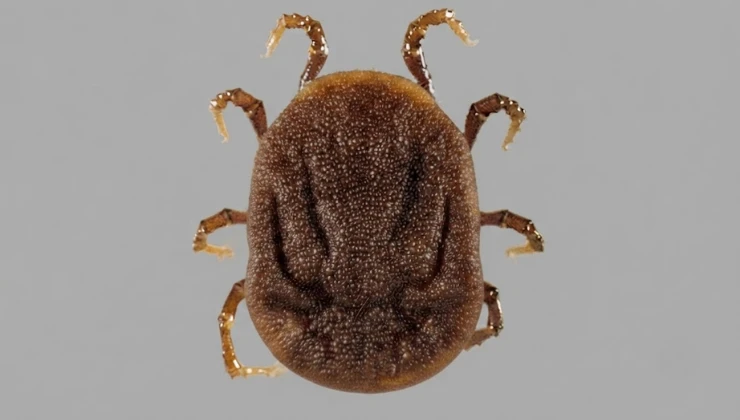
To understand soft ticks, it helps to know that ticks are divided into two broad families:
Hard ticks (family Ixodidae), the ones most people know: deer tick, lone star tick, American dog tick. They have a hard shield (scutum) on the back, visible mouthparts, and feed for days.
Ornithodoros is the genus of soft ticks responsible for tick-borne relapsing fever in North America. These ticks live in rodent burrows, caves, and the woodwork of old cabins.
Soft ticks (family Argasidae), the Ornithodoros species discussed here. They:
Lack a scutum, their body is leathery and flexible, not shielded
Have mouthparts not visible from above, the head is tucked under the body
Feed rapidly, often 20-90 minutes, sometimes less than 1 minute for early-stage larvae
Feed intermittently, multiple short meals over a lifetime rather than one long feed
Do not quest on vegetation, they wait in sheltered harborage in the environment
This is why people bitten by soft ticks often have no idea they were bitten. The tick feeds at night while the person sleeps, detaches, and retreats to a crack in the wall or floor. There may be no visible tick attached in the morning, just a bite site that can go unnoticed.
How to Identify a Soft Tick
If you do find one, a soft tick looks distinctly different from the hard ticks most people picture. Knowing what to look for matters, because the two families call for completely different responses.
Leathery, wrinkled body: A soft tick has no hard plate on its back. Instead the whole body is covered in a tough, pliable, leathery skin that looks wrinkled or granular, almost like a raisin or a small flat seed. When unfed it is flattened; after a blood meal it swells and looks rounder and bluish-gray.
No visible scutum: On a hard tick you can see a smooth, darker shield behind the head. A soft tick has no scutum at all. The back is uniform in texture, with no distinct plate.
Mouthparts hidden from above: On an adult or nymph soft tick, the head and mouthparts sit on the underside, tucked beneath the body. Looking straight down at it, you see a rounded oval with no head sticking out the front. On a hard tick, the mouthparts point forward and are visible from above.
Color and size: Soft ticks are generally mottled tan, brown, or grayish, without the reddish or ornate markings some hard ticks carry. Adults are roughly the size of a raisin or a sesame to sunflower seed, commonly 5 to 10 mm, larger and rounder in outline than a flat, teardrop-shaped deer tick.
The quickest visual tell: a hard tick looks like it has a small “head” and a shiny shield on its back, while a soft tick looks like a plain leathery oval with the head hidden underneath.
In the United States, tick-borne relapsing fever occurs mostly west of the Mississippi River, with established risk in:
Mountain west: California, Oregon, Washington, Idaho, Nevada, Utah, Colorado, Montana, Wyoming
Southwest: Arizona, New Mexico, and Texas
Isolated populations in Florida for Ornithodoros turicata (B. turicatae)
Within those regions, exposure is strongly linked to specific microhabitats:
Old cabins and shelters, particularly those with gaps in wood, logs, or flooring where rodents have nested
Caves, where Ornithodoros species associated with B. turicatae are found
Rodent burrows and animal dens in remote areas
Campgrounds where rodent activity is high and old structures are present
This is a different exposure model from hard ticks. You don’t pick up a soft tick while hiking a trail in broad daylight. You encounter them when sleeping in an environment where they already live.
We have helped thousands of people in Colorado, Oregon, Wyoming, New Jersey, Pennsylvania, Texas, and Wisconsin restore their health and quality of life by diagnosing and treating their Lyme Disease.
Tick-borne relapsing fever (TBRF) is a bacterial infection caused by several Borrelia species and spread by soft ticks. It produces repeating waves of high fever separated by fever-free intervals.

TBRF is caused by several Borrelia species, with Borrelia hermsii being the most common cause in the U.S. (transmitted by Ornithodoros hermsii). Other species include B. turicatae (transmitted by O. turicata) and at least 12 additional Borrelia species globally.
The three North American soft tick species groups worth knowing:
Ornithodoros hermsii / Borrelia hermsii: the most common cause of TBRF in the U.S., associated with higher elevations and mountain cabins in the West.
Ornithodoros turicata / Borrelia turicatae: associated with caves and animal burrows in the Southwest and parts of Florida.
Ornithodoros parkeri / Borrelia parkeri: a third agent of enzootic relapsing fever in western North America. O. parkeri is found in the burrows of ground squirrels and other rodents, and B. parkeri circulates mainly among those rodent reservoirs. Human infection with B. parkeri is rare compared with B. hermsii, but it belongs in the picture because it shares the same soft tick biology and burrow-based habitat.
This is a Borrelia disease, the same bacterial genus that causes Lyme disease, but it is a different condition with a different presentation, different testing approach, and different geographic distribution.
The Distinctive Clinical Picture
The hallmark of TBRF is what the name describes: relapsing fever. The typical pattern:
Initial febrile episode lasting 3-6 days (fever 102-104°F, severe headache, muscle and joint aches, sometimes rigors and confusion)
Spontaneous resolution, the patient feels better
Afebrile interval of 4-14 days
Return of fever, a second (and sometimes third, fourth) episode
The relapsing pattern occurs because the Borrelia bacteria can switch their outer surface proteins (antigenic variation), temporarily evading the immune response. Each episode represents a new wave of bacteremia with a different antigenic variant.
This pattern is diagnostic when recognized. The challenge: many patients don’t realize the episodes are connected, or they’re seen by different providers at each episode.
Other symptoms may include:
Nausea, vomiting
Abdominal pain
Rash in some patients (less consistent than in RMSF)
Neurological involvement in some cases (Lyme-like neurological symptoms)
Rarely: myocarditis, eye involvement
How Is TBRF Different from Lyme Disease?
Both are caused by Borrelia species. The similarities end there:
Vector – Lyme Disease: Deer tick (hard tick); Tick-Borne Relapsing Fever: Ornithodoros soft tick
Region – Lyme Disease: Eastern U.S. (primarily); Tick-Borne Relapsing Fever: Western U.S. (primarily)
Fever pattern – Lyme Disease: Low-grade or absent; Tick-Borne Relapsing Fever: Relapsing high fever
Bull’s-eye rash – Lyme Disease: Common; Tick-Borne Relapsing Fever: Absent or inconsistent
Serology – Lyme Disease: ELISA/Western blot; Tick-Borne Relapsing Fever: Peripheral blood smear + specific serology
Cause – Lyme Disease: B. burgdorferi; Tick-Borne Relapsing Fever: B. hermsii, B. turicatae, others
The testing approach is different. Standard Lyme ELISA does not reliably detect TBRF. Diagnosis is often made by examining a blood smear during a febrile episode (spirochetes may be visible) combined with clinical history and specific TBRF serology.
Hard ticks like the deer tick generally require 36 to 48 hours of attachment to transmit Lyme disease [2]. This window exists because the Borrelia must migrate from the tick’s midgut to its salivary glands during feeding.
Soft ticks are different. Ornithodoros species store Borrelia in their salivary glands, so transmission can begin almost immediately. The comparative vector biology of relapsing fever and Lyme spirochetes shows soft tick transmission can occur in less than 1 minute of feeding [2]. Some sources cite as little as 15 seconds for larval ticks.
This means prompt removal, the protective strategy for Lyme disease, does not provide meaningful protection against soft tick transmission. Prevention requires avoiding or treating the environments where these ticks live.

TBRF responds well to antibiotics when it is correctly identified. Most people improve quickly once treatment starts, and a one to two week course clears the infection in the large majority of cases.
Doxycycline is first line: The standard regimen is doxycycline 100 mg twice daily for 7 to 10 days [7]. A tetracycline-class antibiotic is preferred because it reliably clears the spirochete and reduces the chance of relapse.
Alternatives when doxycycline is not appropriate: For pregnant women and children under 8, where the dental-staining risk of tetracyclines is a concern, penicillin or erythromycin are the usual substitutes. The choice should always be made with the treating clinician.
Course length: Studies show no meaningful difference in outcomes between courses longer than 10 days and shorter courses, so a standard 7 to 10 day course is typically sufficient for uncomplicated TBRF.
Managing the Jarisch-Herxheimer Reaction
The Jarisch-Herxheimer reaction is a short-lived flare of fever, chills, and low blood pressure that can follow the first antibiotic dose as large numbers of bacteria die off at once. It usually signals that the treatment is working.
Anyone treated for TBRF should be warned about the Jarisch-Herxheimer reaction. As the antibiotic kills large numbers of spirochetes at once, the body mounts a sharp inflammatory response, usually within the first few hours after the first dose.
Typical features include a spike in fever, chills, rigors, a fast heart rate, a drop in blood pressure, nausea, and muscle aches. It can feel alarming because it mimics the illness getting worse, but it is a sign the antibiotic is working. The reaction is rarely dangerous and is managed with supportive care: fluids, rest, fever control, and close monitoring during the first several hours of treatment. Because it can involve a transient blood pressure drop, the first dose is best given where the patient can be observed. Steroids and paracetamol do not reliably prevent it.
This is one reason TBRF treatment should be supervised rather than self-managed. Knowing the reaction is coming, and having a plan for it, prevents a frightening but expected response from being mistaken for treatment failure.
We have helped thousands of people in Colorado, Oregon, Wyoming, New Jersey, Pennsylvania, Texas, and Wisconsin restore their health and quality of life by diagnosing and treating their Lyme Disease.
Standard tick prevention (checking for ticks after hiking) does not apply well to soft ticks, because the exposure happens where they live, not where you walk. The relevant prevention strategies are:
Treat clothing and gear with permethrin: Apply permethrin at a 0.5% concentration to clothing, sleeping bags, and tents. At that strength it both repels and kills ticks, and it survives several launderings. Never apply permethrin to skin, it is for fabric only.
Use an effective skin repellent: On exposed skin, use a repellent containing 20% or more DEET (or picaridin or IR3535) for several hours of protection. Repellency against soft ticks is less studied than for hard ticks, so treat it as one layer, not the whole strategy.
Understand the cabin and rodent-nest exposure: This is the risk factor unique to soft ticks. Ornithodoros ticks live in the burrows and nests of rodents and in the walls, floors, and woodpiles of old cabins where those rodents have moved in. The classic exposure is sleeping overnight in a rustic mountain cabin that has an active or recent rodent infestation. If you can, choose sleeping quarters without signs of rodents (droppings, gnawed material, nesting debris) and keep bedding off the floor and away from wall gaps.
Rodent-proof and clear out nesting material: Removing rodent nesting material and sealing the gaps rodents use eliminates the tick’s host and its harborage. For a cabin you use regularly, this is the single most durable prevention step.
Avoid sleeping in or near structures with active rodent activity in high-risk western areas when a better option exists.
If you are staying in a rustic cabin in the western mountain region and later develop recurrent febrile episodes, tell your provider where you stayed and consider TBRF in the differential.
Tick-borne relapsing fever is one of several tick-borne Borrelia conditions that standard testing can miss. Patients with unexplained recurrent fever, particularly with western U.S. outdoor or camping history, who have had negative standard Lyme panels deserve a broader differential and more specific TBRF evaluation.
In functional medicine, we take the full exposure history seriously. Where you were, when you were there, and what the structures looked like matters as much as which tests were ordered. If you’ve had recurrent fever episodes and are searching for answers, see our co-infections comparison resource for context on overlapping tick-borne illnesses.
Our practice works with patients by telehealth in Colorado, Wyoming, New Jersey, Pennsylvania, Texas, and Wisconsin. If you live in one of these states and want to discuss recurrent fevers or a possible tick-borne infection, reach out to our team →
Soft ticks belong to the family Argasidae. Unlike hard ticks, they lack a scutum (hard back shield), have mouthparts not visible from above, feed briefly and repeatedly, and live in sheltered environments like rodent burrows and old wooden structures, not on vegetation.
Usually no. Soft ticks typically bite at night while people sleep and detach before morning. The bite is painless. Many people are unaware they were bitten until fever develops days later.
Soft ticks in the U.S. that cause relapsing fever are found primarily west of the Mississippi River, with risk concentrated in mountain and high-desert regions. Ornithodoros hermsii is associated with higher elevations and mountain cabins; O. turicata with caves and the Southwest.
Doxycycline (100 mg twice daily for 7 to 10 days) is the antibiotic of choice for TBRF. Penicillin or erythromycin are alternatives for patients who cannot take doxycycline, such as young children and pregnant women. The Jarisch-Herxheimer reaction, a temporary worsening as bacteria die off, is common in the first hours after the first dose and should be anticipated and managed with supportive care.
No. Both are caused by Borrelia bacteria, but they are distinct conditions transmitted by different tick species, occurring in different geographic regions, with different clinical presentations and different testing approaches. Standard Lyme tests do not reliably detect TBRF.
Deer Tick (Black-Legged Tick): the primary Lyme disease vector; a hard tick with very different biology from soft ticks
Lone Star Tick: another tick found in similar western and southwestern habitats
American Dog Tick: the most commonly encountered hard tick in the eastern United States
Rocky Mountain Wood Tick: shares geographic range with soft ticks in mountainous western states
Types of Ticks: full guide to tick identification across all U.S. species
Soft ticks are an underrecognized source of tick-borne illness in the western United States. They live in structures, bite at night, and transmit TBRF with near-immediate transmission. If you camp or stay in rustic shelters in the mountain west and develop recurrent high fevers, this tick and this disease deserve to be considered, even if your conventional testing has been unrevealing.
For a complete overview of tick species active in the United States, see our tick identification guide.
Author: Dr. Diane Mueller, ND, LAc, DAOM, Naturopathic Doctor and Doctor of Acupuncture & Oriental Medicine specializing in Lyme disease and tick-borne illness. Founder of MyLymeDoc.com.
Medical Reviewer: Dr. Diane Mueller, ND, LAc, DAOM
Medical Disclaimer: This content is for educational purposes only and is not a substitute for professional medical advice, diagnosis, or treatment. Always consult a qualified healthcare provider with questions about your specific situation.
We have helped thousands of
people restore their health
and quality of life by diagnosing
and treating their Lyme Disease.
“Dr. Mueller’s approach to medicine is refreshing! There is only so much you can do with western medicine and in my life I was needing a new approach. By addressing the whole body, nutritional diet factors, environmental factors, blood work, and incorporating ideas I had not previously known, I was able to break through with my conditions. I am not only experiencing less pain in my life, but through the process of healing guided by Dr. Diane Mueller, I am now happy to say I have more consciousness surrounding how I eat, what to eat and when things are appropriate. Living by example Dr. Mueller has a vibrancy that makes you want to learn and know more about your body and overall health. I highly recommend her to anyone looking for new answers, a new approach to health, or in need of freedom from pain and limitations.”
-Storie S.
Kihei, HI