


If you live in or spend time in the western United States, hiking in the Rockies, camping in mountain terrain, working at elevation, this is the tick you need to know.
The Rocky Mountain wood tick (Dermacentor andersoni) is the primary human-biting tick across the Rocky Mountain region. It carries Rocky Mountain spotted fever, Colorado tick fever, and tularemia. It is also one of the few ticks in North America associated with tick paralysis, a neurological syndrome that can cause rapid ascending paralysis, often in children, and resolves promptly with tick removal.
Here is what you need to know if you’re in its range.
The Rocky Mountain wood tick (Dermacentor andersoni) is the primary human-biting tick in the Rocky Mountain states, at elevations of 4,000 to 10,500 feet
Adults are the stage that bites humans most often, but for Colorado tick fever, all active stages (larva, nymph, and adult) can carry and transmit the virus
It transmits Rocky Mountain spotted fever (RMSF), Colorado tick fever, and tularemia
It is a recognized cause of tick paralysis, an ascending neurological syndrome that resolves with tick removal
Peak season: spring and early summer (April-June at most elevations)
Geographic range: Rocky Mountain states and southwestern Canada
Dr. Diane Mueller treats tick-borne illness by telehealth in the states where the Rocky Mountain wood tick is most active.
Full list of states: where we practice.
We have helped thousands of people in Colorado, Oregon, Wyoming, New Jersey, Pennsylvania, Texas, and Wisconsin restore their health and quality of life by diagnosing and treating their Lyme Disease.
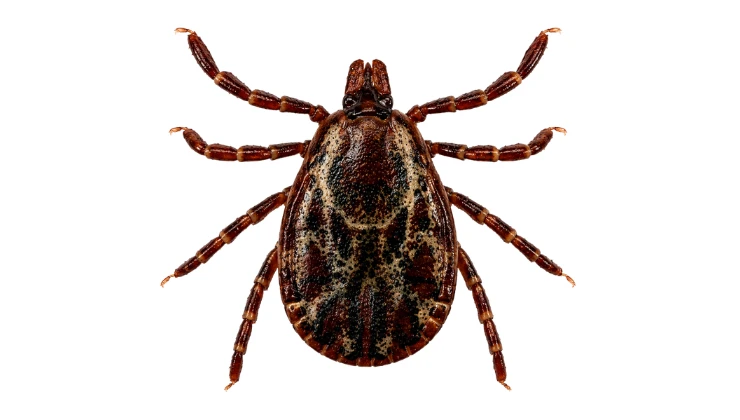
The Rocky Mountain wood tick is a hard-bodied (ixodid) tick with ornate markings that make it recognizable once you know what to look for:
Ornate scutum, the back shield has distinctive pale (gray to whitish) markings against a darker background
Festoons, scalloped ridge patterns along the rear margin of the body
Three-host life cycle, larvae, nymphs, and adults each feed on a different host
Similar in appearance to the American dog tick (Dermacentor variabilis), with which it shares the ornate Dermacentor appearance but differs in geographic range (Rocky Mountain wood tick = West; American dog tick = East/Central)
Adult females are approximately 4-5 mm unfed and can expand substantially when engorged. The pale patterned scutum in contrast to the darker abdomen is the most reliable visual identifier in the field.
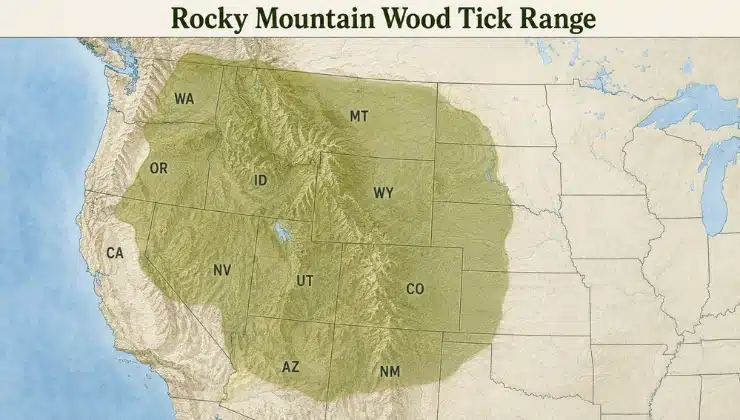
Despite its name, this tick is not found everywhere in the Rocky Mountains. The CDC documents its range as the Rocky Mountain states and southwestern Canada, typically in habitats at 4,000 to 10,500 feet elevation [3].
States with established populations include:
Colorado, Wyoming, Montana, Idaho
Utah, Nevada, New Mexico, Arizona
Parts of California, Oregon, and Washington at appropriate elevations
Southwestern Canadian provinces
The tick’s preferred habitat includes brushy areas, grassy meadows, and woodland edges at higher elevations, the terrain typical of mountain trail hiking, camping, and outdoor work. Rocky Mountain wood ticks are commonly encountered by hikers on mountain trails in spring, particularly along trail edges and in tall grass.
The Rocky Mountain wood tick is a three-host tick, meaning it feeds on a different animal at each of its three feeding stages. The full cycle takes one to three years to complete, depending on temperature, humidity, and how quickly the tick finds a host at each stage [2]. This slow, multi-year cycle is part of why activity is so tightly tied to the spring window at elevation.
Larva (six legs): Larvae hatch in early summer and feed on small rodents such as chipmunks, ground squirrels, and mice. They take a blood meal over 2 to 6 days, drop off, and molt into nymphs.
Nymph (eight legs): Nymphs also feed mainly on small mammals, then molt into adults. In the Rocky Mountain wood tick, immature stages spend most of their time on rodents, not people.
Adult (eight legs): Adults quest on vegetation for larger mammals, deer, livestock, dogs, and humans, and this is the stage that bites people most often. Adult females feed for roughly 5 to 15 days when attached.
A common oversimplification is that only adults matter for disease. That holds for RMSF and tularemia, where adults are the main human-biting stage, but it is not true for Colorado tick fever. All active stages of Dermacentor andersoni, larva, nymph, and adult, can carry and transmit the Colorado tick fever virus. Immature ticks feeding on infected rodents pick up the virus and maintain it in the wild, and any active stage that reaches a person can pass it on.
Seasonal activity at elevation: Adults are most active and bite most often in spring and early summer, then go dormant as summer heat sets in at lower and mid elevations. At higher elevations in the Rockies, snowpack pushes the active window later, so peak tick exposure can run from April into July depending on how high you are and how late the snow lingers. The practical takeaway for anyone hiking Colorado trails: the tick risk peaks exactly when the early-season trails first open up.
We have helped thousands of people in Colorado, Oregon, Wyoming, New Jersey, Pennsylvania, Texas, and Wisconsin restore their health and quality of life by diagnosing and treating their Lyme Disease.
All three of the pathogens below are transmitted by the same tick, but they are very different illnesses, one bacterial and fast-moving, one viral and self-limited, one bacterial and localized. This is why identifying the tick and getting the exposure history right matters so much in the Rocky Mountain region.
Rocky Mountain Wood Tick Diseases at a Glance
Rocky Mountain spotted fever – Pathogen: Rickettsia rickettsii (bacteria); Key symptoms: Sudden high fever, severe headache, muscle pain, rash starting on wrists and ankles and spreading inward (2 to 14 days after bite); Severity: Most dangerous of the three. Untreated case fatality historically over 10%; roughly 0.5% even with modern care. A medical emergency.; Treatment: Doxycycline, started on clinical suspicion before lab confirmation. Delay raises the risk of death. [5]
Colorado tick fever – Pathogen: Colorado tick fever virus, a Coltivirus (virus); Key symptoms: Biphasic fever (fever, break, fever again) in about half of patients, severe headache, muscle aches, fatigue that can last 3+ weeks; Severity: Usually self-limited, but can be severe in children (meningitis, encephalitis, bleeding). Rarely fatal.; Treatment: No specific antiviral. Supportive care: rest, fluids, fever and pain control. Do not donate blood for 6 months. [4]
Tularemia – Pathogen: Francisella tularensis (bacteria); Key symptoms: Ulcer at the bite site plus swollen, tender regional lymph nodes (ulceroglandular form), fever, fatigue; Severity: Serious but treatable; case fatality under 4% with antibiotics, higher if untreated; Treatment: Per 2025 CDC guidance, first-line options are ciprofloxacin, levofloxacin, gentamicin, or doxycycline; streptomycin is now a third-tier option. Start promptly. [6]
Rocky Mountain spotted fever (RMSF) is a bacterial infection caused by Rickettsia rickettsii and spread through tick bites. It progresses rapidly and can be fatal without prompt doxycycline treatment.
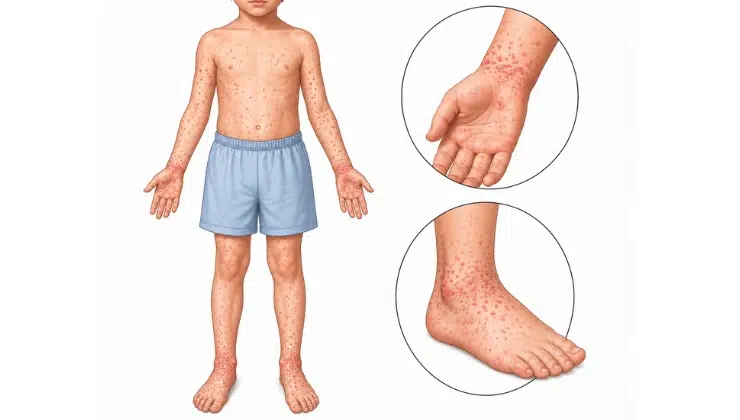
Despite its name, Rocky Mountain spotted fever is not primarily a disease of the Rockies today. The majority of U.S. cases occur in the Southeast and South Central regions (where the American dog tick and brown dog tick are the primary vectors).
But, Dermacentor andersoni is the primary RMSF vector in the western United States, and patients in Rocky Mountain states who develop febrile illness after a tick bite should have RMSF in the differential.
RMSF caused by Rickettsia rickettsii is a rapidly progressing illness. Symptoms typically begin within 2-14 days of a bite:
Sudden high fever (102°F+)
Severe headache, myalgia
Rash starting on wrists and ankles, spreading inward (present in most but not all cases)
Doxycycline is the treatment of choice and should be initiated based on clinical suspicion without waiting for laboratory confirmation. Delay in treatment is associated with severe morbidity and death [5].
Colorado tick fever is a viral illness caused by the Colorado tick fever virus, a Coltivirus, transmitted almost exclusively by the Rocky Mountain wood tick. It typically produces a biphasic fever and is usually self-limited.
Colorado tick fever is caused by the Colorado tick fever virus, a Coltivirus, and is transmitted almost exclusively by the Rocky Mountain wood tick in the United States. It is the most common tick-borne viral illness in the western states, and it is genuinely a regional disease: the overwhelming majority of cases are acquired in the high-elevation Rocky Mountain states, with Colorado consistently among the states reporting the most cases [4]. Unlike RMSF, where adults are the main human-biting stage, all active stages of the tick (larva, nymph, and adult) can carry and transmit this virus, which is why the “adults only” assumption does not hold here.
Patients typically present with:
Biphasic fever in about half of patients, a distinctive pattern of fever for 2-3 days, improvement for 2-3 days, then a second fever episode
Severe headache, myalgia, fatigue
Occasionally: rash, meningitis, or hemorrhagic manifestations in severe cases
There is no specific antiviral treatment for Colorado tick fever. Management is supportive. The illness is self-limited in most patients but can be severe, particularly in children.
This is clinically important because Colorado tick fever can be confused with RMSF, both cause fever after a tick bite in the same geographic area. The biphasic fever pattern and serologic testing help distinguish them.
Tularemia is a bacterial infection caused by Francisella tularensis. When spread by a tick bite, it often causes an ulcer at the bite site with swollen regional lymph nodes, and it responds to prompt antibiotic treatment.
The Rocky Mountain wood tick is a recognized vector for Francisella tularensis, the cause of tularemia. Tick-transmitted tularemia typically presents with an ulcer at the bite site and regional lymph node swelling (ulceroglandular form), along with fever and fatigue.
Antibiotic treatment is effective when started promptly. Current CDC guidance lists ciprofloxacin, levofloxacin, gentamicin, or doxycycline as first-line options, with streptomycin now a third-tier choice [6].
Tick paralysis is a reversible neurological syndrome caused by a neurotoxin in tick saliva, not an infection. It produces an ascending flaccid paralysis that resolves once the attached tick is removed.
This is one of the Rocky Mountain wood tick’s most distinctive clinical associations, and one of the most important to recognize because it can be dramatic and is completely reversible.
Tick paralysis is not an infection. It is caused by a neurotoxin in the tick’s saliva that interferes with acetylcholine at the neuromuscular junction. The result is an ascending flaccid paralysis, weakness beginning in the legs and moving upward, that can progress to respiratory failure if the tick is not found and removed.
Key features:
Most cases occur in children, particularly girls (possibly due to tick concealment in longer hair)
Onset is rapid, often 5-7 days after tick attachment
There is no infection, bacteria or viruses are not involved
Treatment is tick removal, the paralysis typically resolves within hours to days after the tick is found and removed
The tick is often found in the scalp, hairline, neck, or other concealed area
The diagnosis is frequently missed because the tick is not found initially
If a child develops unexplained ascending weakness or ataxia, tick paralysis should be considered and a thorough tick check, particularly of the scalp, performed immediately.
We have helped thousands of people in Colorado, Oregon, Wyoming, New Jersey, Pennsylvania, Texas, and Wisconsin restore their health and quality of life by diagnosing and treating their Lyme Disease.
Peak human exposure to the Rocky Mountain wood tick occurs in spring and early summer, typically April through June at most elevations. Activity falls off in summer heat, with minimal adult activity in peak summer months [1].
This spring window aligns with prime hiking season in the Rockies, early season mountain trails when ticks are most active but visitors may not yet be in “tick awareness” mode.
Patients in the Rocky Mountain region often come in with complex presentations that combine multiple environmental exposures: mold from older mountain cabins, altitude-related physiological stress, and tick exposure. In functional medicine, we evaluate all of these in context.
A patient with fatigue, cognitive difficulty, and a history of tick exposure in Colorado, without a clear positive conventional Lyme test, may have Colorado tick fever (which is serologically distinct), RMSF exposure, or other tick-borne pathogens. Getting the exposure history right is the starting point.
If you’ve spent time in the western mountains and are dealing with unexplained illness, see our co-infection comparison resource or reach out directly.
The Rocky Mountain wood tick is not a documented vector for Borrelia burgdorferi, the cause of classic Lyme disease in the eastern United States. The western blacklegged tick (Ixodes pacificus) is the Lyme vector in the western U.S.
Colorado tick fever is a viral illness (caused by a reovirus) with a distinctive biphasic fever, two rounds of fever separated by improvement. Rocky Mountain spotted fever is a bacterial illness caused by Rickettsia rickettsii and carries a higher severity and case fatality rate without treatment. Both are transmitted by the Rocky Mountain wood tick in the western U.S.
Remove it promptly with fine-tipped tweezers. Photograph it for identification reference. Monitor for fever, rash, headache, or unusual neurological symptoms for 14-21 days. If symptoms develop, mention the tick exposure to your provider and specify that you were in mountainous terrain in the western U.S.
Yes. Tick paralysis can mimic Guillain-Barré syndrome, botulism, and other neurological conditions. The key distinguishing step is a thorough tick check, particularly of the scalp, in any patient with unexplained ascending weakness. The complete resolution of paralysis after tick removal confirms the diagnosis.
The CDC documents the Rocky Mountain wood tick at elevations of approximately 4,000 to 10,500 feet in the Rocky Mountain region [3]. Exposure risk is highest in brushy, grassy habitats at these elevations during spring and early summer.
American Dog Tick: shares RMSF transmission but is found primarily in the eastern and central United States
Deer Tick (Black-Legged Tick): the western black-legged tick (I. pacificus) shares some of the Rocky Mountain wood tick’s range
Lone Star Tick: another multi-disease vector found in the South and expanding into the Midwest
Gulf Coast Tick: another spotted fever group tick found in adjacent southern geography
Types of Ticks: full guide to tick identification across all U.S. species
If you hike, work, or spend time in the Rocky Mountain states at elevation, the Rocky Mountain wood tick is a real exposure risk in spring. Its diseases, RMSF, Colorado tick fever, tularemia, and tick paralysis, are clinically distinct and require different management approaches. Knowing which tick you’re dealing with after an exposure helps point the clinical workup in the right direction.
Standard tick prevention, long pants, light-colored clothing, DEET or permethrin, and thorough post-hike tick checks, remains the most effective protection. See our tick prevention guide for complete protocols.
Author: Dr. Diane Mueller, ND, LAc, DAOM
Medical Reviewer: Dr. Diane Mueller, ND, LAc, DAOM
Medical Disclaimer: This content is for educational purposes only and is not a substitute for professional medical advice, diagnosis, or treatment. Always consult a qualified healthcare provider with questions about your specific situation.
We have helped thousands of
people restore their health
and quality of life by diagnosing
and treating their Lyme Disease.
“Dr. Mueller’s approach to medicine is refreshing! There is only so much you can do with western medicine and in my life I was needing a new approach. By addressing the whole body, nutritional diet factors, environmental factors, blood work, and incorporating ideas I had not previously known, I was able to break through with my conditions. I am not only experiencing less pain in my life, but through the process of healing guided by Dr. Diane Mueller, I am now happy to say I have more consciousness surrounding how I eat, what to eat and when things are appropriate. Living by example Dr. Mueller has a vibrancy that makes you want to learn and know more about your body and overall health. I highly recommend her to anyone looking for new answers, a new approach to health, or in need of freedom from pain and limitations.”
-Storie S.
Kihei, HI