

Lyme Disease Doctor in New Hampshire

Anyone searching for a Lyme disease doctor in New Hampshire should know one thing about this state first. The New Hampshire Department of Health and Human Services identifies five separate reportable illnesses carried by a single tick species here: “Lyme disease (most common reported tickborne disease), Anaplasmosis, Babesiosis, Powassan virus and Borrelia miyamotoi.” All five, per NH DHHS, are “transmitted by the bite of the black-legged tick (Ixodes scapularis), formerly known as the deer tick.” One bite, five possible illnesses, and a standard Lyme test only screens for one of them. My Lyme Doc provides telehealth care for Lyme disease, co-infections and mold-related illness to New Hampshire residents.

Lyme disease is an infection caused by Borrelia burgdorferi bacteria, transmitted to humans in New Hampshire by the bite of the blacklegged tick, also called the deer tick.

Powassan virus is a tickborne virus that can cause brain swelling. NH DHHS states that about 10 percent of Powassan encephalitis cases are fatal, and about half of survivors of the clinical disease have permanent neurological effects.
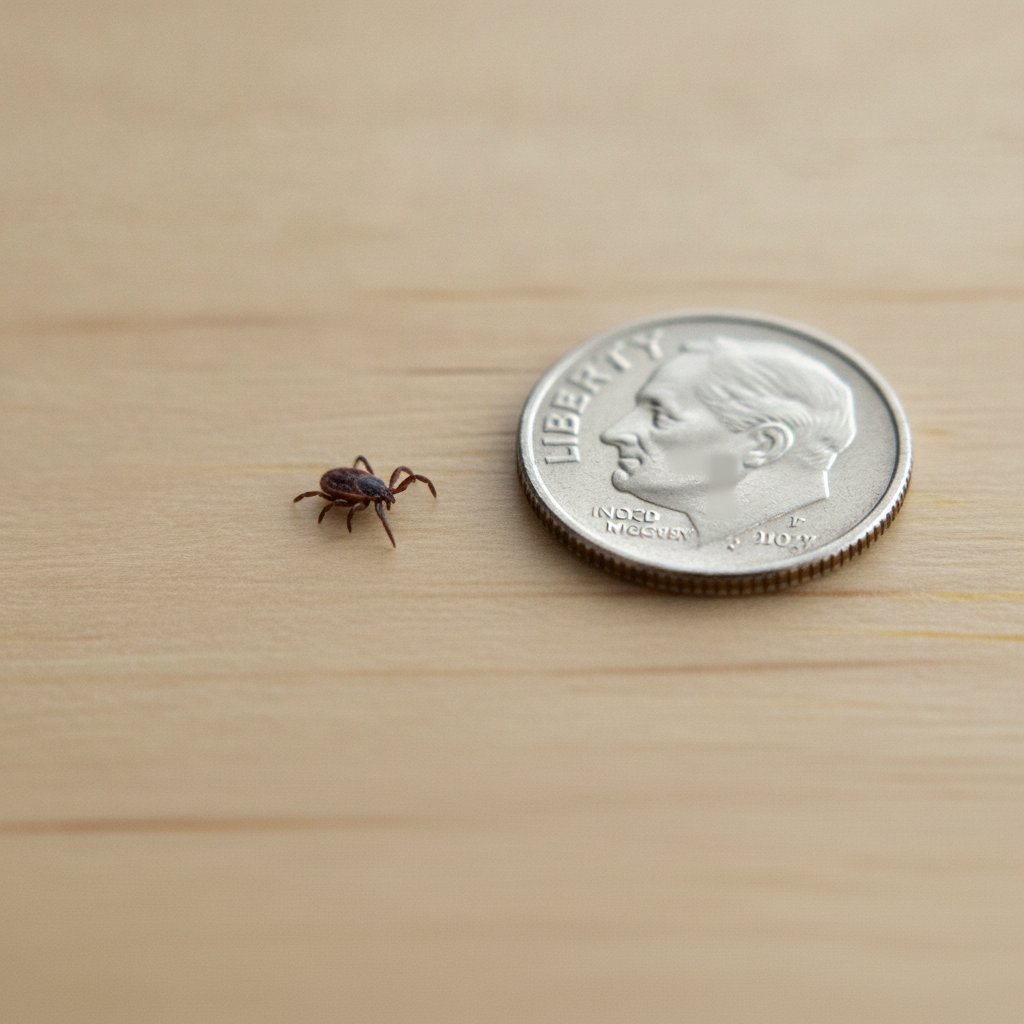
A blacklegged tick nymph shown at actual size next to a US dime for scale

Key Takeaways

  • New Hampshire’s blacklegged tick carries five reportable illnesses, not just Lyme: Lyme disease, anaplasmosis, babesiosis, Powassan virus, and Borrelia miyamotoi.

  • CDC states plainly that “New Hampshire has one of the highest rates of Lyme disease in the country.”

  • Powassan virus has no vaccine and no antiviral treatment. NH DHHS reports 8 confirmed cases since 2013, including two in 2023, in Rockingham and Carroll counties.

  • A UNH Cooperative Extension study found blacklegged ticks in New Hampshire carrying the pathogens for babesiosis and anaplasmosis alongside Lyme, meaning co-infection is a real possibility, not a rare exception.

  • Nymph-stage ticks, the size most likely to bite unnoticed, are most active May through August, per NH DHHS.

  • Care for New Hampshire residents is delivered by telehealth. My Lyme Doc sees patients in eleven states.

Do you need a Lyme disease doctor in New Hampshire?

Most people who reach this page have already been somewhere else. They have had a single Lyme test come back negative, been told their fatigue or joint pain is something else, and left without an explanation that fits what they are living with.

That gap is worth reading alongside chronic Lyme disease symptoms, because in New Hampshire the gap is often the test itself, not the illness. A standard Lyme panel checks for Borrelia burgdorferi. It does not automatically check for the four other illnesses NH DHHS says the same tick carries. A patient can test negative for Lyme and still be dealing with anaplasmosis, babesiosis, or something else the tick left behind.

The CDC’s own tracking program is direct about the scale of the problem here: “New Hampshire has one of the highest rates of Lyme disease in the country.” This is not a state where Lyme is a rare or contested diagnosis. It is a state where the tick population is well established and the illness picture is more complicated than one test can capture.

One tick, five illnesses: what New Hampshire’s blacklegged tick actually carries

This is the single most useful thing to understand about tick-borne illness in this state. More on the organism itself is on deer tick.

IllnessCaused byWhat NH DHHS says
Lyme diseaseBorrelia burgdorferi“Most common reported tickborne disease” in New Hampshire
AnaplasmosisAnaplasma phagocytophilumTransmitted by the same blacklegged tick bite
BabesiosisBabesia microti (a parasite, not a bacterium)Transmitted by the same blacklegged tick bite
Powassan virusPowassan virus“About 10% of Powassan encephalitis cases are fatal”; no vaccine, no antiviral treatment
Borrelia miyamotoiBorrelia miyamotoiA relapsing-fever-type illness, same tick, same bite

All five are transmitted by the same species, the blacklegged tick. NH DHHS notes it can pass Powassan virus in as little as 15 minutes of attachment, far faster than the 24-hour window NH DHHS cites for preventing Lyme transmission by prompt tick removal. A tick removed quickly may still have transmitted a virus before it transmitted the bacteria most people are watching for.

A UNH Cooperative Extension fact sheet adds a detail worth knowing directly: “a 2007 study also found two additional pathogens in some N.H. blacklegged ticks: the pathogens that cause babesiosis and anaplasmosis in people.” Co-infection in a single bite is not a theoretical edge case in this state. It has been documented in the ticks themselves.

A side-by-side comparison of what each co-infection actually looks like is on co-infections symptom comparison.

Powassan virus: the illness a Lyme test will never catch

This deserves its own section because it is the illness most New Hampshire patients have never heard of, and it is the most serious one on the list.

NH DHHS reported in September 2023 that the state had identified “a total of 8 cases of POWV since 2013.” Two of those cases were confirmed that year, “one in an adult in Rockingham County and one in a child from Carroll County.” Eight cases sounds small. The outcomes attached to those cases are not. NH DHHS states plainly that “about 10% of Powassan encephalitis cases are fatal” and that “about half of those who survive the clinical disease have permanent neurological sequelae.”

There is no vaccine for Powassan virus and no antiviral treatment. Care is supportive. That makes prevention and early recognition the only real levers. A fast, thorough tick check after any New Hampshire outdoor exposure is worth taking seriously, since NH DHHS notes the tick “only needs to be attached to a person for 15 minutes to transmit POWV.”

A Lyme test will not surface this. If a patient has neurological symptoms, a documented tick exposure in New Hampshire, and a negative standard Lyme panel, Powassan is one of the possibilities that needs to be actively ruled in or out. It should not be assumed away because “the Lyme test was negative.”

Symptoms that may point to Lyme or a related illness

There is no single presentation, which is a large part of why these illnesses get missed or mistaken for each other.

  • Fatigue that rest does not resolve

  • Migrating joint or muscle pain that moves between sites

  • Brain fog, word-finding difficulty, memory lapses

  • Recurrent fevers, chills, night sweats, or a relapsing pattern of feeling ill then better

  • Headaches, light and sound sensitivity

  • Confusion, seizures, or new neurological symptoms, which warrant urgent evaluation given New Hampshire’s documented Powassan cases

  • Numbness, tingling, nerve pain

  • Sleep that does not restore

  • Heart palpitations or air hunger

  • A rash, though many people never develop or never notice one

Erythema migrans is the expanding rash that can appear at the site of a tick bite. It is the most recognizable sign of early Lyme disease, and its absence does not rule the diagnosis out.

Anaplasmosis is a bacterial tickborne illness that often causes fever, headache, muscle aches, and chills, sometimes without any rash at all.

More detail on tick species and the illnesses they carry is on types of ticks.

Testing and diagnosis considerations for New Hampshire patients

  1. Do not stop at one test. A negative Lyme-specific panel does not address anaplasmosis, babesiosis, Powassan, or Borrelia miyamotoi, all of which NH DHHS attributes to the same tick bite.

  2. Flag neurological symptoms explicitly. Given New Hampshire’s confirmed Powassan cases, new confusion, severe headache, or seizure activity after a tick exposure deserves direct evaluation for Powassan, not just a standard Lyme workup.

  3. Add exposure and travel history. New Hampshire residents who spend time in wooded or brushy areas from May through August, the nymph season NH DHHS names as peak risk, should have that timeline reviewed alongside symptom onset.

  4. Test broadly when co-infection is plausible. The documented presence of babesiosis and anaplasmosis pathogens in New Hampshire blacklegged ticks means a broader panel is often warranted, not just repeat Lyme serology.

  5. Look for the drivers underneath. Mold exposure, unresolved co-infections and immune dysfunction frequently travel together with tick-borne illness and change what treatment should look like.

Treatment options for New Hampshire patients

My Lyme Doc uses a four-phase approach, and the order is deliberate.

  1. Build the body first. Nutrient status, blood sugar, adrenal and thyroid function, mitochondrial support. A depleted body cannot tolerate what comes later.

  2. Lifestyle and nervous system. Limbic and nervous system regulation, addressing the dysregulation that long illness produces.

  3. Gentle, strategic detox. Paced to minimize Herxheimer reactions rather than provoke them.

  4. Targeted microbe balancing and repair.
    Antimicrobial work, once the body can absorb it.


Most clinics reverse this and go after the pathogen immediately. That is a common reason patients crash during treatment. More detail is on Lyme disease treatment.

A patient at home having a telehealth consultation on a laptop

Telehealth Lyme care across New Hampshire

What that means in practice. Chronic Lyme and mold illness are worked up largely through history, symptom pattern, exposure timeline and laboratory testing. A long conversation and a careful review of your records is most of the diagnostic work, and none of it requires being in the same room. Lab orders go to a draw site near you. Prescriptions go to your pharmacy.

What telehealth cannot do. A video visit cannot include a hands-on physical examination. Where one is genuinely needed, or where symptoms suggest an emergency such as Powassan encephalitis, that gets coordinated with local, in-person care rather than skipped.

What you need. A private space, a reliable connection, and a New Hampshire address.

New Hampshire is one of eleven states where My Lyme Doc sees patients. The full list is on where we practice.

Why patients choose My Lyme Doc

Patients arrive having seen twenty or more clinicians on average, and most arrive with root causes nobody has looked for. What they usually say they want is not a new protocol. It is someone who takes the pattern seriously and looks properly.

The initial visit is $300 and runs long deliberately, because most people arrive with a stack of results that has never been read together in one sitting. Ongoing care runs as a membership between $400 and $1,100 per month depending on the level of support your case needs. Labs, supplements and treatments are billed separately.

Have Lyme Disease or suspect you do?

We have helped thousands of people in Colorado, Oregon, Wyoming, New Jersey, Pennsylvania, Texas, Wisconsin, New Hampshire, Alabama, South Dakota, and Vermont restore their health and  quality of life by diagnosing and treating their Lyme Disease.

Common Questions

Yes. CDC’s own tracking program states directly that “New Hampshire has one of the highest rates of Lyme disease in the country.” NH DHHS identifies Lyme as the most commonly reported tickborne illness in the state.

NH DHHS names four others carried by the same blacklegged tick bite: anaplasmosis, babesiosis, Powassan virus, and Borrelia miyamotoi. A Lyme test does not screen for any of the other four.

Serious. NH DHHS states that about 10 percent of Powassan encephalitis cases are fatal, and about half of survivors of the clinical disease have permanent neurological effects. There is no vaccine and no antiviral treatment, so prevention and fast recognition matter most.

Not necessarily. It rules out one of five illnesses NH DHHS attributes to New Hampshire’s blacklegged tick. Anaplasmosis, babesiosis, Powassan virus, and Borrelia miyamotoi all require separate testing.

NH DHHS identifies late spring through summer, most often May through August, as peak activity for nymph-stage blacklegged ticks, the size most likely to bite without being noticed.

No. New Hampshire patients are seen by telehealth.

New Hampshire tick and Lyme disease resources

Official state and university sources for New Hampshire residents who want to verify any of the above.

About the author

Written and medically reviewed by Dr. Diane Mueller, ND, DAOM, LAc. Dr. Mueller is a naturopathic doctor and licensed acupuncturist, and the founder of My Lyme Doc, which has worked with more than 1,000 patients across the eleven states My Lyme Doc serves. Read more about the team.

Last reviewed: September 18, 2026

Book your New Hampshire consultation

New Hampshire residents can book an initial visit and have their full history and prior results reviewed properly.

Lyme disease care in the other states we serve

My Lyme Doc sees patients in eleven states, all by video visit from home. If you live in one of the others, start here. Live somewhere else? You can still be a patient if you can travel to one of these states at least once a year and have your appointments there.

A full breakdown of how care is delivered state by state sits on the states where we see patients page.

Medical disclaimer

This page is for general educational purposes and is not medical advice. It does not create a doctor and patient relationship, and it is not a substitute for diagnosis or treatment from your own clinician. Always talk with a qualified healthcare provider before starting, stopping, or changing any treatment. If you are experiencing a medical emergency, call 911 or go to the nearest emergency room.

Have Lyme Disease or suspect you do?

We have helped thousands of people in Colorado, Oregon, Wyoming, New Jersey, Pennsylvania, Texas, Wisconsin, New Hampshire, Alabama, South Dakota, and Vermont restore their health and  quality of life by diagnosing and treating their Lyme Disease.

Free Lyme/Mold Webinar: "Why Am I Still Sick?"

Have Lyme Disease or suspect that you do?

We have helped thousands of
people restore their health
and quality of life by diagnosing
and treating their Lyme Disease.

“Dr. Mueller’s approach to medicine is refreshing! There is only so much you can do with western medicine and in my life I was needing a new approach.  By addressing the whole body, nutritional diet factors, environmental factors, blood work, and incorporating ideas I had not previously known, I was able to break through with my conditions.  I am not only experiencing less pain in my life, but through the process of healing guided by Dr. Diane Mueller, I am now happy to say I have more consciousness surrounding how I eat, what to eat and when things are appropriate.  Living by example Dr. Mueller has a vibrancy that makes you want to learn and know more about your body and overall health.  I highly recommend her to anyone looking for new answers, a new approach to health, or in need of freedom from pain and limitations.”

-Storie S.

Kihei, HI

Lyme Disease is Often Misdiagnosed as Fibromyalgia, Chronic Fatigue, Depression,
or Other Illnesses

End Chronic Fatigue, Pain, Brain Fog &
More Taught By Expert Dr. Diane Mueller