


If you are looking for a Lyme disease doctor in Alabama, start with the tick. In Alabama, the tick that bit you was probably not a deer tick, and a Lyme test will not find what it gave you. The Alabama Cooperative Extension System calls the lone star tick “the most abundant tick species in Alabama.” CDC states that “lone star ticks have not been shown to transmit B. burgdorferi,” the bacterium a Lyme test looks for. My Lyme Doc provides telehealth care for Lyme disease, other tick-borne illness and mold-related illness to Alabama residents.
Lyme disease is an infection caused by Borrelia burgdorferi bacteria, spread to people by the bite of an infected blacklegged tick, also called the deer tick.
Spotted fever rickettsiosis is a group of tick-borne infections caused by Rickettsia bacteria. The Alabama Department of Public Health lists Rickettsia rickettsii, the cause of Rocky Mountain spotted fever, and Rickettsia parkeri among them.
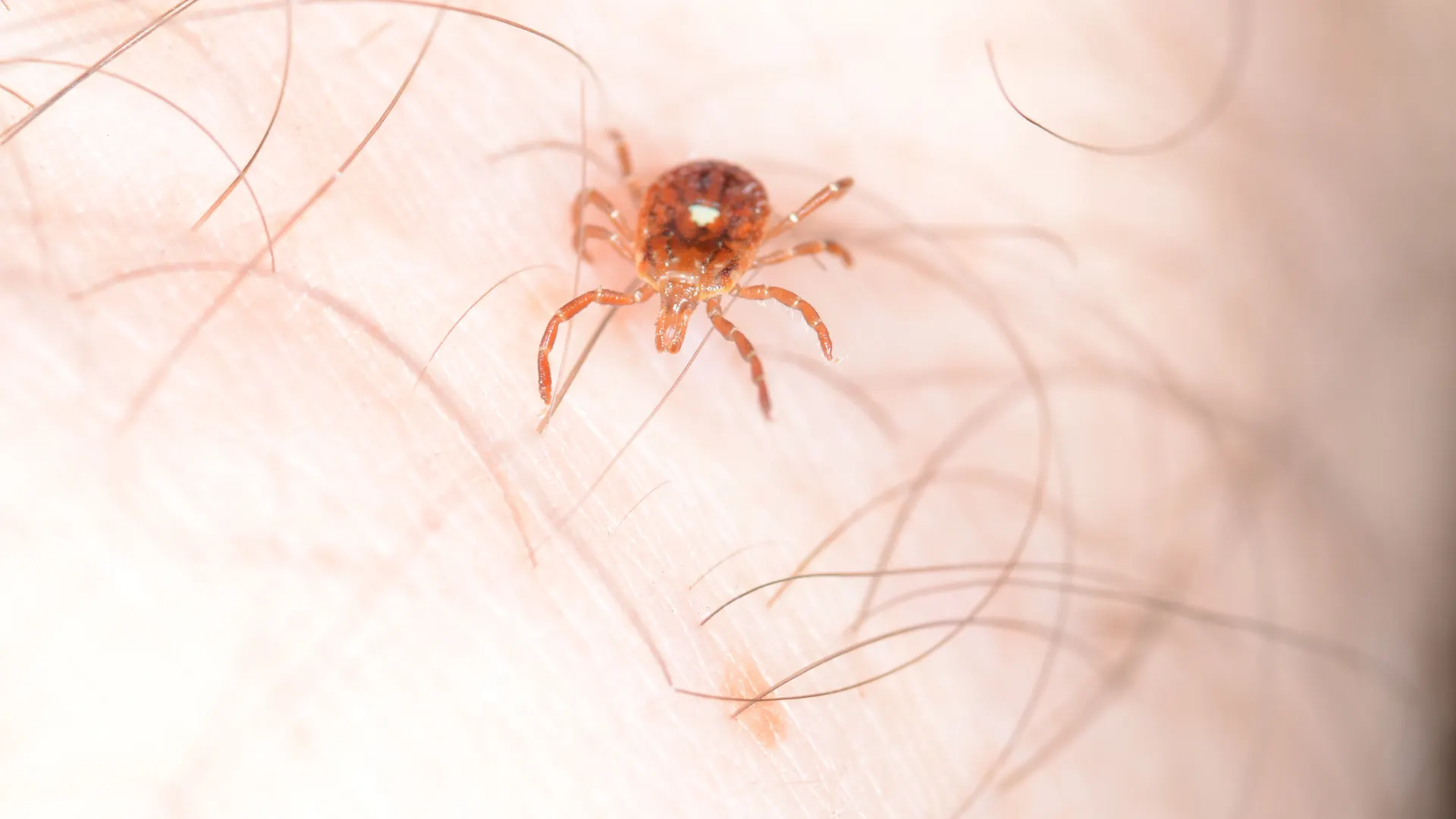
Most people who land here have already been told something that did not fit. A Lyme test came back negative. Someone said Lyme is not really an Alabama problem. The fatigue, joint pain and brain fog stayed.
Part of that is accurate. ADPH states plainly that “in Alabama, there are few cases of Lyme disease because the state is considered a low-incidence state.” The mistake is stopping there. Alabama has plenty of ticks and plenty of tick-borne illness, and most of it is something other than Lyme. The lone star tick is the one Alabamians meet most, and it carries a different set of problems.
A Lyme disease doctor in Alabama is useful for one reason. You need someone who asks which tick, which illness, and which test, instead of running one Lyme panel and closing the file.
ADPH publishes a year-by-year table of reported tick-borne cases. In each of the last three years, spotted fever rickettsiosis cases outnumbered Lyme cases by nearly two to one or more.
| Illness (ADPH reported cases) | 2022 | 2023 | 2024 |
|---|---|---|---|
| Spotted fever rickettsiosis | 118 | 81 | 71 |
| Lyme disease | 32 | 36 | 38 |
| Ehrlichiosis | 6 | 4 | 9 |
| Anaplasmosis | 4 | 1 | 5 |
| Babesiosis | 0 | 1 | 4 |
| Tularemia | 3 | 1 | 1 |
Spotted fever counts ran much higher in earlier years, with 671 cases in 2017 and 673 in 2018. The Alabama Cooperative Extension System describes spotted fever as “the most commonly reported tick-borne illness in Alabama.” An Auburn University study adds that “human cases of tick-borne diseases in Alabama have risen steadily over the last 2 decades.”
One footnote on the ADPH table matters for anyone who travels. A case is counted “if the person resided in Alabama during their exposure period; this does not necessarily indicate where the disease was acquired.” Some Alabama Lyme cases may come from a trip north.
ADPH and ACES name several ticks that bite people in Alabama, and only one of them is the classic Lyme carrier. A wider overview of each species sits on types of ticks.
| Tick | What ADPH’s tick chart links it to | What a standard Lyme test sees |
|---|---|---|
| Lone star tick (Amblyomma americanum) | Ehrlichiosis, tularemia, alpha-gal syndrome; CDC links it to STARI | None of these |
| Gulf Coast tick (Amblyomma maculatum) | Spotted fever rickettsiosis, the group that includes Rickettsia parkeri | None of these |
| American dog tick (Dermacentor variabilis) | Spotted fever rickettsiosis, tularemia | None of these |
| Blacklegged tick (Ixodes scapularis) | Lyme disease, anaplasmosis, babesiosis, ehrlichiosis | Lyme disease only |
The disease pairings in this table come from the ADPH chart “Ticks of Public Health Concern in Alabama,” plus ADPH’s spotted fever and alpha-gal pages and CDC’s STARI page. Local names add confusion. ACES notes the lone star tick is “also known as the water tick,” and ADPH lists the American dog tick as the “wood” tick.
The Gulf Coast tick deserves attention because few people have heard of it. ADPH names it, along with the American dog tick, as a carrier of spotted fever rickettsiosis. ACES says it “prefers to feed on large hosts such as livestock, deer, and coyotes” but “may attach to humans and pets if given the opportunity.”
Ehrlichiosis is a bacterial tick-borne infection that often causes fever, chills, headache and muscle aches. ADPH names the lone star tick and the blacklegged tick as its main carriers.
More on ehrlichiosis and anaplasmosis together is on Anaplasma and Ehrlichia co-infections.
A standard Lyme test looks for signs of one organism, Borrelia burgdorferi. In Alabama, the tick most likely to bite you has not been shown to carry it.
An Auburn University team sampled eight recreational sites in eastern central Alabama in May and June of 2015. Of 1,310 ticks collected, “97.7% of 1,310 samples were the lone star tick.” CDC states that “lone star ticks have not been shown to transmit B. burgdorferi,” and adds that “their saliva has been shown to kill Borrelia.”
So a negative Lyme result after a lone star bite is expected. It says little about ehrlichiosis, alpha-gal syndrome, or STARI.
STARI (southern tick-associated rash illness) is a rash illness linked to lone star tick bites. It causes an expanding red rash similar to the Lyme rash, often with fatigue, fever and aches. ACES notes it is “also known as Masters disease.”
STARI is the clearest example of the testing gap. CDC states that “there are no diagnostic blood tests for STARI because the cause is not known.” Diagnosis rests on the rash, the symptoms, and the tick exposure.
Alpha-gal syndrome is an allergic condition linked to tick bites. It causes reactions after eating red meat or other mammal products, and ADPH says it is “primarily associated with the bite of a lone star tick.”
Alpha-gal is invisible in state data for a different reason. ADPH explains that it “is not a nationally notifiable condition. This means that it is not reported in Alabama.” More on the allergy itself is on alpha-gal syndrome.
Yes, though it is uncommon here compared with the Northeast. ADPH lists Lyme among the four most common tick-borne diseases under surveillance in Alabama, and reported 38 cases in 2024. The blacklegged tick is established in the state, and ACES calls it “an abundant tick species in Alabama.”
Why so few cases, then? Tick behavior is part of the answer. A 2015 PLoS One study compared blacklegged tick nymphs from northern and southern populations. It found that southern nymphs “rarely emerge from the leaf litter” and are “unlikely to contact passing humans.” Northern nymphs were seen questing up to 19.5 times more often.
That makes Lyme less likely in Alabama, not impossible. A person can still be bitten locally by a blacklegged tick, or pick up Lyme while traveling. The practical takeaway is to test for what the exposure history points to, including Lyme when it fits. More on the organism is on deer tick.
Alabama’s tick-borne illnesses overlap heavily in how they feel, which is a large part of why they get missed.
Eschar is a dry, dark scab that forms where an infected tick fed. ADPH notes that people with Rickettsia parkeri infection “typically develop an eschar at the site of the tick bite.”
Erythema migrans is the expanding rash that can appear at the site of a tick bite in early Lyme disease. A similar rash appears in STARI, so the rash alone does not settle which illness is present.
A rash is not a reliable signal either way. ACES reports that spotted fever rash is absent “in approximately 10 percent of cases,” and that “less than 30 percent of infected adults” with ehrlichiosis develop a body rash. For the longer-term picture, see chronic Lyme disease symptoms.
Sudden high fever, confusion, a spreading spotted rash, or trouble breathing after a tick bite needs emergency care the same day.
Acute spotted fever and ehrlichiosis are treated with antibiotics, and ADPH names doxycycline as the treatment of choice for ehrlichiosis. That care should not wait. My Lyme Doc’s role is usually later, when symptoms persist after the acute phase or the cause was not found.
For that longer road, My Lyme Doc uses a four-phase approach, and the order is deliberate.
Many clinics reverse this order and go after the pathogen first. That is a common reason patients crash during treatment. More detail is on Lyme disease treatment.

Yes, and telehealth is the only way My Lyme Doc sees Alabama patients.
What that means in practice. Chronic tick-borne and mold illness is worked up largely through history, symptom pattern, exposure timeline and laboratory testing. In Alabama, where the tick species and the travel history carry so much weight, a long conversation is most of the diagnostic work. Lab orders go to a draw site near you. Prescriptions go to your pharmacy.
What telehealth cannot do. A video visit cannot include a hands-on physical examination. Where one is needed, or where symptoms suggest an emergency such as severe spotted fever, that gets coordinated with local, in-person care.
What you need. A private space, a reliable connection, and an Alabama address.
Alabama is one of eleven states where My Lyme Doc sees patients. The full list is on where we practice.
Patients arrive having seen twenty or more clinicians on average, and most arrive with root causes nobody has looked for.
The initial visit is $300 and runs long on purpose, because most people arrive with a stack of results that has not been read together in one sitting. Ongoing care runs as a membership between $400 and $1,100 per month, depending on the level of support your case needs. Labs, supplements and treatments are billed separately.