


Anyone looking for a Lyme disease doctor in South Dakota has probably heard that Lyme is rare here. That is true, and it is also incomplete. The South Dakota Department of Health states that “the deer tick that carries the bacteria has been found in five eastern South Dakota counties to date.” In 2023 the department classified 6 reported cases as acquired inside South Dakota against 3 linked to travel. Rare is not the same as absent.
MyLymeDoc provides telehealth care for Lyme disease, co-infections and mold-related illness to South Dakota residents.
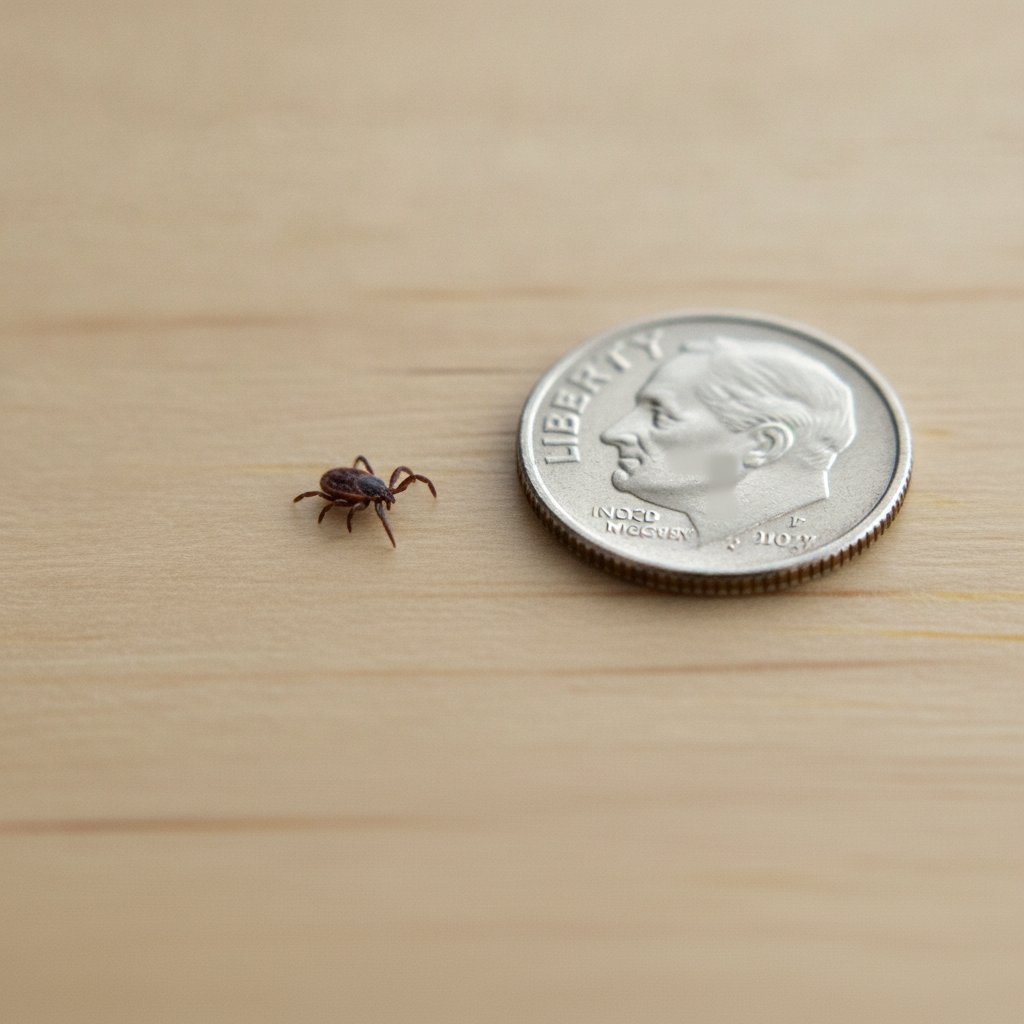
Lyme disease is an infection caused by Borrelia burgdorferi bacteria, spread to people by the bite of the blacklegged tick (Ixodes scapularis), also called the deer tick.
You may need one if you have months of symptoms, a possible tick exposure, and a clinician who stopped at “we don’t see Lyme here.” That sentence should start an evaluation, not end it.
Many people who reach MyLymeDoc describe years of fatigue, moving pain and brain fog, with labs called normal. They say some version of “I’ve been sick for years and no one can tell me why.” Compare that history against the pattern on chronic Lyme disease symptoms.
South Dakota’s low case counts are real, at “7 to 17 cases per year” between 2018 and 2023, per the state health department. A clinician who rarely sees Lyme has little reason to think of it first. That is a statistical habit, not a verdict on your illness.
Lyme disease is uncommon in South Dakota, yet most of its 2023 cases were acquired inside the state. The South Dakota Department of Health’s 2023 summary lists 6 South Dakota-acquired cases, spread from Hamlin and Hanson counties in the east to Pennington in the west.
By contrast, only 3 cases “had travelled to Minnesota (2), New York (1), Connecticut (1) during the incubation period.” A patient who has not left the state can still be a Lyme case.
The department’s Lyme page says the deer tick is documented in five eastern counties “to date,” a range still being mapped. More on this tick is on deer tick.
South Dakota DOH reports most exposures “during June, July and August, but cases have been reported during every month of the year,” and notes that “reinfection is possible.”
South Dakota’s tick-borne disease list is broader than Lyme, and several illnesses on it are entirely home-grown. The table below draws only on the South Dakota Department of Health’s 2023 surveillance summary.
| Illness | Tick named by SD DOH | What SD DOH reports |
|---|---|---|
| Lyme disease | Blacklegged (deer) tick | 7 to 17 cases per year, 2018 to 2023. In 2023, 6 South Dakota-acquired, 3 travel-linked. |
| Tularemia | American dog tick, wood tick, lone star tick | 100 percent South Dakota-acquired, 2018 to 2023. 9 to 17 cases per year, 2018 to 2021. 8 cases in 2023. |
| Anaplasmosis and ehrlichiosis | Blacklegged tick; lone star and American dog tick | South Dakota-acquired cases were 400 percent higher in 2023 than in 2022. Five were South Dakota-acquired in 2023. |
| Rocky Mountain spotted fever | American dog tick | 100 percent South Dakota-acquired, 2018 to 2023. One case reported in each of 2022 and 2023. |
| Babesiosis | Blacklegged tick | Two documented cases since 2018. The 2023 case was South Dakota-acquired, from Todd County. |
Tularemia is a bacterial infection caused by Francisella tularensis. It can spread through tick and deer fly bites, handling infected animals such as rabbits, or contaminated water.
Rocky Mountain spotted fever is a bacterial infection spread by ticks that causes fever, headache and rash. South Dakota DOH states it “can be rapidly fatal if not treated within the first 5 days of symptoms.”
Tularemia case counts ran in a range similar to Lyme’s, all acquired in-state, though ticks are not its only route: in 2023, “80% of the cases had exposure to cats during the incubation period.” Details on the tick most tied to tularemia and spotted fever are on American dog tick.
Anaplasmosis is a bacterial illness spread by the blacklegged tick that often causes fever, chills, headache and muscle aches, sometimes without a rash.
The anaplasmosis and ehrlichiosis numbers are small but rising, and more on how they present is on anaplasma and ehrlichia co-infections.
Three tick species are common in South Dakota, according to SDSU Extension: the American dog tick, the Rocky Mountain wood tick, and the blacklegged tick. SDSU Extension also reports “isolated observations of the Lonestar tick in South Dakota.”
| Tick | What it can carry, per SD DOH, SDSU Extension or CDC | Range note |
|---|---|---|
| Blacklegged (deer) tick | Lyme disease, anaplasmosis, Powassan disease | Documented in five eastern South Dakota counties (SD DOH) |
| American dog tick | Rocky Mountain spotted fever, tularemia | “Widely distributed east of the Rocky Mountains” (CDC) |
| Rocky Mountain wood tick | Rocky Mountain spotted fever, Colorado tick fever, tularemia | CDC places it in Rocky Mountain states at 4,000 to 10,500 feet |
| Lone star tick | Ehrlichiosis, alpha-gal syndrome | Isolated observations only (SDSU Extension) |
Alpha-gal syndrome is an allergic reaction to red meat that can develop after a lone star tick bite.
A common South Dakota experience is hearing a dog tick does not carry Lyme, which is correct about Lyme but says nothing about tularemia or spotted fever. For the western species, see Rocky Mountain wood tick.
Minnesota is a high-incidence Lyme state that shares South Dakota’s eastern border. The Minnesota Department of Health reported 2,685 probable Lyme cases in 2022, counted under a lab-based method that differs from South Dakota’s.
That figure shows scale, not a matched rate. Minnesota places most likely exposures “in east-central, north-central, and southeast Minnesota,” within weekend range of South Dakota. CDC’s rule is that “surveillance data are collected and reported based on where people live, not where they got Lyme disease.” A resident bitten there still counts as South Dakota’s case, which is why travel history matters.
No single symptom pattern defines tick-borne illness, so these conditions often get missed or mistaken for each other. South Dakota DOH notes that Lyme “symptoms usually begin within a month of exposure.”
Erythema migrans is the expanding rash that can appear at the site of a tick bite. It is the most recognizable sign of early Lyme disease, and its absence does not rule the diagnosis out.
Matching each tick species to its symptoms is easier on types of ticks.
Babesiosis testing has its own quirks, covered on babesia testing.
MyLymeDoc uses Dr. Mueller’s four-phase method, in a deliberate order.
Many clinics go after the pathogen first, a common reason patients crash during treatment. The sequence is laid out further on Lyme disease treatment.

There is no MyLymeDoc office in South Dakota, and this page does not suggest otherwise.
What that means in practice. Chronic Lyme and mold illness are worked up largely through history, exposure timeline and lab testing. Lab orders go to a draw site near you, and prescriptions go to your pharmacy.
What telehealth cannot do. A video visit cannot include a hands-on exam, so suspected spotted fever or any emergency goes to local, in-person care right away.
South Dakota is one of eleven states where MyLymeDoc is licensed. The full list is on where we practice.
Patients arrive having seen twenty or more specialists on average, and 99 percent arrive with root causes others have missed. Taking the whole pattern seriously is the core of how Dr. Diane Mueller approaches Lyme disease specialist care.
The initial visit is $300 and runs long on purpose, because most people bring years of unread results. Ongoing care is an all-inclusive membership between $400 and $1,100 per month, depending on the support your case needs.